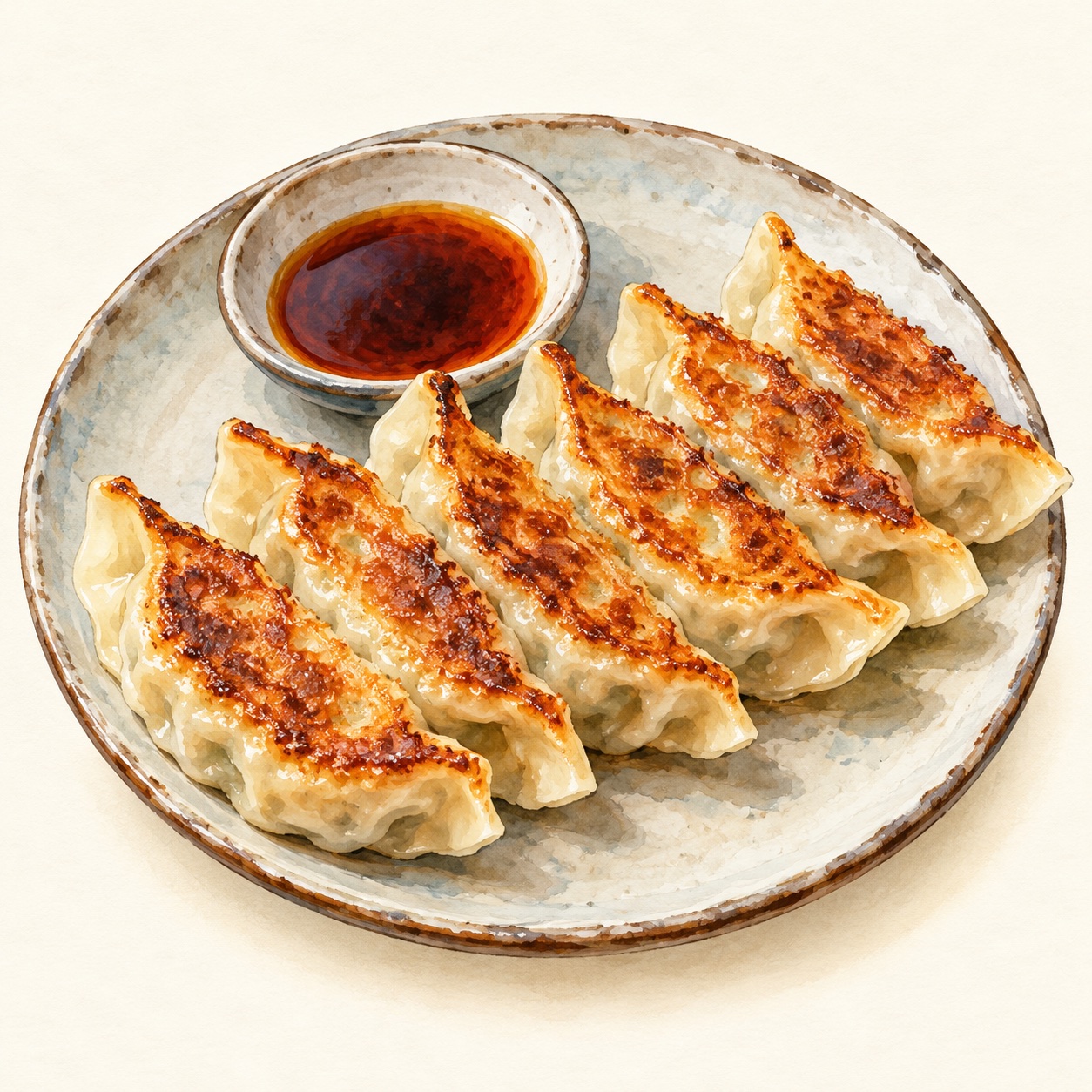
Gyoza: Japanese pan-fried dumplings
Crisp underneath, tender on top, and filled with pork and cabbage. A dish that is fun to make together and freezes very well.
Edited by EMA
Original JAPANITIES recipe. Results may vary with ingredients and equipment.
Checked on: · Source : JAPANITIES editorial recipe
Ingredients
- 24 gyoza wrappers (from the fresh or frozen section of Asian grocery stores)
- 250 g minced pork
- 200 g Chinese cabbage (or white cabbage), very finely sliced
- 1 tsp salt
- 1 clove of garlic and a thumb of ginger (1 tsp), grated
- 1 tbsp soy sauce
- 1 tsp toasted sesame oil
- Pepper
- Neutral oil and 80 ml water for cooking
- Sauce: 2 tbsp soy sauce, 1 tbsp rice vinegar, a few drops of chili oil
No gyoza wrappers? No problem
Gyoza dough is very simple to make with flour and boiling water. Even without an Asian grocery nearby, supermarket flour is enough, and homemade dough is tender and easy to fold.
Homemade dough (about 24 wrappers)
- Ingredients: 200 g flour (half pastry flour, half bread flour, or T55 flour), a pinch of salt, 100–110 ml boiling water, flour or cornstarch for dusting
- Put the flour and salt in a bowl. Pour in the boiling water a little at a time, stirring with chopsticks (or a fork) until crumbly. Be careful: it is very hot.
- When the dough is cool enough to touch, bring it together by hand and knead for about 5 minutes, until smooth.
- Wrap in cling film and rest for 30 minutes at room temperature (make the filling in the meantime).
- Roll the dough into a log, cut it into 24 equal pieces and press each one lightly with the palm of your hand, cut side up.
- Flour each piece and roll it out into a disc 8–9 cm across, thicker in the middle and thinner at the edges.
- Stack the discs, dusting them with flour so they do not stick, and cover with a damp cloth so they do not dry out.
It is actually easy to fold
- Kneaded with boiling water, the dough is soft and a little sticky: often you only need to pinch the edges, without even wetting them.
- You do not need to make pleats: fold into a half-moon and pinch the edges, and your gyoza will still be delicious.
- Once you feel confident, try 2 or 3 pleats along the edge. You improve very quickly.
- Place the gyoza on a floured tray so that they do not touch each other.
What about rice flour?
- Rice flour on its own makes dough that stretches poorly and tears easily, so we do not recommend it for beginners.
- Replace 50–60 g of the 200 g of flour with rice flour for a softer, slightly more tender dough.
- Rice flour sometimes needs a little more water: if the dough is crumbly, add boiling water by the teaspoon.
- If you are allergic to wheat, try a small amount first: a 100% rice dough is very fragile.
Method
- Salt the cabbage with the salt, leave it to release water for 10 minutes, then squeeze it firmly in a cloth.
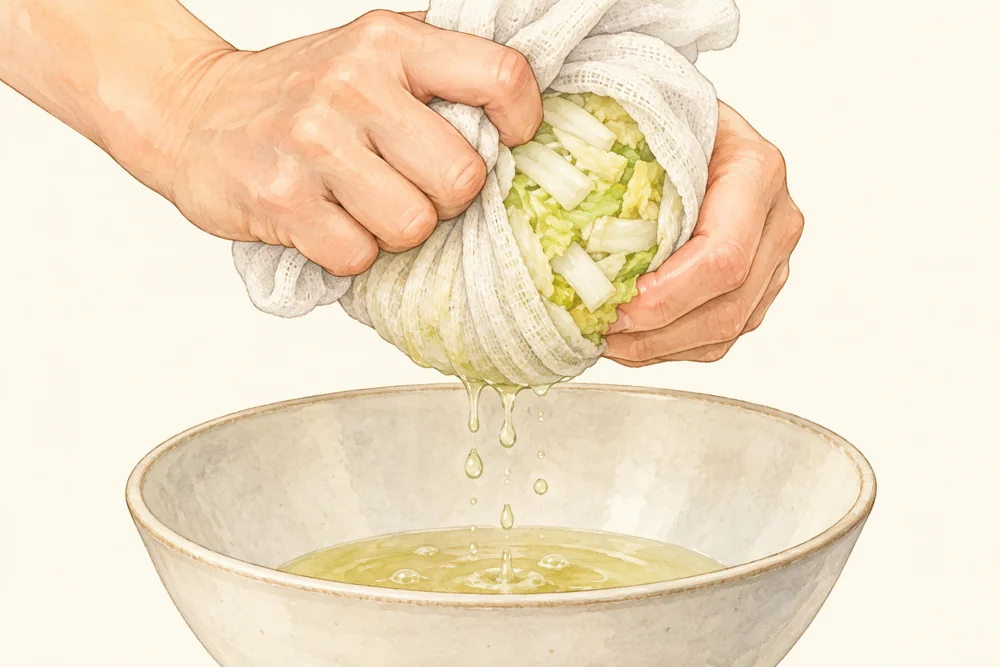
Squeezing the cabbage in a cloth · JAPANITIES - Mix the pork, cabbage, garlic, ginger, soy sauce, sesame oil and pepper by hand until the filling is sticky.
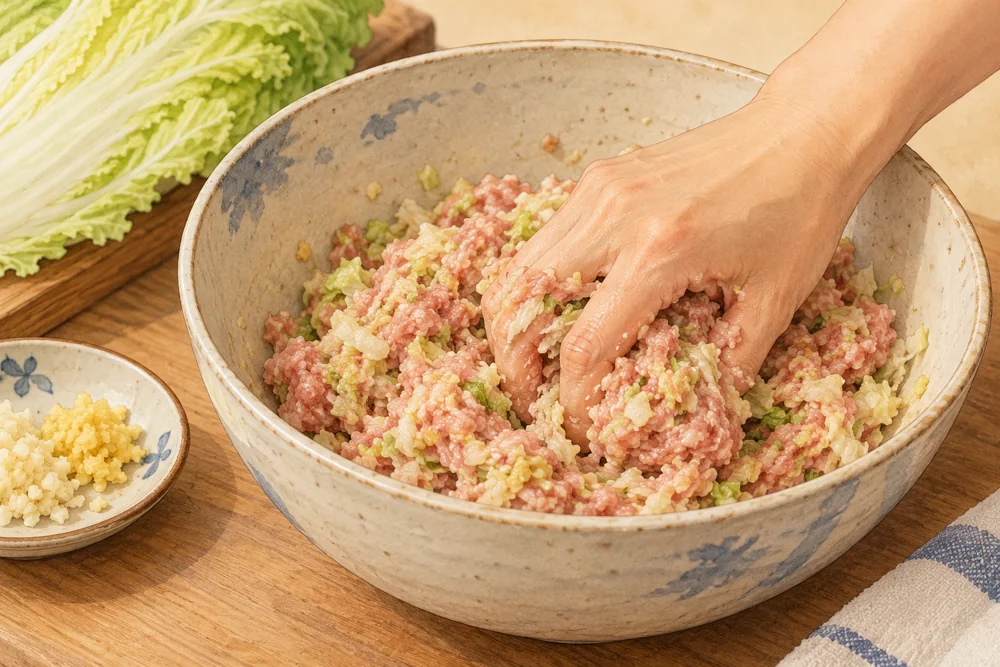
Mixing the meat and cabbage into a sticky filling · JAPANITIES - Put a well-heaped teaspoon of filling in the centre of a wrapper. Wet the edge, fold into a half-moon and seal with 5 or 6 small pleats.
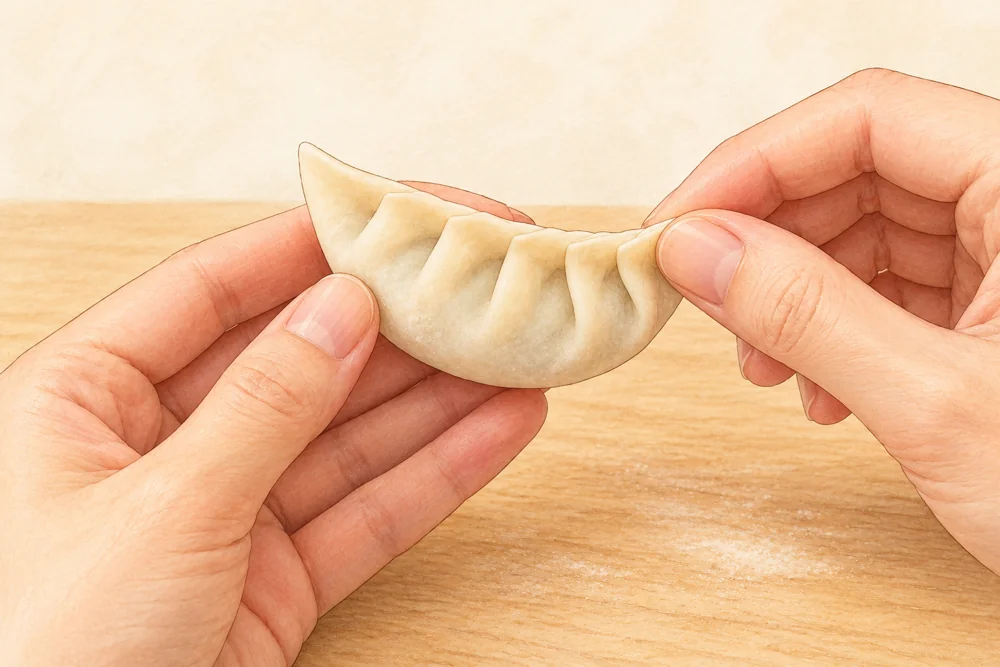
Folding the wrapper into a half-moon and pinching pleats along one side · JAPANITIES - Oil a non-stick pan and arrange the gyoza side by side. Brown the bottoms for 2 minutes over medium heat.
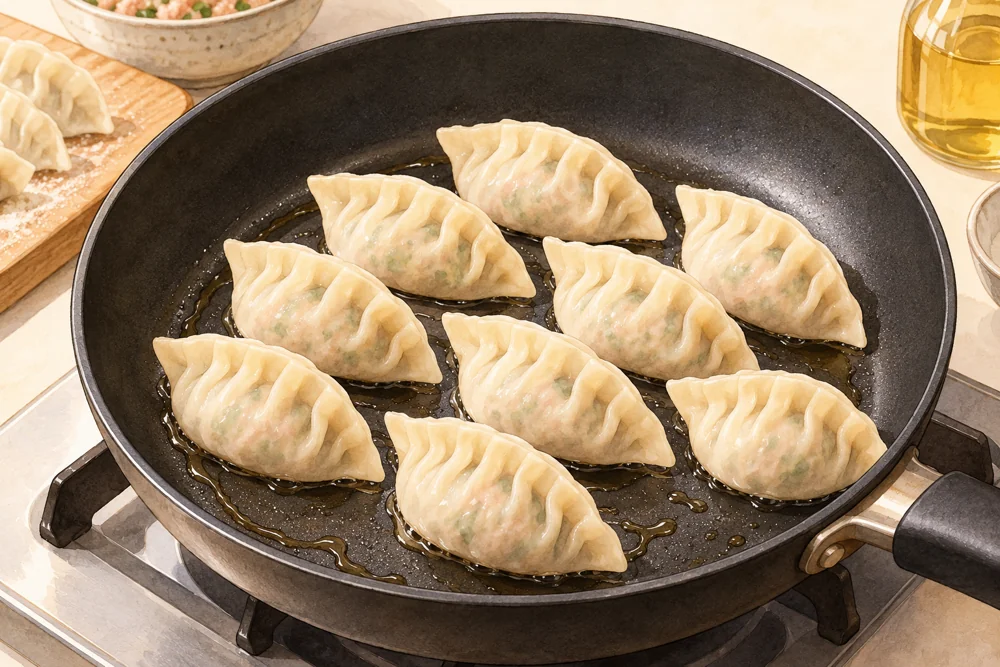
Arranging the gyoza flat side down in the pan · JAPANITIES - Pour in the water, cover and steam for 4–5 minutes.
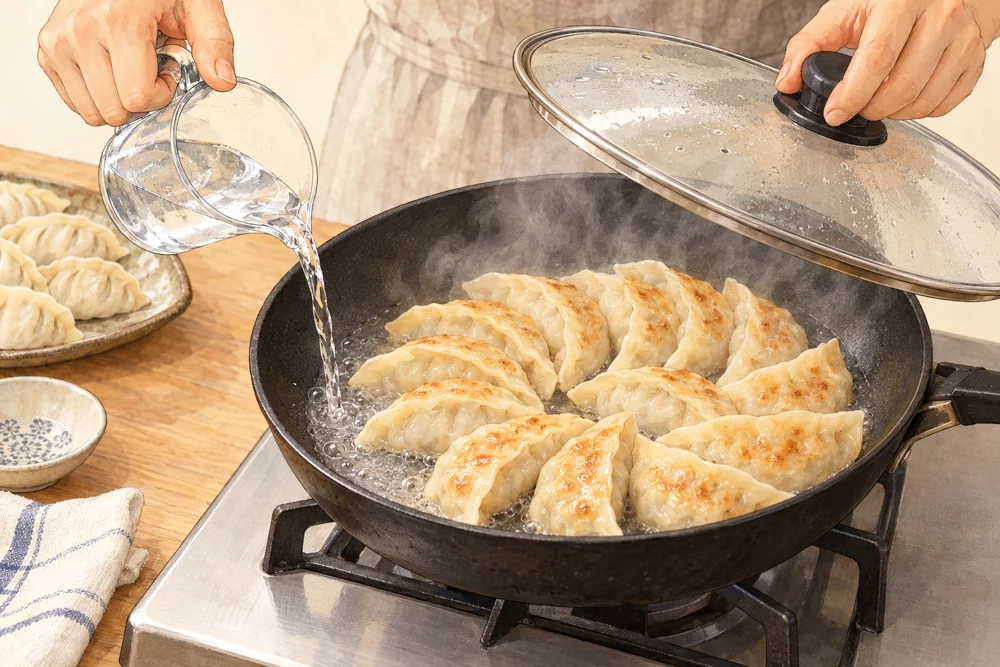
Adding the water and covering to steam · JAPANITIES - Remove the lid and let the water evaporate so the bottoms crisp up again. Serve with the sauce.
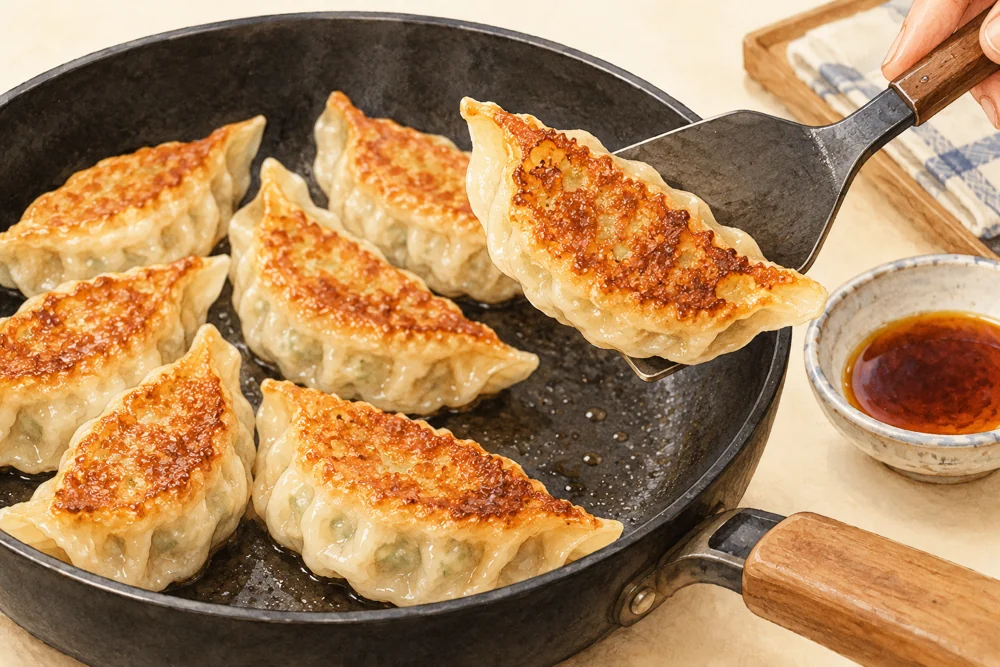
Letting the water evaporate and crisping the bottoms · JAPANITIES
Another fold: the hat shape
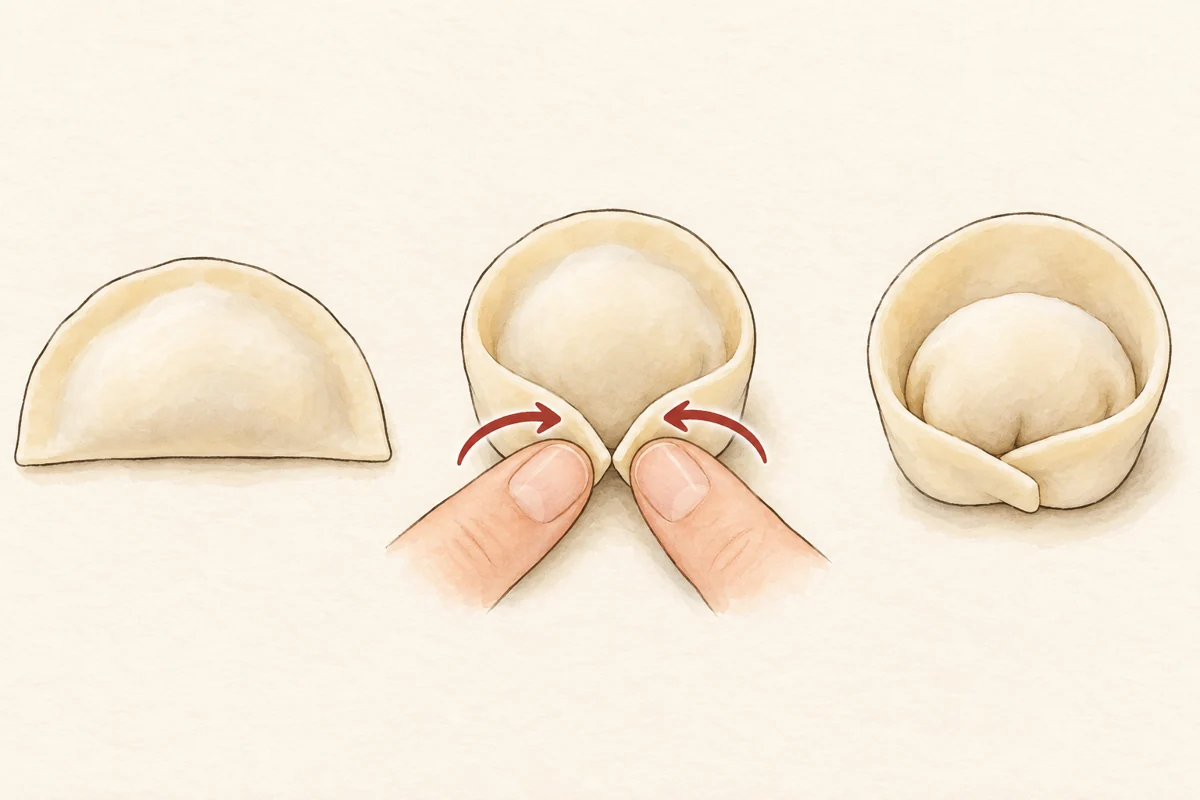
A fold without small pleats: seal the dough into a half-moon, then bring the two tips together. Use little filling to make shaping easier.
- Put a little filling in the centre. Moisten the edge, fold into a half-moon and seal carefully, pressing out the air.
- Bring the two tips of the half-moon forward. Lightly moisten one tip, overlap the other and press to stick them together.
- Check that the tips stay stuck and flatten the base slightly. The filling must be completely enclosed.
Tips
- The cabbage must be squeezed well: too much water bursts the dough and makes the filling soggy.
- To freeze: place the raw gyoza on a tray without touching, freeze, then bag them. Cook straight from frozen, adding 1–2 minutes.
- No gyoza wrappers: wonton wrappers work, but they are thinner.
Wine pairing
A fruity, fresh rosé goes well with the pork and the golden crust. Add the vinegar and chili oil gradually. The editors’ suggestion is based on the flavours of the dish and the style of the wine: adapt it to your taste.
- Worth trying: dry Bordeaux rosé
- At the wine shop, say which style you want: dry, lightly oaked or with supple tannins.