Tonight in Kurama (Kyoto): the fire festival, a strange autumn festival
Checked on
Published on
On the evening of Thursday 22 October, the fire festival takes place in Kurama, near Kyoto. Its origin, how it unfolds and tips for going.
In this article
The essentials
On the evening of Thursday 22 October, the “Kurama fire festival” (Kurama no hi matsuri) takes place in Kurama, north of Kyoto. It is the annual festival of Yuki Shrine, held every 22 October. From 6 pm until past midnight, flames rise all over the village. Entry is free.
The origin
It is one of the three most distinctive festivals of Kyoto. It goes back to 940, when the deity Yuki, venerated at the imperial palace, was welcomed in Kurama: villagers carried their local deity, Hachisho Myojin, in a palanquin (mikoshi) and welcomed it with countless torches. This legend is the origin of today’s festival.
How it unfolds
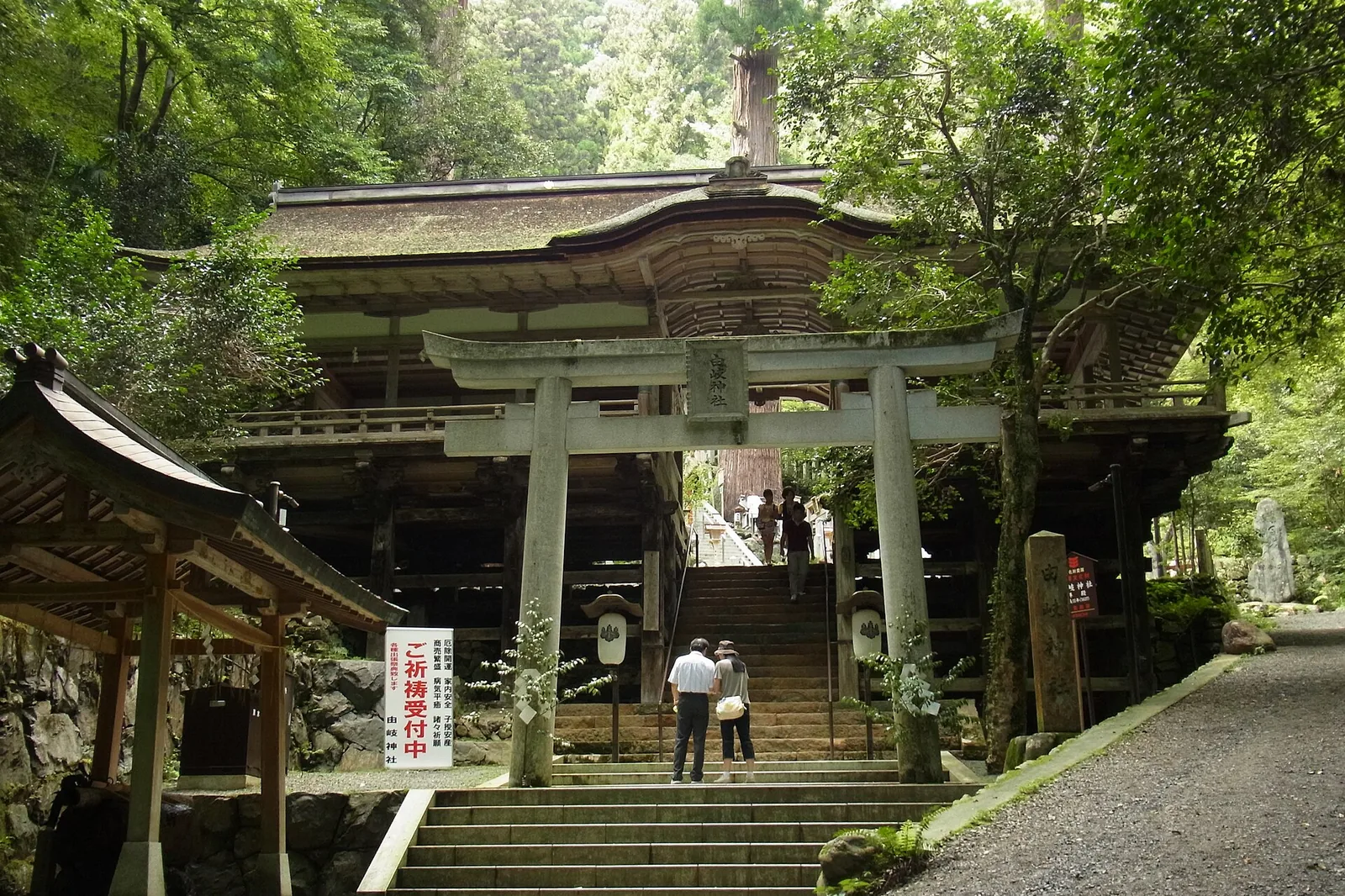
Around 6 pm, at the signal “Shinji ni mairasshare”, the fires set up in front of each house are lit at the same time. After children carrying small torches, young men carry large torches shouting “Sairei, sairyo” and walk through the village. Then the young men gather in front of the shrine gate and two mikoshi come down the stone staircase, lit by the flames: this is the high point.
Tips for getting there
The site is Yuki Shrine and the village along the Kurama road. Kurama Station (Eizan) is about a 6-minute walk. On the day, from 3 pm, ordinary vehicle traffic is banned between Kibuneguchi and Kurama Onsen, and all car parks are closed: use public transport. Before the festival starts, the area in front of the shrine gate is reserved for worship and access above it is closed.
To keep in mind
Times and restrictions may vary a little from year to year. Before leaving, check the latest information from Yuki Shrine and the Kyoto tourist office. This article is based on official tourism pages consulted today.
Learn the grammar
French grammar
Learn sentence patterns and usage from the article’s own sentences.
01The present indicative
est / sont + attribute (noun, adjective, prepositional phrase)
C’est la fête annuelle du sanctuaire Yuki, célébrée chaque 22 octobre.Key pointsÊtre in the present is est for a singular subject and sont for a plural one. It describes nature, state or place (“is”, “is located”). If what follows (the attribute) is a noun, adjective or prepositional phrase, it is not a passive. If a past participle follows, it is a passive (est annoncé). Headlines and summaries often use the present to describe the current situation.
02The passive voice in the present
être (est / sont) + past participle (+ par / de)
Vers 18 h, au signal « Shinji ni mairasshare », les foyers dressés devant chaque maison sont allumés en même temps.Key pointsThe passive means “is done” or “is being done”. It is formed with être + past participle, which agrees with the subject in gender and number (la mesure est adoptée / les mesures sont adoptées). The agent is introduced by par (or de). In the news it is common when the event, rather than the actor, is the focus (est prévu / est annoncé / est connu).
03The gerund
en + present participle (-ant)
Après des enfants portant de petites torches, de jeunes hommes portent de grandes torches en criant « Sairei, sairyo » et parcourent le village.Key pointsThe gerund means “while doing”, “by doing” or “when doing”. Its form is en + present participle (-ant). Take the nous form of the present, drop -ons and add -ant (faire → faisant). The subject is normally that of the main clause. It shows things happening at the same time, or the means.
04The imperative
present vous form (-ez) / nous (-ons) / tu
Le jour même, dès 15 h, la circulation des véhicules ordinaires est interdite entre Kibuneguchi et Kurama Onsen, et tous les parkings sont fermés : utilisez les transports en commun.Key pointsThe imperative expresses commands, requests and advice. It has no subject: the sentence starts with the verb (Consultez les informations.). The vous form ends in -ez, nous in -ons (Restons prudents.), and tu in -e for -er verbs (Consulte). It is very common in notices and warnings (Vérifiez, Consultez, Restez informé).
05Pronominal verbs
se / s’ + verb
Puis les jeunes se rassemblent devant la porte du sanctuaire et deux mikoshi descendent l’escalier de pierre, éclairés par les flammes : c’est le moment fort.Key pointsA pronominal verb is used with a reflexive pronoun (me, te, se, nous, vous) before the verb. It can mean “do to oneself”, “be done” or “do to each other”. In the news, se traduire (to result in), se tenir (to take place), s’agir de (to be a matter of) and se diffuser (to spread) are frequent. The pronoun changes with the subject (il se tient / ils se tiennent / je me souviens).
06Pouvoir: ability and possibility
peut / peuvent / pourrait + infinitive
Les horaires et restrictions peuvent varier un peu d’une année à l’autre.Key pointsPut a base-form verb after pouvoir. Peut means “can” or “may”; the conditional pourrait gives a more reserved possibility, “might”. It does not necessarily mean implementation is settled.
07Marking a starting point
dès / depuis / à partir de + point in time
Le jour même, dès 15 h, la circulation des véhicules ordinaires est interdite entre Kibuneguchi et Kurama Onsen, et tous les parkings sont fermés : utilisez les transports en commun.Key pointsDès means “as early as” or “as soon as”, and à partir de means “from … onwards”. Depuis basically shows a state or period continuing from a point in time. All deal with a start, but they are not used the same way.
08The uses of dans
dans + noun phrase
De 18 h à minuit passé, des flammes s’élèvent dans tout le village.Key pointsDans means “in, inside” for places, but also for a scope such as a system or period. With future time, dans deux jours means “in two days”. In the article’s example, check what it is “inside” and which scope it marks. Identify the value of dans in the passage.
09Coordination with et
word / group / clause + et + …
Son origine, son déroulement et les conseils pour y aller.Key pointsEt joins not only words but also groups of nouns and whole clauses. Spot the two elements playing the same role to break up a long sentence. Et does not necessarily express cause and effect.
10Definite articles
le / la / l’ / les + noun
Le jeudi 22 octobre au soir a lieu à Kurama, près de Kyoto, la fête du feu.Key pointsLe is masculine singular, la feminine singular and les plural. Before a vowel or a silent h, singular le and la become l’. The definite article points to something already known or a general concept, so look at the context.
Japanese grammar
Understand the structure and usage from the text.
01Cause or purpose with ため
〜ため / 〜ために
「篝(かがり)」は、火をたくための台や、そこで燃やす火のことです。Key pointsため is used for both reason and purpose. “成立ではないため” is a reason and “運転手を守るため” a purpose. Decide from the whole sentence whether what precedes is a cause or a goal.
02The polite past ました
verb stem (連用形) + ました
村人たちは、土地の神様である八所明神を神輿に乗せ、たくさんの松明をかざして、神様を迎えました。Key pointsIn “発表しました”, ました makes a verb polite past. The negative is “ませんでした”. Read the actual date together with the date and time in the text.
03Quoting with と: content and report
plain-form sentence + と + verbe de parole (報じる, 説明する…)
この故事が、今の祭りの元になったと伝えられています。Key pointsと takes the content that is reported or explained. In “改定する方針だと報じました”, “改定する方針だ” is what the report said. Separating the content from who said it and how makes long sentences easier to read.
04Treating a clause like a noun with こと
plain-form sentence + こと + particle
940年に、御所でまつられていた由岐大明神を、鞍馬に迎えたときのことが由来です。Key points“〜すること” treats an action or content like a noun. The particle after it (が・を・は…) shows its role in the sentence. “ことができる” is a fixed combination meaning “can”.
05Linking actions with the て-form
verb て-form + next expression
小さな松明を持った子どもたちに続いて、青年たちが大きな松明をかつぎ、「サイレイ、サイリョウ」とかけ声をかけながら、集落を練り歩きます。Key pointsThe て-form links actions in a series, in order or as a reason. In “確認して、出発する” the relation is judged from the content. In “〜ている” it can show an action in progress or a continuing state.
06Linking two nouns with の
noun A + の + noun B
10月22日(木)の夜、京都の鞍馬で「鞍馬の火祭」が行われます。Key pointsA explains noun B that follows. It is not only possession: the relation can be belonging, target, content and more. In “政府の案” and “年金の税控除”, read the relation from the context.