Jūsan’ya (23 October 2026): moon viewing, with thanks for chestnuts and beans
The 13th day of the 9th lunar month, which falls on Friday 23 October 2026: moon dango, chestnuts and beans. Its origin, decorations, how to celebrate
Edited by EMA
Checked on: · Source : JAPANITIES editorial team / Illustration: JAPANITIES
What is Jūsan’ya?
Jūsan’ya (“the thirteenth night”) is the night of the 13th day of the 9th month of the lunar calendar: people admire a beautiful moon and give thanks for the autumn harvest. In 2026 it falls on Friday 23 October, about a month after Jūgoya (25 September 2026). It is also called “the later moon” (nochi no tsuki), the “chestnut moon” (kuri meigetsu) or the “bean moon” (mame meigetsu).
Difference from Jūgoya
- Jūgoya is a custom that came from China; Jūsan’ya is said to have been born in Japan.
- The moon of Jūsan’ya is not quite full, but it has long been considered the most beautiful after that of Jūgoya.
- Around Jūgoya, typhoons and autumn rains are frequent; around Jūsan’ya the sky is often clear, hence the proverb “no clouds on Jūsan’ya”.
Origin
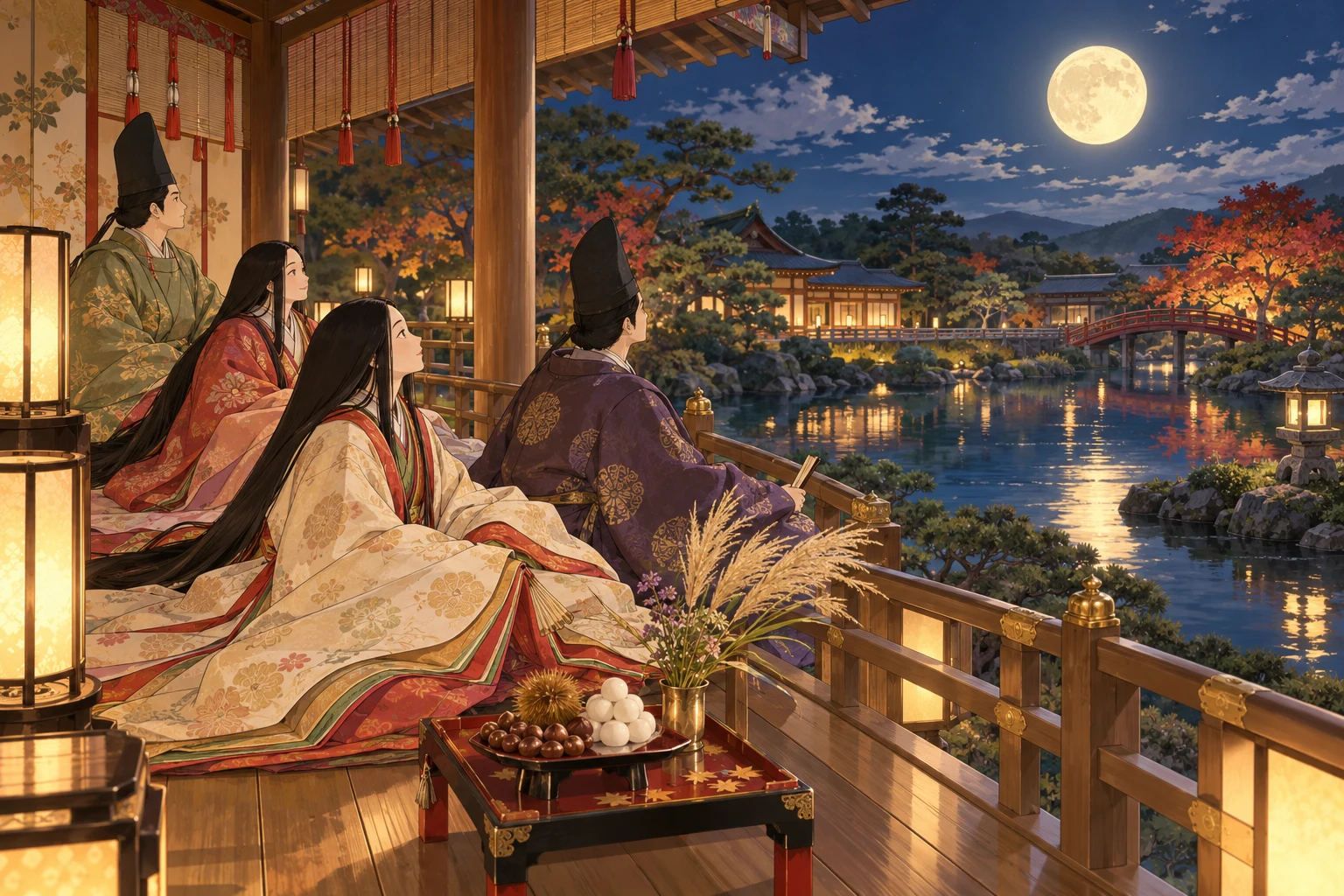
The exact origin is not known and several theories exist. The Heian-period poetry collection “Mitsune-shū” tells how, on the 13th day of the 9th month of the 19th year of Engi (919), Emperor Daigo held a moon-viewing party with poems. Some see this as the start of the custom.
Offerings and decorations
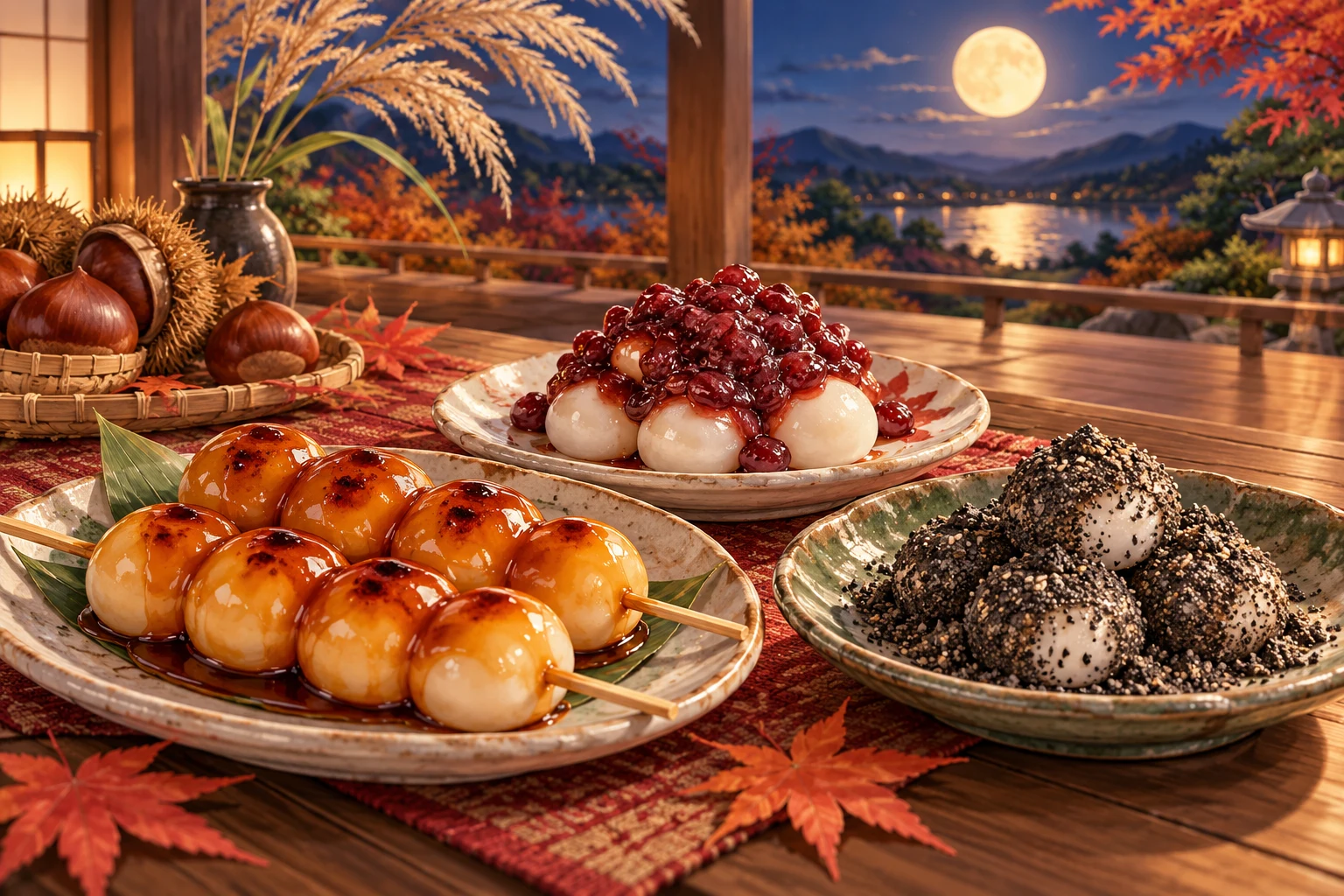
- Moon dango (tsukimi dango): 15 for Jūgoya, 13 for Jūsan’ya, as a guide. For 13, 9 go at the bottom and 4 on top.
- Chestnuts and beans: Jūsan’ya also celebrates the harvest of chestnuts and beans, hence the nicknames “chestnut moon” and “bean moon”.
- Susuki (Japanese pampas grass): ears of rice would normally be offered, but they are not ready yet; susuki takes their place. After the festival, it is said to be hung under the eaves to keep evil spirits away.
Katamitsuki (viewing only one moon)
Viewing only Jūgoya or only Jūsan’ya is called “katamitsuki” and was once thought to bring bad luck. If you saw the moon at Jūgoya, you should see it at Jūsan’ya too. It is said that adding Tōkan’ya, the 10th day of the 10th lunar month (18 November in 2026), and viewing the moon three times brings good fortune.
At the table
- Moon dango: rice flour rolled into balls, like a full moon. Eating round balls is said to bring health and happiness.
- Chestnut rice (kuri gohan): the autumn dish par excellence, linked to the chestnut moon.
- Edamame and other beans: linked to the bean moon; boiled in salted water and eaten just as they are.
- Chestnut sweets and sweet beans: a way to enjoy the harvest.
Celebrating it in France
- Chestnuts: autumn is their season in France (châtaigne, marron), at the market and the supermarket. Vacuum-packed peeled marrons save time.
- Shiratamako: at Japanese grocery stores. Failing that, the glutinous rice flour sold in Asian grocery stores will do.
- Edamame: frozen at Asian grocery stores and large supermarkets.
- Instead of susuki, a few pampas grass plumes in a vase set the mood.
Related recipes
Three recipes for celebrating Jūsan’ya at home.
Sources and notes
The origins are debated, and the number of dango or how they are arranged varies by region and family. Article written by JAPANITIES based on pages about the traditional Japanese calendar.