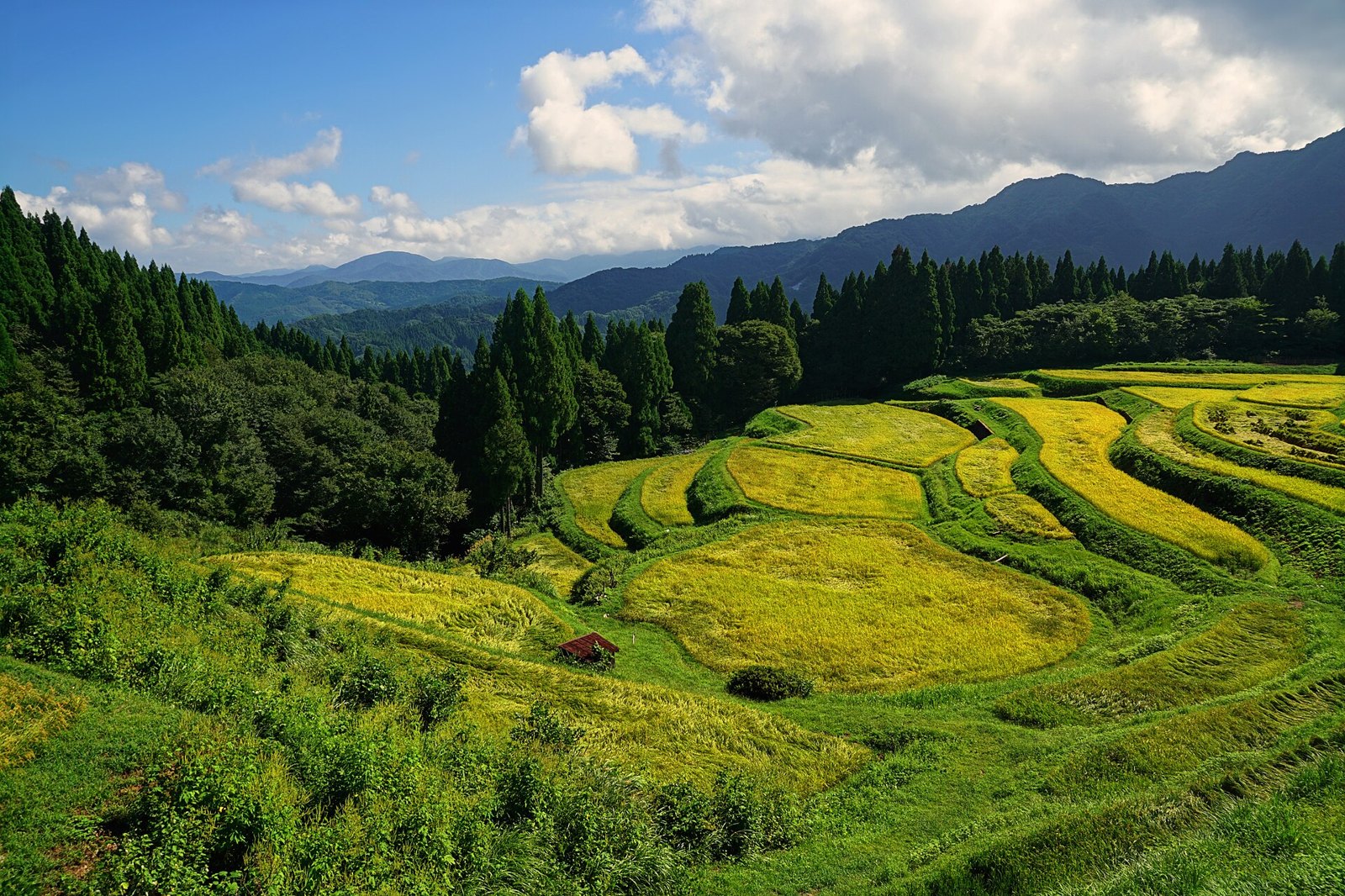
Shinmai: enjoying this year’s new-crop rice
The season to taste freshly harvested rice. What shinmai is, the history of rice growing and the Niinamesai, cooking it with the right amount of water
Edited by EMA
Checked on: · Source : JAPANITIES editorial team / Photo: rikky_photography (CC BY 4.0)
What is shinmai?
“Shinmai” is new-crop rice, harvested this very year; it generally means rice that was milled and packaged before 31 December of that year. In Japan it reaches the markets from about September, and October is the season to enjoy it. Recently harvested, the grain contains a lot of water and cooks into plump, soft rice.
Historical background: rice growing and gratitude for the harvest
- Japanese rice growing is thought to have begun in the Yayoi period. Since then, rice has been both a food and an offering to the gods.
- The festival in which the year’s new grains are offered to the gods and then eaten by people is called “Niinamesai”. Its origin is said to go back to the Yayoi period, and the word “niiname” already appears in the Nihon Shoki.
- In the old lunar calendar it was held on the second day of the hare (u) in the 11th month. When Japan switched to the solar calendar in 1873 (Meiji 6), the second day of the hare in November was kept as it was, which gave 23 November.
- 23 November is now “Labor Thanksgiving Day” (Kinrō Kansha no Hi). The name was changed after the war, but the Niinamesai is still celebrated at the imperial court and in shrines across the country.
“No new rice before the Niinamesai”
According to one belief, new rice should not be eaten before the day of the Niinamesai, out of respect for the gods to whom it is offered first. But in the past it took about two months between harvest, sun-drying and bagging. With technical progress, new rice appears as early as September in some regions. A shrine priest considers that everyone can follow their own conviction.
Cooking new-crop rice well
- A little less water: new-crop rice contains a lot of water; allow 5–10% less water than usual. For 2 gō, that is about 1–2 tablespoons less. In a rice cooker, set the water just below the mark (1–2 mm).
- But the ideal ratio depends on the variety and the equipment. Follow the instructions on the bag; failing that, start with a little less water and adjust to your taste.
- Soaking: in a pan, 30 minutes in summer and 1 h to 1 h 30 in winter. Some rice cookers need only about 20 minutes; check the manual.
- Rinse without rubbing hard, as if you were “washing” the rice. Throw away the first water immediately.
- Once cooked, rest for 10 minutes in the pan, then fluff the rice by turning it from the bottom with the spatula.
How to enjoy it
First taste the new rice just as it is, freshly cooked. Salted onigiri, raw egg on rice, miso soup and pickled vegetables: simple menus that show off the rice.
In France
- Japanese rice (short-grain) is found at Japanese grocery stores. Look for bags marked “shinmai” (new-crop rice).
- Arrivals and the “shinmai” label depend on the shop: ask in store.
- Even if the rice is not new, taking care over the amount of water and the resting time gives very good rice.
Related recipe
The method for cooking new-crop rice well is summarised below.
Sources and notes
The water ratio and soaking time vary with the variety, the equipment and the season: take them as guides. The origin of the Niinamesai and the belief mentioned have several explanations.