Japan: “violent” Typhoon No. 30 approaches the Sakishima Islands on 23 and 24 October
Checked on
Published on
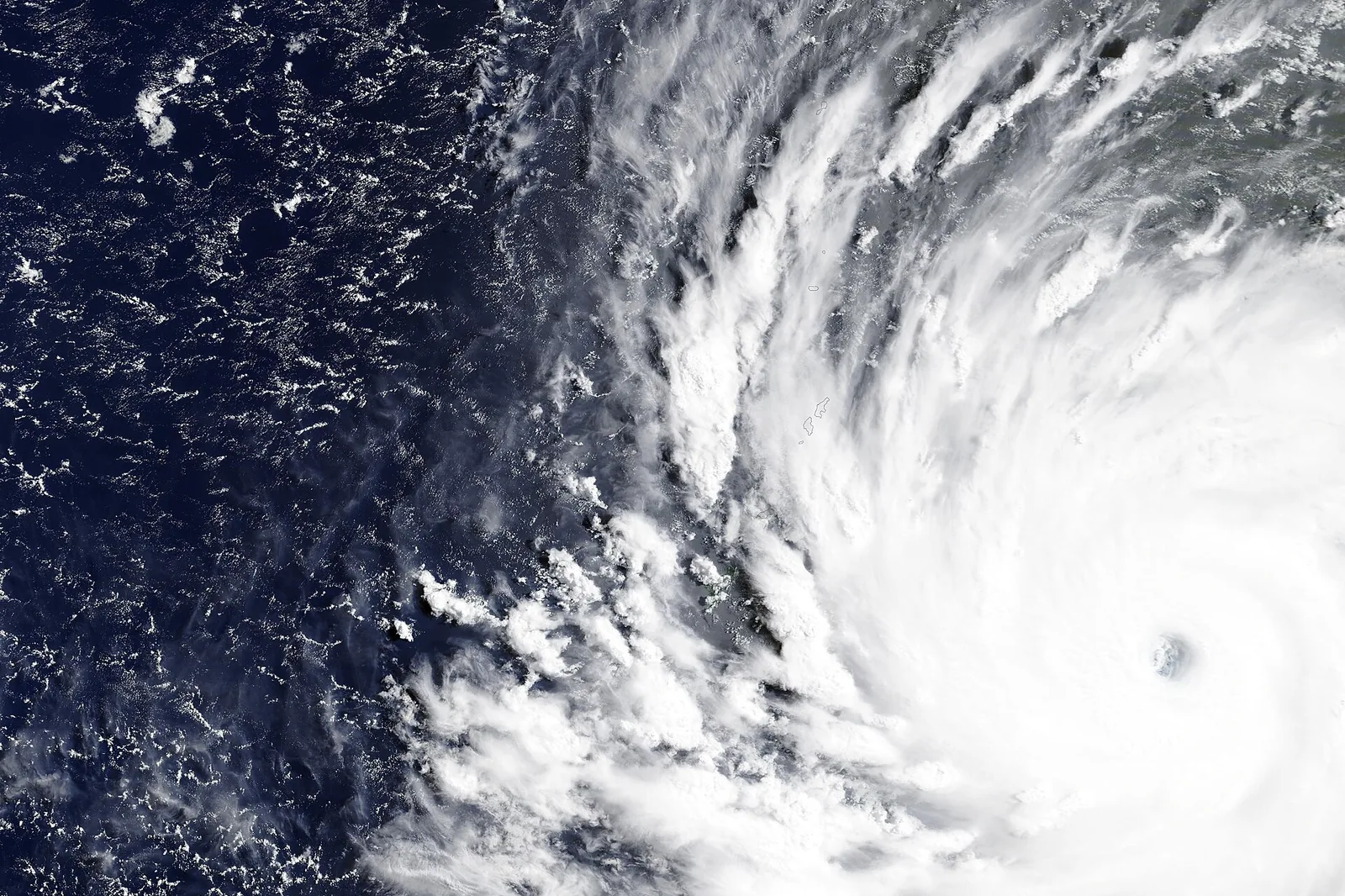
Typhoon No. 30, large and “violent”, is approaching the Sakishima Islands. Current position, risks and preparations.
In this article
The essentials
Typhoon No. 30, large and “violent”, is expected to approach the Sakishima Islands, in Okinawa Prefecture, on 23 and 24 October. The Meteorological Agency calls for the greatest vigilance against violent winds, waves and landslides, and asks people to finish preparations during the 22nd.
Position and intensity
At noon on the 22nd, the typhoon was south of Okinawa and moving west-north-west at 15 km/h; it should bend its track towards the north. Its central pressure has fallen to 900 hPa, from 945 hPa in our article of the 18th: it has strengthened further in four days.
Possible damage
NHK warns of wind so violent that some homes could be damaged, with heavy rain. Waves with swell and landslides are to be feared. Effects are possible in western Japan.
For travellers and residents of the Sakishima
If you have to go to Miyako, Ishigaki or Yonaguni, check flight and ferry information before leaving. Before the typhoon arrives, it is advisable to prepare food, water, charged batteries and lamps and to secure windows and outdoor objects. This general advice does not replace the instructions of local authorities.
To keep in mind
The track and intensity may still change; check the latest information from the Meteorological Agency. This article is based on NHK and other media of 22 October.
Learn the grammar
French grammar
Learn sentence patterns and usage from the article’s own sentences.
01The present indicative
est / sont + attribute (noun, adjective, prepositional phrase)
Vagues avec houle et glissements de terrain sont à craindre.Key pointsÊtre in the present is est for a singular subject and sont for a plural one. It describes nature, state or place (“is”, “is located”). If what follows (the attribute) is a noun, adjective or prepositional phrase, it is not a passive. If a past participle follows, it is a passive (est annoncé). Headlines and summaries often use the present to describe the current situation.
02The passé composé
present of avoir + past participle
Les chiffres viennent des entreprises ou des organismes cités ; JAPANITIES ne les a pas vérifiés.Key pointsThe passé composé is the most common past tense, used for “did” and “has done” — actions completed in the past. It is formed with the auxiliary avoir (a / ont…) in the present + a past participle. Past participles of -er verbs end in -é (annoncer → annoncé); learn the irregular ones (faire → fait, prendre → pris, voir → vu). In the negative, ne … pas wraps the auxiliary (n’a pas annoncé). In the news it reports facts that have already happened, such as “announced” or “voted”.
03The passé composé of pronominal verbs
se + present of être + past participle
Sa pression centrale est descendue à 900 hPa, contre 945 hPa dans notre article du 18 : il s’est encore renforcé en quatre jours.Key pointsThe passé composé of a pronominal verb (se + verb) always uses être as auxiliary (il s’est diffusé / elles se sont réunies). Se changes with the subject: me, te, se, nous, vous. The past participle usually agrees with the subject in gender and number.
04The imparfait
stem (nous form of the present) + -ais / -ait / -ions / -iez / -aient
À midi le 22, le typhon se trouvait au sud d’Okinawa et se déplaçait vers l’ouest-nord-ouest à 15 km/h ; il devrait infléchir sa route vers le nord.Key pointsThe imparfait describes states, background, habits and actions in progress in the past (il était, elle avait, ils pensaient). Take the nous form of the present, drop -ons, and add -ais / -ais / -ait / -ions / -iez / -aient. If the passé composé gives “the event itself”, the imparfait paints “the situation at the time”.
05The present conditional
stem (infinitive) + -ais / -ait / -ions / -iez / -aient
Le typhon n° 30, de grande taille et « violent », devrait approcher les îles Sakishima, dans la préfecture d’Okinawa, les 23 et 24 octobre.Key pointsThe conditional expresses possibility, supposition, unconfirmed information and polite requests (“would”, “might”). It uses the same stem as the future and the same endings as the imparfait (-ais, -ait, -ions, -iez, -aient): pouvoir → il pourrait. In the news it is used to avoid asserting, as in “is reported to…” or “there is a possibility…”.
06The passive voice in the present
être (est / sont) + past participle (+ par / de)
Avant l’arrivée du typhon, il est conseillé de préparer vivres, eau, batteries chargées et lampes et de fixer fenêtres et objets extérieurs.Key pointsThe passive means “is done” or “is being done”. It is formed with être + past participle, which agrees with the subject in gender and number (la mesure est adoptée / les mesures sont adoptées). The agent is introduced by par (or de). In the news it is common when the event, rather than the actor, is the focus (est prévu / est annoncé / est connu).
07The imperative
present vous form (-ez) / nous (-ons) / tu
La trajectoire et l’intensité peuvent encore changer ; consultez les dernières informations de l’Agence météorologique.Key pointsThe imperative expresses commands, requests and advice. It has no subject: the sentence starts with the verb (Consultez les informations.). The vous form ends in -ez, nous in -ons (Restons prudents.), and tu in -e for -er verbs (Consulte). It is very common in notices and warnings (Vérifiez, Consultez, Restez informé).
08Pronominal verbs
se / s’ + verb
À midi le 22, le typhon se trouvait au sud d’Okinawa et se déplaçait vers l’ouest-nord-ouest à 15 km/h ; il devrait infléchir sa route vers le nord.Key pointsA pronominal verb is used with a reflexive pronoun (me, te, se, nous, vous) before the verb. It can mean “do to oneself”, “be done” or “do to each other”. In the news, se traduire (to result in), se tenir (to take place), s’agir de (to be a matter of) and se diffuser (to spread) are frequent. The pronoun changes with the subject (il se tient / ils se tiennent / je me souviens).
09Negation and its scope
ne / n’ … pas · ne … plus
Ces conseils généraux ne remplacent pas les consignes des autorités locales.Key pointsNormally ne and pas wrap the verb. Before a vowel, ne becomes n’. Check which part of the sentence the negation covers. Ne … plus means “no longer”.
10Pouvoir: ability and possibility
peut / peuvent / pourrait + infinitive
La NHK prévient d’un vent d’une violence telle que certaines habitations pourraient être endommagées, avec de fortes pluies.Key pointsPut a base-form verb after pouvoir. Peut means “can” or “may”; the conditional pourrait gives a more reserved possibility, “might”. It does not necessarily mean implementation is settled.
11Dates and their prepositions
le + 日付 / du … au …
Cet article s’appuie sur la NHK et d’autres médias du 22 octobre.Key pointsLe 15 octobre means “on 15 October”. Distinguish the le before a date from the le that marks a weekly habit like a weekday. Du is de + le and au is à + le, so decide the meaning from the verb and period expressions around them. Their role depends on the group: a range of dates, the date of a bulletin or another complement.
12Marking a starting point
dès / depuis / à partir de + point in time
Le « hectopascal » mesure la pression : plus le chiffre est bas, plus le typhon est puissant. « Violent » est la catégorie d’intensité des typhons, à partir de 54 m/s de vent maximal.Key pointsDès means “as early as” or “as soon as”, and à partir de means “from … onwards”. Depuis basically shows a state or period continuing from a point in time. All deal with a start, but they are not used the same way.
13Devoir: obligation or probability
doit / doivent / devrait + infinitive
Le typhon n° 30, de grande taille et « violent », devrait approcher les îles Sakishima, dans la préfecture d’Okinawa, les 23 et 24 octobre.Key pointsDevoir + infinitive means “must”, but depending on context it can also mean “is expected to”. Devrait is conditional. In the news, judge from the context whether it is an obligation or a forecast.
Japanese grammar
Understand the structure and usage from the text.
01Plan, outlook and policy
〜の予定 / 〜見込み / 〜方針
大型で猛烈な台風30号は、23日から24日にかけて、沖縄県の先島諸島に近づく見込みです。Key points予定 is a plan, 見込み a forecast and 方針 a course of action or intention. None of them asserts that something has already been carried out. Note the difference from expressions such as “決まりました”.
02Expressing a possibility
〜可能性がある / 〜かもしれない
西日本にも、影響が出る可能性があると報じられています。Key pointsThese forms say something may happen. Even when “possibility” is written, it does not mean it will certainly happen. Check whose forecast it is, plus the time and conditions.
03Giving examples with など
noun / expression + など
宮古島、石垣島、与那国島などへ行く予定がある人は、航空会社や船会社の、最新の運航情報を、出発前に確認してください。Key points“暴言など” gives “abusive language” as one example. It is not necessarily a closed list of only the things named. It also helps when reading the scope of a news story.
04Quoting with と: content and report
plain-form sentence + と + verbe de parole (報じる, 説明する…)
NHKは、一部の住宅が壊れるおそれがあるほどの、猛烈な風が吹くと伝えています。Key pointsと takes the content that is reported or explained. In “改定する方針だと報じました”, “改定する方針だ” is what the report said. Separating the content from who said it and how makes long sentences easier to read.
05Treating a clause like a noun with こと
plain-form sentence + こと + particle
18日の記事では、945ヘクトパスカルでしたので、4日間で、さらに発達したことになります。Key points“〜すること” treats an action or content like a noun. The particle after it (が・を・は…) shows its role in the sentence. “ことができる” is a fixed combination meaning “can”.
06Linking actions with the て-form
verb て-form + next expression
気象庁は、暴風、高波、土砂災害に、厳重に警戒するよう呼びかけ、22日のうちに、対策を終えるよう求めています。Key pointsThe て-form links actions in a series, in order or as a reason. In “確認して、出発する” the relation is judged from the content. In “〜ている” it can show an action in progress or a continuing state.