Learning Japanese with Kenshi Yonezu’s “Chikyūgi”: words and grammar
Checked on
Published on
The words and grammar of Kenshi Yonezu’s “Chikyūgi”, explained simply. Without the lyrics: meaning, the thread of the song and the official video.

In this article
The essentials
We use Kenshi Yonezu’s “Chikyūgi” (Spinning Globe) to learn Japanese vocabulary and expressions. For copyright reasons, we reproduce neither the full lyrics nor a complete translation. Instead, we explain in our own words the story of the song, the meaning of the words that appear in it and the grammar. The official video is below; read the lyrics on the official services while listening to the song.
About the song
“Chikyūgi” is a song available on streaming since 17 July 2023. It became the theme of Hayao Miyazaki’s animated film “The Boy and the Heron”. The CD came out on 26 July, the day the video was released. The video was shot on Yakushima and directed by Okuyama Hiroshi. According to the press, it was Miyazaki listening to “Paprika” that started the project, and the commission goes back about four years.
The title “Chikyūgi”

A “chikyūgi” is a globe: as you spin it, you see the countries and seas of the world. The character “gi” (儀) originally means an instrument used to observe the stars and directions. In the song, the gesture of “spinning” the globe serves as a comparison for the impulse that makes you think of a distant world or someone you can no longer see. Thinking of a faraway place is said in Japanese “omoi o haseru”.
The thread of the song: the beginning

The song opens with the narrator remembering the sky on the day of their birth: a high sky, clear to the horizon. They recall hearing a voice that gently encouraged them to leave, like a first farewell at the threshold of life’s journey. They then tell how, through the seasons, they met people and sometimes hurt someone. The closer you get to what is bright, the more what is dark becomes clear; that is why the sky seems even farther away.
The thread of the song: departure and encounters

In the next scene, the narrator starts running against the wind. A heap of broken things blocks the way, but they cross it, because they believe someone is waiting at the end of the road. Throwing a door wide open to enter an unknown world, they also suggest a burning curiosity that wants to bring to light what was hidden. Never satisfied, they let their thoughts travel to faraway worlds. Comparing this impulse to the gesture of spinning a globe is the central image of the song.
The thread of the song: losing a loved one

In the second half, the narrator says the person they loved has gone to a place nobody knows. That person keeps the gentle face of that day and is today somewhere, very far away. In the rain, not caring about others’ glances, they start to sing aloud. If they can keep walking, they think, it is because they wish it to continue. They dream of seeing that person again and carefully keep, so as not to forget, a secret buried deep inside. Even in sadness, the wish gives the strength to walk.
The thread of the song: the last scene

Towards the end, the song grows calmer. The narrator reflects that everything began with the sincere wish of their small self. Carrying a loneliness, they turn the corner of the road and set off again. At the end, the opening words return one last time, joined by the joy of being connected to others and the sadness of what has been lost. They will go on drawing both, welcoming both. The image of the globe, that of the title, returns one last time and wraps the whole song.
The theme of the song
The theme of the song can be read like this: “thinking of what is far away moves you forward”. The sky on the day of birth, the voice of farewell, the person you can no longer see, the world you have not yet seen: all of this is out of reach today. Yet the narrator never stops thinking of the far away. Carrying sadness, joy and a secret, they continue on their way. The repeated return of the same call gives the impression that the journey is made of repeated steps.
Words of sky and nature

The song contains many words related to the sky, weather, light and shadow. “Harewataru” means the sky is perfectly clear from end to end. “Hikari” (light) and “kage” (shadow) have opposite meanings and are used together. The weather mirrors changes of mood: you start running in the wind, you start singing in the rain. “Gareki” means the debris of destroyed buildings; the word can also stand for hardships to overcome.
Words of the road and movement

The verbs in the song convey bodily movements well. “Hashiri-dasu” means to start running; the suffix “-dasu” marks the start of an action. “Koeru” means to go over an obstacle. “Ake-hanatsu” means to throw a door or window wide open. “Mawasu” means to spin, and “nigiri-komu” to grip firmly in the hand. “Naderu” means to stroke gently with the hand, and “tebanasu” to let go of what you were holding. “Sure-chigau” is said when you pass each other and go off in different directions.
Words of feeling

Words that express feelings matter too. “Negau” means to wish for something to happen, and “negai” is that wish. “Sabishisa”, “yorokobi” and “kanashimi” are nouns formed from adjectives or verbs, which clearly name a feeling. “Kizutsukeru” means to hurt someone’s heart or body. “Akitarazu” means not to be content with what you have and to want more; it expresses a strong desire. “Kamawazu” means without caring about. “Abaku” means to bring a hidden secret to light.
What is Yakushima?
Yakushima is an island in Kagoshima Prefecture, south of Kyūshū. Very rainy, it is known for its moss-covered forests, clear streams and old Japanese cedars, called yakusugi. The vegetation changes with altitude, from the coast to the mountains. Part of the island has been on UNESCO’s World Natural Heritage list since 1993. The photos below show the rocks, trees and water of this forest.


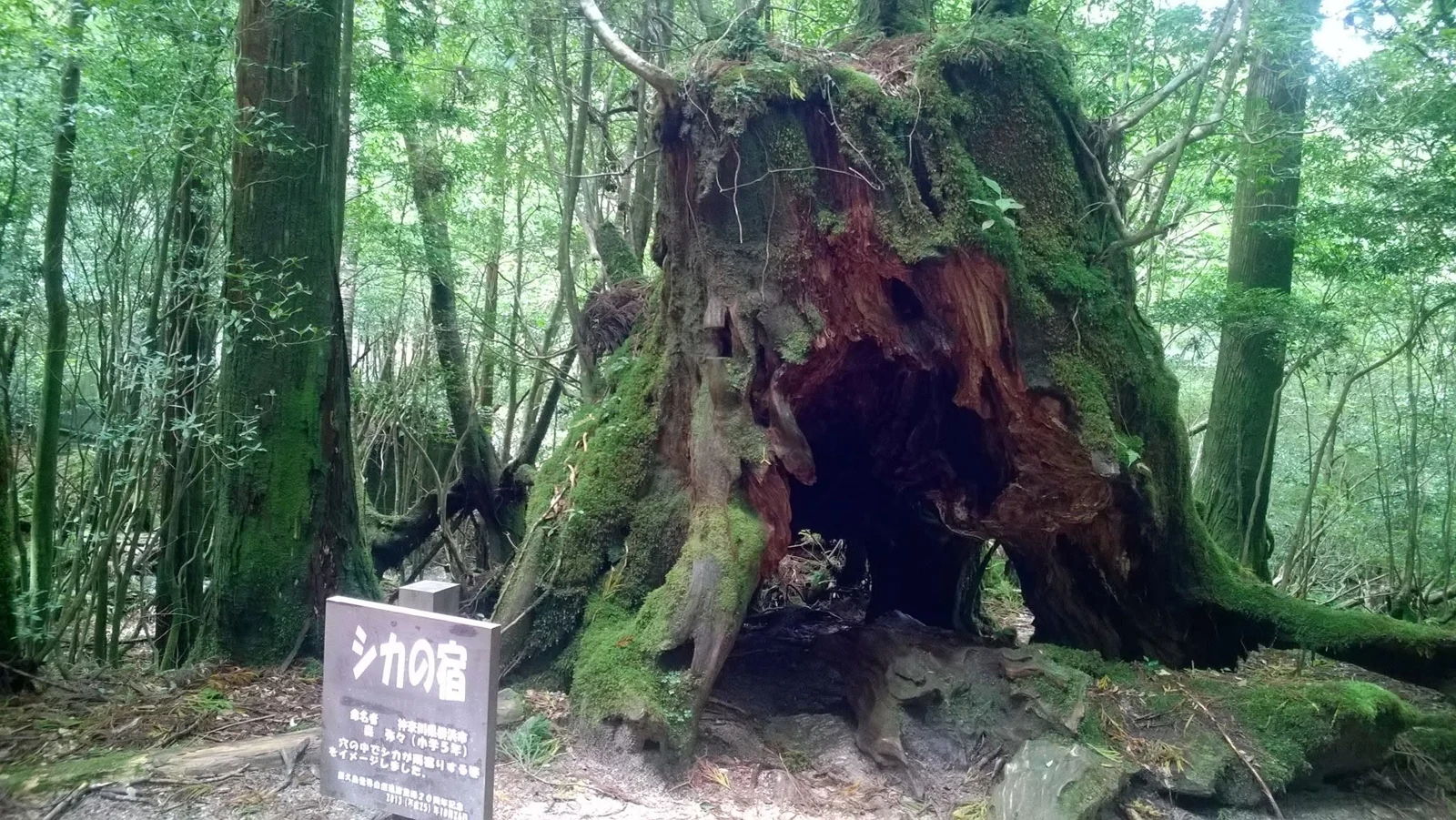
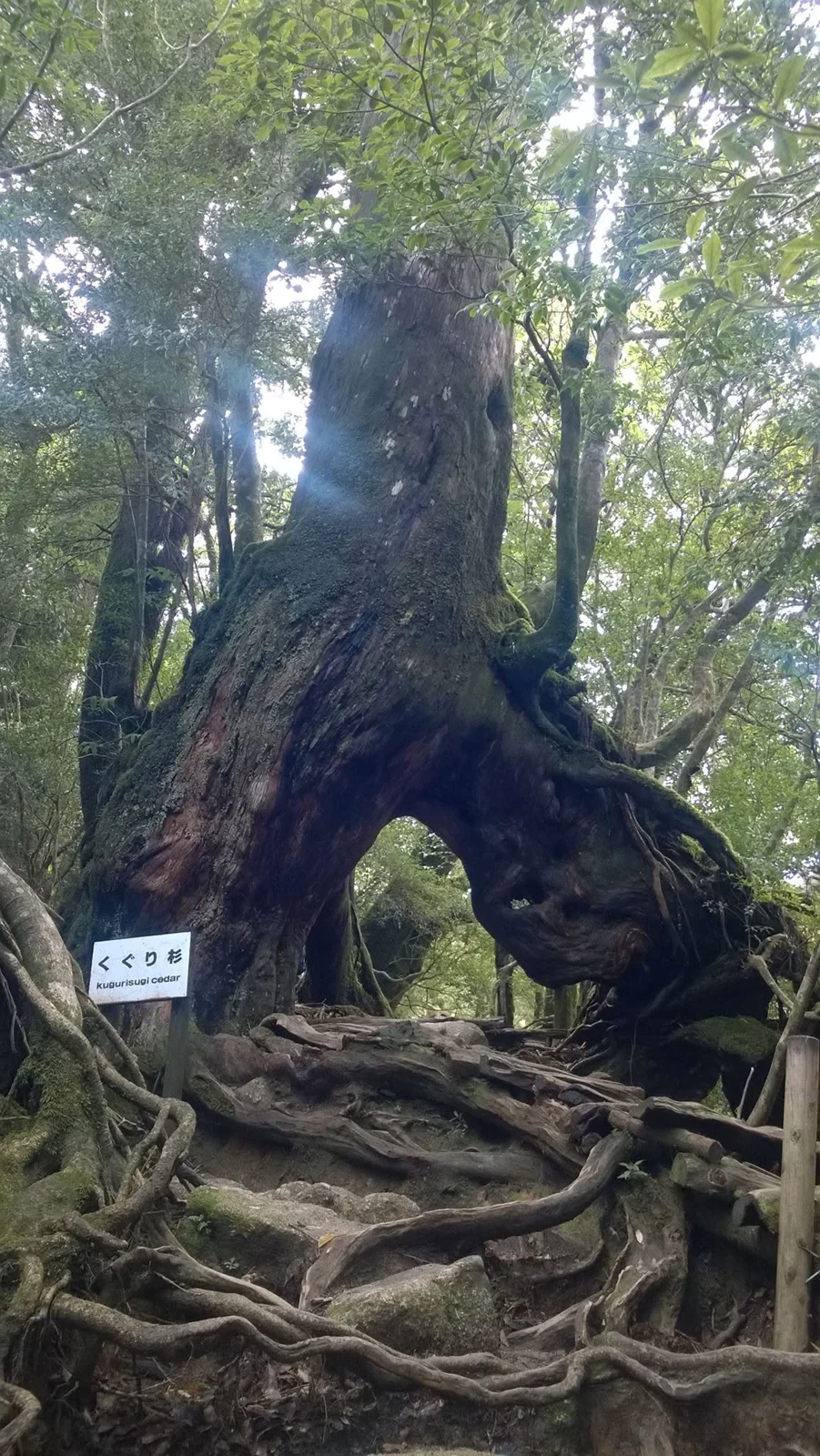


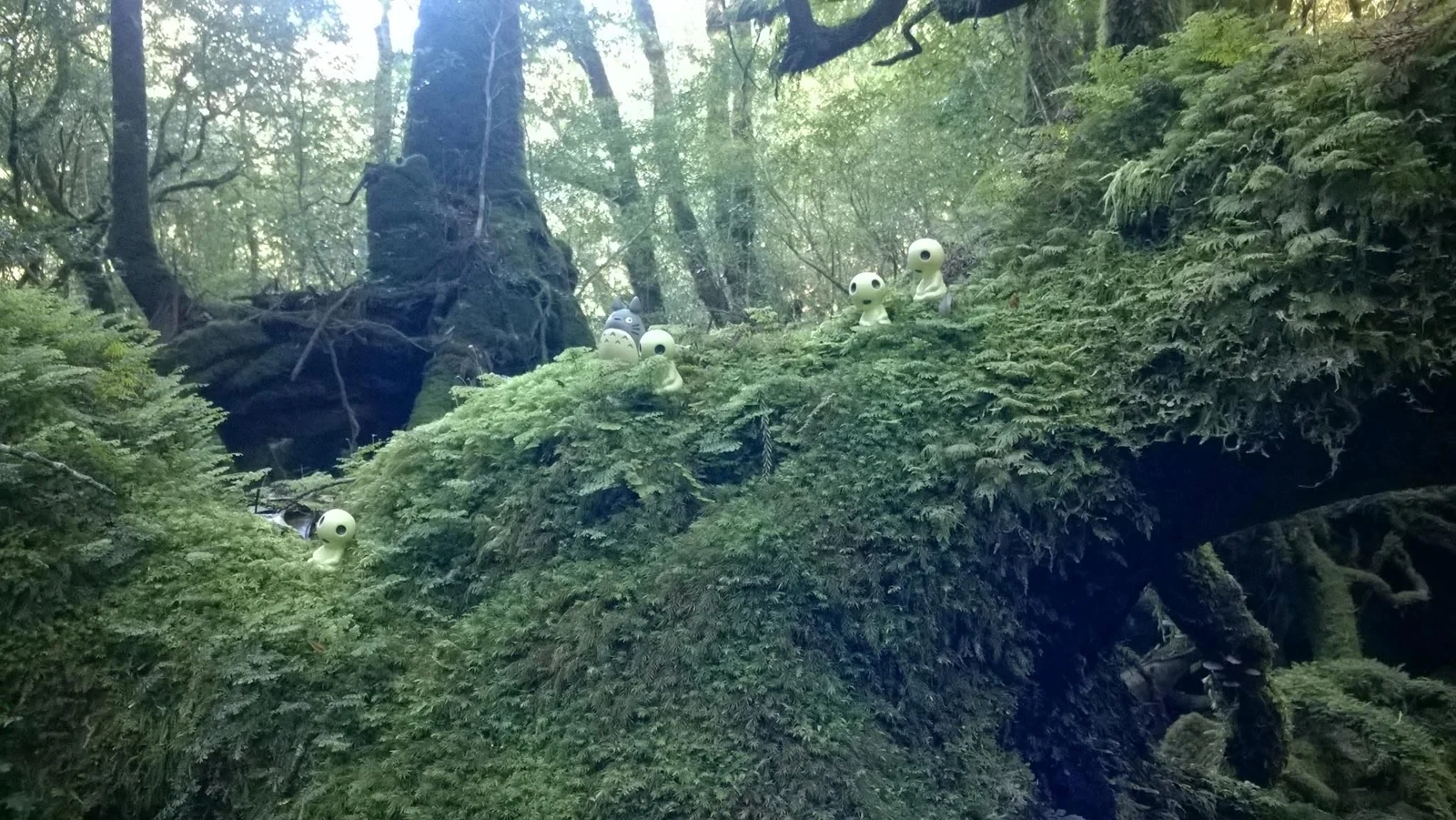
撮影:naoco / Photos : naoco
To keep in mind
This article reproduces neither the full lyrics nor a complete translation. The vocabulary and grammar explanations are general and are not an official interpretation of the song. There is no single way to understand a song. The rights to the music and the video belong to their rights holders.
Learn the grammar
French grammar
Learn sentence patterns and usage from the article’s own sentences.
01The present indicative
est / sont + attribute (noun, adjective, prepositional phrase)
« Chikyūgi » est une chanson disponible en streaming depuis le 17 juillet 2023.Key pointsÊtre in the present is est for a singular subject and sont for a plural one. It describes nature, state or place (“is”, “is located”). If what follows (the attribute) is a noun, adjective or prepositional phrase, it is not a passive. If a past participle follows, it is a passive (est annoncé). Headlines and summaries often use the present to describe the current situation.
02The passé composé
present of avoir + past participle
Il raconte ensuite qu’au fil des saisons il a croisé des gens et, parfois, blessé quelqu’un.Key pointsThe passé composé is the most common past tense, used for “did” and “has done” — actions completed in the past. It is formed with the auxiliary avoir (a / ont…) in the present + a past participle. Past participles of -er verbs end in -é (annoncer → annoncé); learn the irregular ones (faire → fait, prendre → pris, voir → vu). In the negative, ne … pas wraps the auxiliary (n’a pas annoncé). In the news it reports facts that have already happened, such as “announced” or “voted”.
03The imparfait
stem (nous form of the present) + -ais / -ait / -ions / -iez / -aient
Dans la seconde moitié, le narrateur dit que la personne qu’il aimait est partie vers un endroit que personne ne connaît.Key pointsThe imparfait describes states, background, habits and actions in progress in the past (il était, elle avait, ils pensaient). Take the nous form of the present, drop -ons, and add -ais / -ais / -ait / -ions / -iez / -aient. If the passé composé gives “the event itself”, the imparfait paints “the situation at the time”.
04The futur simple
stem (infinitive) + -ai / -as / -a / -ons / -ez / -ont
Il continuera à dessiner l’une comme l’autre, en accueillant les deux.Key pointsThe futur simple means “will do” or “is planned to”. Add -ai, -as, -a, -ons, -ez, -ont to the infinitive (participer → il participera). Watch the irregular stems: être → ser-, avoir → aur-, aller → ir-, faire → fer-, pouvoir → pourr-, voir → verr-. In the news it is used for fixed plans and outlooks.
05The present subjunctive
il faut que / pour que / bien que + subject + subjunctive
S’il peut continuer à marcher, pense-t-il, c’est parce qu’il souhaite que cela continue.Key pointsThe subjunctive expresses wish, need, purpose, doubt and feeling rather than “fact”. It is used inside a clause with que. Triggers: il faut que (must), pour que / afin que (so that), bien que / quoique (although), avant que (before), souhaiter que, vouloir que and others. Formation: stem of the ils present minus -ent + -e, -es, -e, -ions, -iez, -ent. Irregular: être → soit, avoir → ait, aller → aille, faire → fasse, pouvoir → puisse, savoir → sache.
06The passive voice in the present
être (est / sont) + past participle (+ par / de)
En ouvrant grand une porte pour entrer dans un monde inconnu, il fait aussi penser à une curiosité ardente, qui veut mettre au jour ce qui était caché.Key pointsThe passive means “is done” or “is being done”. It is formed with être + past participle, which agrees with the subject in gender and number (la mesure est adoptée / les mesures sont adoptées). The agent is introduced by par (or de). In the news it is common when the event, rather than the actor, is the focus (est prévu / est annoncé / est connu).
07The passive in the passé composé
a / ont été + past participle
Le clip a été tourné à Yakushima et réalisé par Okuyama Hiroshi.Key pointsThe past passive means “was done”. Its form is present of avoir + été (past participle of être) + past participle. Été does not change, but the last participle agrees with the subject in gender and number (la loi a été votée / les textes ont été votés). It is frequent in news reporting results such as votes, decisions and announcements.
08The gerund
en + present participle (-ant)
Le clip officiel est à voir plus bas ; lisez les paroles sur les services officiels, en écoutant la chanson.Key pointsThe gerund means “while doing”, “by doing” or “when doing”. Its form is en + present participle (-ant). Take the nous form of the present, drop -ons and add -ant (faire → faisant). The subject is normally that of the main clause. It shows things happening at the same time, or the means.
09Pronominal verbs
se / s’ + verb
Plus on approche de ce qui est lumineux, plus ce qui est sombre se précise ; c’est pourquoi le ciel paraît encore plus lointain.Key pointsA pronominal verb is used with a reflexive pronoun (me, te, se, nous, vous) before the verb. It can mean “do to oneself”, “be done” or “do to each other”. In the news, se traduire (to result in), se tenir (to take place), s’agir de (to be a matter of) and se diffuser (to spread) are frequent. The pronoun changes with the subject (il se tient / ils se tiennent / je me souviens).
10Negation and its scope
ne / n’ … pas · ne … plus
Dans la chanson, le geste de « faire tourner » le globe sert de comparaison à l’élan qui pousse à penser à un monde lointain ou à quelqu’un qu’on ne peut plus voir.Key pointsNormally ne and pas wrap the verb. Before a vowel, ne becomes n’. Check which part of the sentence the negation covers. Ne … plus means “no longer”.
11Citing a source with selon
selon + noun / organisation
Selon la presse, c’est l’écoute de « Paprika » par Miyazaki qui est à l’origine du projet, et la commande remonte à environ quatre ans.Key pointsSelon means “according to”. Put a person or organisation after it as the source. It separates facts the writer checked directly from what another body or report said. Citing a source does not turn a forecast into an accomplished fact.
12Pouvoir: ability and possibility
peut / peuvent / pourrait + infinitive
S’il peut continuer à marcher, pense-t-il, c’est parce qu’il souhaite que cela continue.Key pointsPut a base-form verb after pouvoir. Peut means “can” or “may”; the conditional pourrait gives a more reserved possibility, “might”. It does not necessarily mean implementation is settled.
13Purpose with pour
pour + infinitive
Nous utilisons « Chikyūgi » (Spinning Globe) de Kenshi Yonezu pour apprendre le vocabulaire et les expressions du japonais.Key pointsThis is the purpose, “in order to…”. Put the base form of a verb after pour. The purpose stated here is separate from whether the effect was actually achieved.
14The subject relative pronoun qui
noun + qui + verb
À la place, nous expliquons en nos propres mots l’histoire de la chanson, le sens des mots qui y apparaissent et la grammaire.Key pointsQui continues a description of the person or thing just mentioned (“the one that does…”). Because qui is itself the subject of the next verb, do not repeat the subject. The verb agrees with the noun qui refers to.
Japanese grammar
Understand the structure and usage from the text.
01Citing a source: によると
noun + によると
報道によると、宮崎監督が「パプリカ」を聴いたことがきっかけで、依頼は、約4年前にさかのぼります。Key pointsAs in “LCPによると”, it shows where the information comes from. What that source reported follows. It is used differently from “私にとって”, which gives one’s own opinion.
02Polite negation and plain form
〜ではありません / 〜ではない
ことばの意味と文法は、一般的な説明で、歌の公式な解釈ではありません。Key pointsThey negate a noun and similar content. “ではありません” is the polite form and “ではない” the plain form. “成立ではありません” shows that it cannot be said to have been concluded.
03Cause or purpose with ため
〜ため / 〜ために
歌詞の全文と全文の翻訳は、著作権のため、ここには載せません。Key pointsため is used for both reason and purpose. “成立ではないため” is a reason and “運転手を守るため” a purpose. Decide from the whole sentence whether what precedes is a cause or a goal.
04Giving examples with など
noun / expression + など
歌詞は、公式の配信サービスなどで、見ながら読んでください。Key points“暴言など” gives “abusive language” as one example. It is not necessarily a closed list of only the things named. It also helps when reading the scope of a news story.
05The polite past ました
verb stem (連用形) + ました
宮崎駿監督のアニメ映画『君たちはどう生きるか』の主題歌になりました。Key pointsIn “発表しました”, ました makes a verb polite past. The negative is “ませんでした”. Read the actual date together with the date and time in the text.
06Treating a clause like a noun with こと
plain-form sentence + こと + particle
「地球儀(ちきゅうぎ)」は、地球の形をした模型で、回しながら、世界のいろいろな国や海を見ることができます。Key points“〜すること” treats an action or content like a noun. The particle after it (が・を・は…) shows its role in the sentence. “ことができる” is a fixed combination meaning “can”.