Google opens TorchTPU: PyTorch on its TPU chips, after Amazon, against Nvidia’s lead
Checked on
Published on
Published on 20 October, in the same direction as Amazon’s TorchNeuron announced the day before.
In this article
The essentials
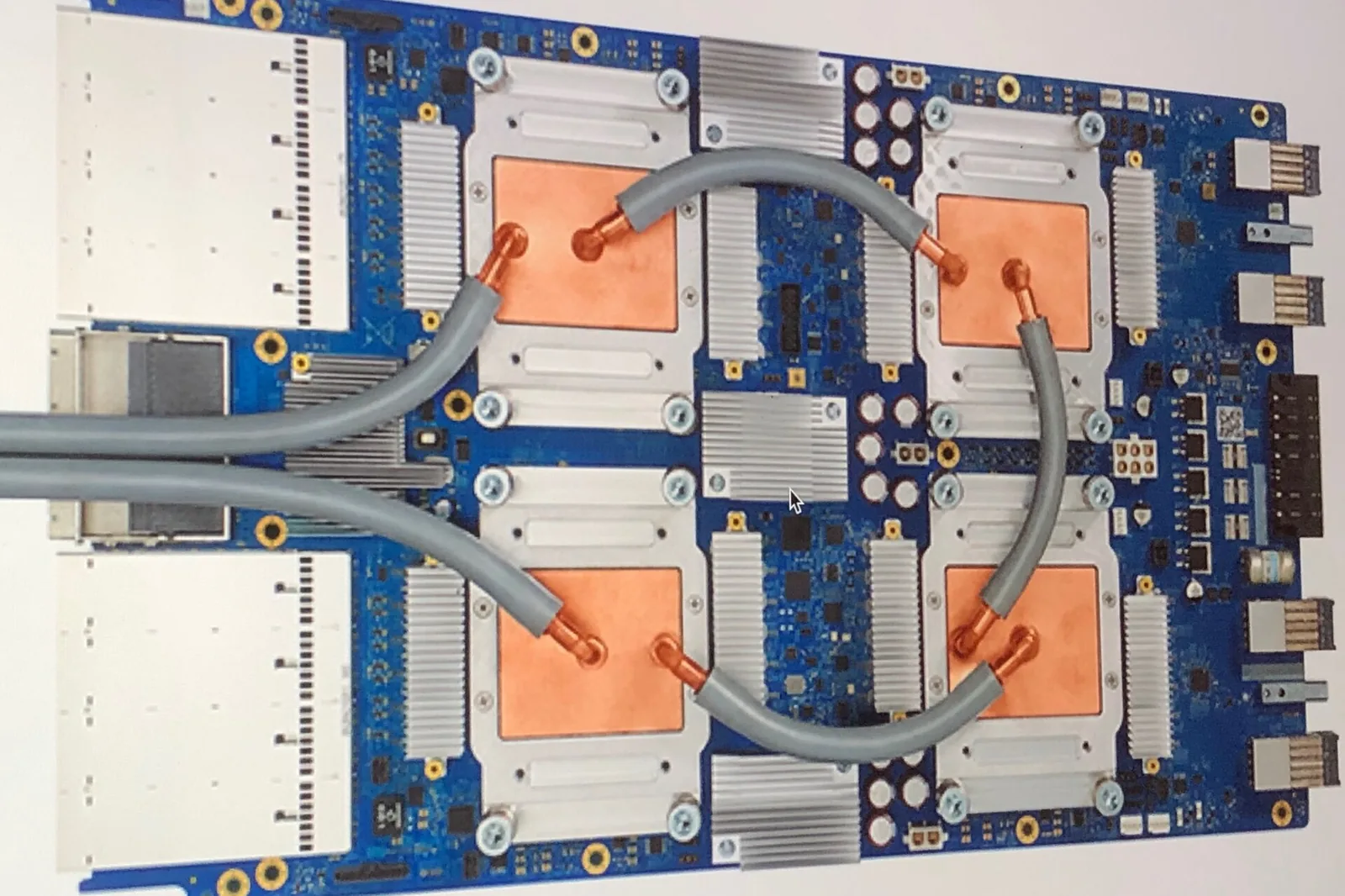
Google published TorchTPU on 20 October, an open-source version of PyTorch for its TPU chips. According to Google, existing applications can be migrated with a simple configuration change, without rewriting.
Context
PyTorch is the most widely used tool for building AI (“more than 85% of applications according to some”, cites TechCrunch). Originally designed for Nvidia chips, it was hard to port to other hardware, which partly explains Nvidia’s strength. Amazon had announced TorchNeuron for its own chips the day before.
What is announced with it
Google says it worked with Meta, Hugging Face, Inferact (vLLM), RadixArk (SGLang) and others to check compatibility. A new tool, the “TPU agent suite”, helps migrate applications to Google Cloud and fixes errors automatically. LiteRT, for phones and computers, is updated for PyTorch applications.
Experts’ views
Holger Mueller (Constellation Research) considers that rebuilding PyTorch makes porting to Google’s and Amazon’s platforms easier, but the erosion of Nvidia’s position remains uncertain. SiliconANGLE writes that convincing developers to leave Nvidia GPUs will take more than this launch.
What is PyTorch?
PyTorch was created by Meta in 2016, opened in 2022 and entrusted to the Linux Foundation. Designed for Nvidia chips, it was hard to port elsewhere. Amazon also contributed to PyTorch’s upstream code to make it less dependent on Nvidia; according to SiliconANGLE, Google did not do so this time.
To keep in mind
The claim of a simple configuration change comes from Google. Real performance and the migration effort remain to be verified.
Learn the grammar
French grammar
Learn sentence patterns and usage from the article’s own sentences.
01The present indicative
est / sont + attribute (noun, adjective, prepositional phrase)
PyTorch est l’outil le plus utilisé pour créer des IA (« plus de 85 % des applications selon certains », cite TechCrunch).Key pointsÊtre in the present is est for a singular subject and sont for a plural one. It describes nature, state or place (“is”, “is located”). If what follows (the attribute) is a noun, adjective or prepositional phrase, it is not a passive. If a past participle follows, it is a passive (est annoncé). Headlines and summaries often use the present to describe the current situation.
02The passé composé
present of avoir + past participle
Google a publié le 20 octobre TorchTPU, une version de PyTorch en open source pour ses puces TPU.Key pointsThe passé composé is the most common past tense, used for “did” and “has done” — actions completed in the past. It is formed with the auxiliary avoir (a / ont…) in the present + a past participle. Past participles of -er verbs end in -é (annoncer → annoncé); learn the irregular ones (faire → fait, prendre → pris, voir → vu). In the negative, ne … pas wraps the auxiliary (n’a pas annoncé). In the news it reports facts that have already happened, such as “announced” or “voted”.
03The imparfait
stem (nous form of the present) + -ais / -ait / -ions / -iez / -aient
Conçu à l’origine pour les puces Nvidia, il était difficile à porter sur d’autres matériels, ce qui explique en partie la force de Nvidia.Key pointsThe imparfait describes states, background, habits and actions in progress in the past (il était, elle avait, ils pensaient). Take the nous form of the present, drop -ons, and add -ais / -ais / -ait / -ions / -iez / -aient. If the passé composé gives “the event itself”, the imparfait paints “the situation at the time”.
04The futur simple
stem (infinitive) + -ai / -as / -a / -ons / -ez / -ont
SiliconANGLE écrit que convaincre les développeurs de quitter les GPU Nvidia demandera plus que ce lancement.Key pointsThe futur simple means “will do” or “is planned to”. Add -ai, -as, -a, -ons, -ez, -ont to the infinitive (participer → il participera). Watch the irregular stems: être → ser-, avoir → aur-, aller → ir-, faire → fer-, pouvoir → pourr-, voir → verr-. In the news it is used for fixed plans and outlooks.
05The passive voice in the present
être (est / sont) + past participle (+ par / de)
LiteRT, pour téléphones et ordinateurs, est mis à jour pour les applications PyTorch.Key pointsThe passive means “is done” or “is being done”. It is formed with être + past participle, which agrees with the subject in gender and number (la mesure est adoptée / les mesures sont adoptées). The agent is introduced by par (or de). In the news it is common when the event, rather than the actor, is the focus (est prévu / est annoncé / est connu).
06The passive in the passé composé
a / ont été + past participle
PyTorch a été créé par Meta en 2016, ouvert en 2022 et confié à la Linux Foundation.Key pointsThe past passive means “was done”. Its form is present of avoir + été (past participle of être) + past participle. Été does not change, but the last participle agrees with the subject in gender and number (la loi a été votée / les textes ont été votés). It is frequent in news reporting results such as votes, decisions and announcements.
07Negation and its scope
ne / n’ … pas · ne … plus
Amazon a aussi contribué au code amont de PyTorch pour le rendre moins dépendant de Nvidia ; selon SiliconANGLE, Google ne l’a pas fait cette fois.Key pointsNormally ne and pas wrap the verb. Before a vowel, ne becomes n’. Check which part of the sentence the negation covers. Ne … plus means “no longer”.
08Citing a source with selon
selon + noun / organisation
Selon Google, les applications existantes peuvent être migrées par un simple changement de configuration, sans réécriture.Key pointsSelon means “according to”. Put a person or organisation after it as the source. It separates facts the writer checked directly from what another body or report said. Citing a source does not turn a forecast into an accomplished fact.
09Pouvoir: ability and possibility
peut / peuvent / pourrait + infinitive
Selon Google, les applications existantes peuvent être migrées par un simple changement de configuration, sans réécriture.Key pointsPut a base-form verb after pouvoir. Peut means “can” or “may”; the conditional pourrait gives a more reserved possibility, “might”. It does not necessarily mean implementation is settled.
10Purpose with pour
pour + infinitive
PyTorch est l’outil le plus utilisé pour créer des IA (« plus de 85 % des applications selon certains », cite TechCrunch).Key pointsThis is the purpose, “in order to…”. Put the base form of a verb after pour. The purpose stated here is separate from whether the effect was actually achieved.
Japanese grammar
Understand the structure and usage from the text.
01Citing a source: によると
noun + によると
アマゾンは、PyTorchの本体にも、NVIDIAに頼らない形に近づける変更を送りましたが、SiliconANGLEによると、グーグルは、今回それをしていません。Key pointsAs in “LCPによると”, it shows where the information comes from. What that source reported follows. It is used differently from “私にとって”, which gives one’s own opinion.
02Cause or purpose with ため
〜ため / 〜ために
PyTorchは、AIを作るために広く使われているツールで、「AIアプリの約85%が使っている」という見方もあります(TechCrunchが引用した情報)。Key pointsため is used for both reason and purpose. “成立ではないため” is a reason and “運転手を守るため” a purpose. Decide from the whole sentence whether what precedes is a cause or a goal.
03Giving examples with など
noun / expression + など
グーグルは、Meta、Hugging Face、vLLMを作るInferact、SGLangを作るRadixArkなどと協力して、互換性を確認したといいます。Key points“暴言など” gives “abusive language” as one example. It is not necessarily a closed list of only the things named. It also helps when reading the scope of a news story.
04The polite past ました
verb stem (連用形) + ました
20日に公開されました。Key pointsIn “発表しました”, ました makes a verb polite past. The negative is “ませんでした”. Read the actual date together with the date and time in the text.
05Quoting with と: content and report
plain-form sentence + と + verbe de parole (報じる, 説明する…)
すでにあるプログラムを、書き直さずに、設定を少し変えるだけで、移せるとしています。Key pointsと takes the content that is reported or explained. In “改定する方針だと報じました”, “改定する方針だ” is what the report said. Separating the content from who said it and how makes long sentences easier to read.
06Linking actions with the て-form
verb て-form + next expression
それが、NVIDIAが強い理由の1つとされています。Key pointsThe て-form links actions in a series, in order or as a reason. In “確認して、出発する” the relation is judged from the content. In “〜ている” it can show an action in progress or a continuing state.