Toyota and Waymo: bZ4X robotaxis in Japan from 2027
Checked on
Published on
- Toyota and Waymo plan an initial robotaxi service using the bZ4X in Japan in 2027.
- The vehicles will be built at Toyota’s Takaoka plant in Aichi Prefecture.
- The number of vehicles, fares and cities could not be verified here.
In this article
The announcement
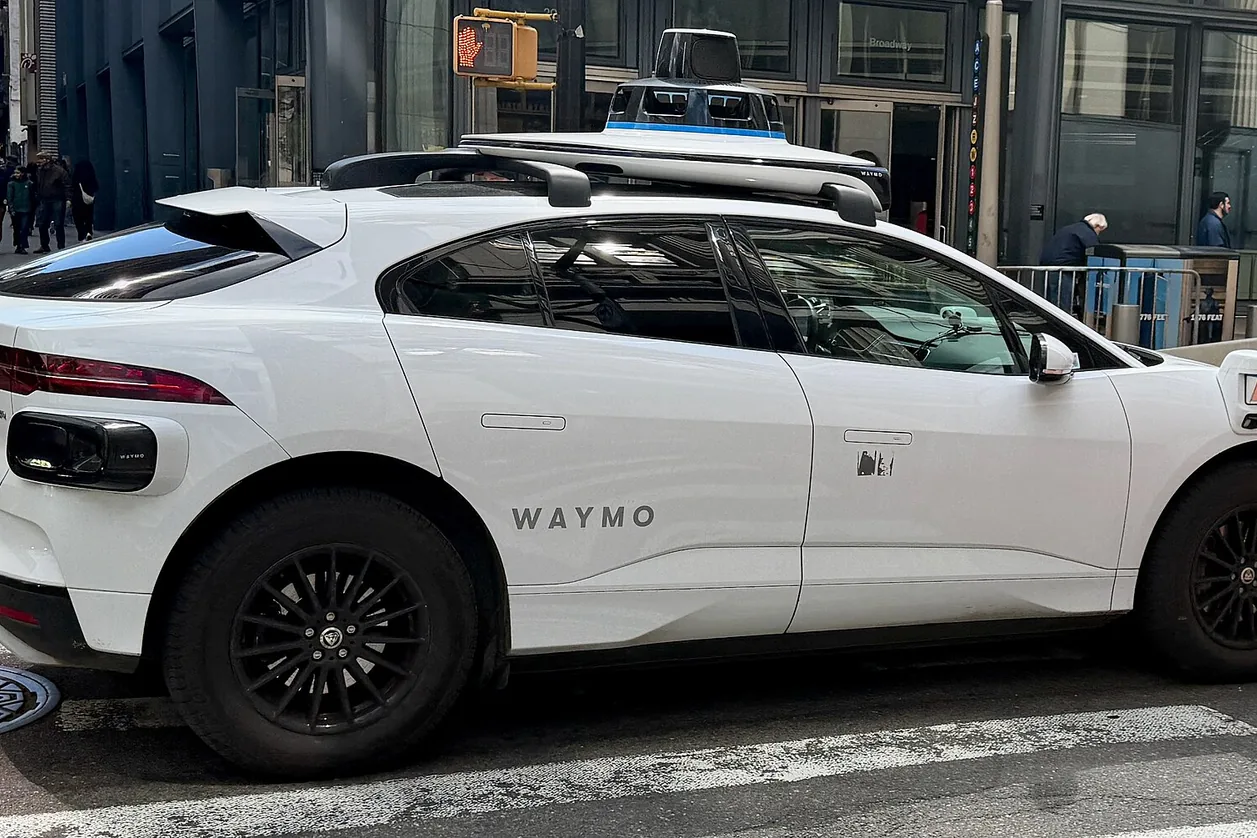
According to Toyota, Toyota and Waymo are moving to the next stage of their cooperation on autonomous driving. Waymo’s robotaxis will use Toyota’s bZ4X electric vehicle. An initial service, including trials and validation, is planned in Japan in 2027.
Where will they be built?
The vehicles will be built at Toyota’s Takaoka plant, in Toyota City (Aichi Prefecture). Both the assembly of the base vehicle and the installation of Waymo’s self-driving hardware will be carried out there.
Background
According to GIGAZINE, the two groups signed an agreement in principle on a strategic partnership in April 2025. Waymo has been testing Jaguar I-PACE vehicles in Japan since 2025, managed by Nihon Kotsu. A gradual rollout, notably in the United Kingdom, is mentioned.
What does level 4 mean?
Level 4 refers to autonomous driving in which the system handles all of the driving under defined conditions. There may be no driver, but the service remains limited to those conditions (weather, roads, etc.). The number of vehicles, fares and cities could not be verified.
Learn the grammar
French grammar
Learn sentence patterns and usage from the article’s own sentences.
01The present indicative
est / sont + attribute (noun, adjective, prepositional phrase)
Une exploitation initiale, incluant des essais et validations, est prévue au Japon en 2027.Key pointsÊtre in the present is est for a singular subject and sont for a plural one. It describes nature, state or place (“is”, “is located”). If what follows (the attribute) is a noun, adjective or prepositional phrase, it is not a passive. If a past participle follows, it is a passive (est annoncé). Headlines and summaries often use the present to describe the current situation.
02The passé composé
present of avoir + past participle
Le nombre de véhicules, les tarifs et les villes n’ont pas pu être vérifiés.Key pointsThe passé composé is the most common past tense, used for “did” and “has done” — actions completed in the past. It is formed with the auxiliary avoir (a / ont…) in the present + a past participle. Past participles of -er verbs end in -é (annoncer → annoncé); learn the irregular ones (faire → fait, prendre → pris, voir → vu). In the negative, ne … pas wraps the auxiliary (n’a pas annoncé). In the news it reports facts that have already happened, such as “announced” or “voted”.
03The imparfait
stem (nous form of the present) + -ais / -ait / -ions / -iez / -aient
D’après GIGAZINE, les deux groupes avaient signé en avril 2025 un accord de principe de partenariat stratégique.Key pointsThe imparfait describes states, background, habits and actions in progress in the past (il était, elle avait, ils pensaient). Take the nous form of the present, drop -ons, and add -ais / -ais / -ait / -ions / -iez / -aient. If the passé composé gives “the event itself”, the imparfait paints “the situation at the time”.
04The futur simple
stem (infinitive) + -ai / -as / -a / -ons / -ez / -ont
Les robotaxis de Waymo utiliseront le véhicule électrique bZ4X de Toyota.Key pointsThe futur simple means “will do” or “is planned to”. Add -ai, -as, -a, -ons, -ez, -ont to the infinitive (participer → il participera). Watch the irregular stems: être → ser-, avoir → aur-, aller → ir-, faire → fer-, pouvoir → pourr-, voir → verr-. In the news it is used for fixed plans and outlooks.
05The passive voice in the present
être (est / sont) + past participle (+ par / de)
Le nombre de véhicules et les villes concernées ne sont pas précisés dans les sources consultées.Key pointsThe passive means “is done” or “is being done”. It is formed with être + past participle, which agrees with the subject in gender and number (la mesure est adoptée / les mesures sont adoptées). The agent is introduced by par (or de). In the news it is common when the event, rather than the actor, is the focus (est prévu / est annoncé / est connu).
06Negation and its scope
ne / n’ … pas · ne … plus
Le nombre de véhicules et les villes concernées ne sont pas précisés dans les sources consultées.Key pointsNormally ne and pas wrap the verb. Before a vowel, ne becomes n’. Check which part of the sentence the negation covers. Ne … plus means “no longer”.
07Citing a source with selon
selon + noun / organisation
Selon Toyota, Toyota et Waymo passent à l’étape suivante de leur coopération dans la conduite autonome.Key pointsSelon means “according to”. Put a person or organisation after it as the source. It separates facts the writer checked directly from what another body or report said. Citing a source does not turn a forecast into an accomplished fact.
08Pouvoir: ability and possibility
peut / peuvent / pourrait + infinitive
Il peut ne pas y avoir de conducteur, mais le service reste limité à ces conditions (météo, routes, etc.).Key pointsPut a base-form verb after pouvoir. Peut means “can” or “may”; the conditional pourrait gives a more reserved possibility, “might”. It does not necessarily mean implementation is settled.
09Expressing a plan or a deadline
être prévu / prévoir / être envisagé
Une exploitation initiale, incluant des essais et validations, est prévue au Japon en 2027.Key pointsPrévoir means “to plan, to expect”. Être prévu means “to be scheduled” and être envisagé means “to be under consideration”. In the news, read them separately from expressions that describe events that have already happened. They do not say that the event has already taken place.
10Dates and their prepositions
le + 日付 / du … au …
Annonce du 30 octobre.Key pointsLe 15 octobre means “on 15 October”. Distinguish the le before a date from the le that marks a weekly habit like a weekday. Du is de + le and au is à + le, so decide the meaning from the verb and period expressions around them. Their role depends on the group: a range of dates, the date of a bulletin or another complement.
Japanese grammar
Understand the structure and usage from the text.
01Citing a source: によると
noun + によると
トヨタ自動車の発表によると、トヨタとWaymoは自動運転分野の協業を次の段階へ進めます。Key pointsAs in “LCPによると”, it shows where the information comes from. What that source reported follows. It is used differently from “私にとって”, which gives one’s own opinion.
02Giving examples with など
noun / expression + など
その後、イギリスなどにも順次広げる予定と伝えられています。Key points“暴言など” gives “abusive language” as one example. It is not necessarily a closed list of only the things named. It also helps when reading the scope of a news story.
03The polite past ました
verb stem (連用形) + ました
GIGAZINEによると、両社は2025年4月に自動運転の開発・普及で戦略的な提携に基本合意しました。Key pointsIn “発表しました”, ました makes a verb polite past. The negative is “ませんでした”. Read the actual date together with the date and time in the text.
04Quoting with と: content and report
plain-form sentence + と + verbe de parole (報じる, 説明する…)
ベースの車両の組み立てから、Waymoの自動運転用ハードウェアの取り付けまでを、同じ工場で行うとされています。Key pointsと takes the content that is reported or explained. In “改定する方針だと報じました”, “改定する方針だ” is what the report said. Separating the content from who said it and how makes long sentences easier to read.
05Possibility in Japanese: できる・られる
verb potential form / 〜ことができる
台数や走る都市は発表で示されておらず、ここでは確認できませんでした。Key pointsできる is the basic verb for ability. The potential form of 受ける is 受けられる. The same られる can also be passive or honorific, so decide from the meaning of the sentence.
06Linking actions with the て-form
verb て-form + next expression
Waymoは2025年から、ジャガーI-PACEを使って日本で試験運行をしていて、車両の管理は日本交通が担当しているとされています。Key pointsThe て-form links actions in a series, in order or as a reason. In “確認して、出発する” the relation is judged from the content. In “〜ている” it can show an action in progress or a continuing state.