Bordeaux: left bank or right bank? Map, grapes and styles
Place the Médoc and Graves on the left, Saint-Émilion and Pomerol on the right. Rivers, grape varieties and reading the label: useful pointers to get
Edited by EMA
Checked on: · Source : JAPANITIES / CIVB and classification bodies
The answer in a few words
The two banks are geographical pointers, not a hierarchy. Cabernet sauvignon often plays a major role on the left, merlot on the right. Blends, producers, plots and vintages prevent them from being two fixed tastes.
Map: three water landmarks
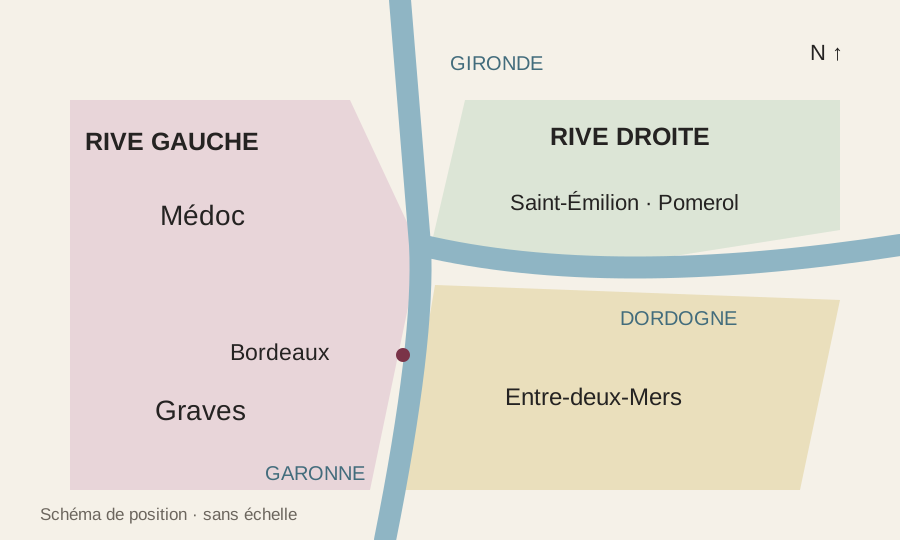
The left-bank vineyards lie west of the Garonne and the Gironde estuary. The Libournais lies north of the Dordogne. The Entre-deux-Mers fills the space between the Garonne and the Dordogne. The diagram explains the positions, without showing distances or an itinerary.
Quick comparison
Read the appellation first, then the grape varieties. Neither soils nor styles are uniform across a whole bank.
| Pointer | Left bank | Right bank |
|---|---|---|
| Reference appellations | Médoc, Graves / Pessac-Léognan | Saint-Émilion, Pomerol |
| Reference grapes | Cabernet sauvignon | Merlot, cabernet franc |
| Soils often cited | Gravel; also clay, sand and limestone | Clay and limestone; also gravel and sand |
| Tendencies of the reds | Structure and marked tannins are common | Roundness and fruit are often emphasised |
A look at Saint-Émilion
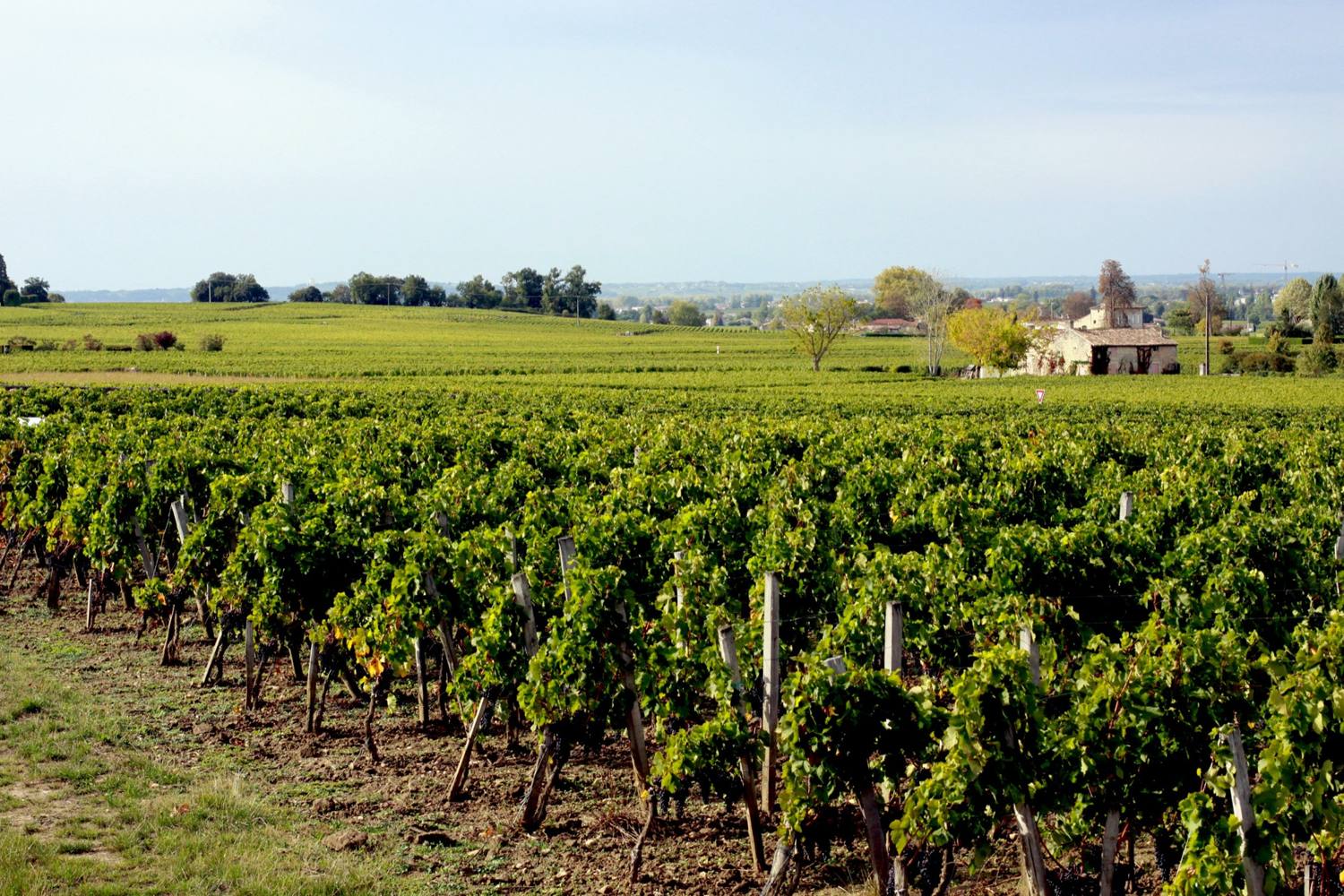
Merlot can give supple wines as well as powerful wines for ageing. Right bank therefore does not always mean light. The appellation and the producer remain useful.
Three steps to choose
Spot the appellation, place it on a bank, then tell the wine merchant the style you want. This method helps you ask questions; it does not by itself let you deduce the price or maturity of a bottle.
Sources and checks
Checked on 16 October 2026. JAPANITIES synthesis of official resources. The styles described are tendencies, not a quality ranking.