17 October mobilisation: against the cost of living, different figures from organisers and government
Checked on
Published on
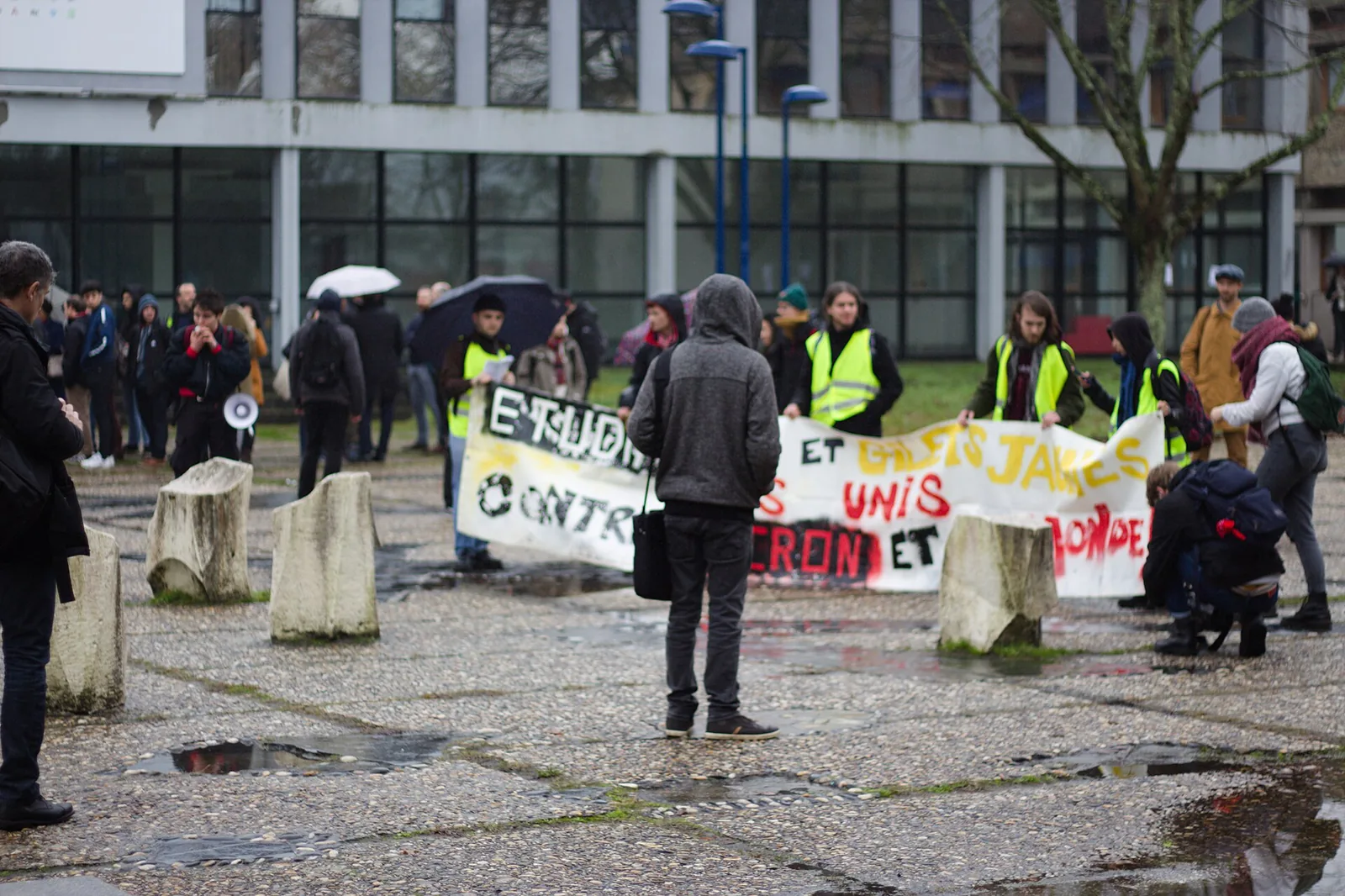
Starting on social media, the day targets the cost of living. The real number of participants is not known at this stage.
In this article
What is it about?
According to Euronews and France 24, this Saturday 17 October is a national day of action against rising fuel, energy and food prices. It spread on social media from early September, starting from a viral TikTok video about pump prices.
Who is calling for it?
According to Euronews, the CGT, Solidaires, the VTC (ride-hailing drivers’) inter-union, the Confédération paysanne, the organisers of the climate marches, the Communist Party, La France insoumise and high-school and student organisations support the call. The FNSEA does not take part. According to France 24, the CGT will take part wherever conditions allow, but is focusing on the 5 November strike day.
What scale?
A collaborative map backed by Gilets jaunes collectives lists more than 1,300 actions, including more than 600 demonstrations. Interior Minister Laurent Nuñez expects about 250 and 80 demonstrations. These figures rest on different methods and are not the real number of participants. The day coincides with the start of the All Saints’ school holidays: France 24 thinks it hard to know whether the social-media momentum will translate into real mobilisation.
Where? What to know?
In Paris, a gathering is called for 2 pm at place de la République. In Grenoble, meet at 1:30 pm at place Victor-Hugo; in Rennes, at 2 pm at place de la République. In Bordeaux, a gathering on cours Victor-Hugo appears on a participatory map, with no confirmed time. The Interior Ministry is strengthening the security arrangements and promises a “firm and immediate” response in case of violence or prolonged blockades. Places and times may change: check the latest information from organisers, the prefecture and transport operators.
Learn the grammar
French grammar
Learn sentence patterns and usage from the article’s own sentences.
01The present indicative
est / sont + attribute (noun, adjective, prepositional phrase)
Selon Euronews et France 24, ce samedi 17 octobre est une journée d’action nationale contre la hausse des prix du carburant, de l’énergie et de l’alimentation.Key pointsÊtre in the present is est for a singular subject and sont for a plural one. It describes nature, state or place (“is”, “is located”). If what follows (the attribute) is a noun, adjective or prepositional phrase, it is not a passive. If a past participle follows, it is a passive (est annoncé). Headlines and summaries often use the present to describe the current situation.
02The passé composé of pronominal verbs
se + present of être + past participle
Elle s’est diffusée sur les réseaux sociaux depuis début septembre, à partir d’une vidéo TikTok virale sur le prix à la pompe.Key pointsThe passé composé of a pronominal verb (se + verb) always uses être as auxiliary (il s’est diffusé / elles se sont réunies). Se changes with the subject: me, te, se, nous, vous. The past participle usually agrees with the subject in gender and number.
03The futur simple
stem (infinitive) + -ai / -as / -a / -ons / -ez / -ont
Selon France 24, la CGT participera partout où les conditions seront réunies, mais se concentre sur la journée de grève du 5 novembre.Key pointsThe futur simple means “will do” or “is planned to”. Add -ai, -as, -a, -ons, -ez, -ont to the infinitive (participer → il participera). Watch the irregular stems: être → ser-, avoir → aur-, aller → ir-, faire → fer-, pouvoir → pourr-, voir → verr-. In the news it is used for fixed plans and outlooks.
04The passive voice in the present
être (est / sont) + past participle (+ par / de)
Le nombre réel de participants n’est pas connu à ce stade.Key pointsThe passive means “is done” or “is being done”. It is formed with être + past participle, which agrees with the subject in gender and number (la mesure est adoptée / les mesures sont adoptées). The agent is introduced by par (or de). In the news it is common when the event, rather than the actor, is the focus (est prévu / est annoncé / est connu).
05The imperative
present vous form (-ez) / nous (-ons) / tu
Lieux et horaires peuvent changer : consultez les dernières informations des organisateurs, de la préfecture et des transporteurs.Key pointsThe imperative expresses commands, requests and advice. It has no subject: the sentence starts with the verb (Consultez les informations.). The vous form ends in -ez, nous in -ons (Restons prudents.), and tu in -e for -er verbs (Consulte). It is very common in notices and warnings (Vérifiez, Consultez, Restez informé).
06Negation and its scope
ne / n’ … pas · ne … plus
Le nombre réel de participants n’est pas connu à ce stade.Key pointsNormally ne and pas wrap the verb. Before a vowel, ne becomes n’. Check which part of the sentence the negation covers. Ne … plus means “no longer”.
07Citing a source with selon
selon + noun / organisation
Selon Euronews et France 24, ce samedi 17 octobre est une journée d’action nationale contre la hausse des prix du carburant, de l’énergie et de l’alimentation.Key pointsSelon means “according to”. Put a person or organisation after it as the source. It separates facts the writer checked directly from what another body or report said. Citing a source does not turn a forecast into an accomplished fact.
08Pouvoir: ability and possibility
peut / peuvent / pourrait + infinitive
Lieux et horaires peuvent changer : consultez les dernières informations des organisateurs, de la préfecture et des transporteurs.Key pointsPut a base-form verb after pouvoir. Peut means “can” or “may”; the conditional pourrait gives a more reserved possibility, “might”. It does not necessarily mean implementation is settled.
09Dates and their prepositions
le + 日付 / du … au …
Selon France 24, la CGT participera partout où les conditions seront réunies, mais se concentre sur la journée de grève du 5 novembre.Key pointsLe 15 octobre means “on 15 October”. Distinguish the le before a date from the le that marks a weekly habit like a weekday. Du is de + le and au is à + le, so decide the meaning from the verb and period expressions around them. Their role depends on the group: a range of dates, the date of a bulletin or another complement.
10Marking a starting point
dès / depuis / à partir de + point in time
Elle s’est diffusée sur les réseaux sociaux depuis début septembre, à partir d’une vidéo TikTok virale sur le prix à la pompe.Key pointsDès means “as early as” or “as soon as”, and à partir de means “from … onwards”. Depuis basically shows a state or period continuing from a point in time. All deal with a start, but they are not used the same way.
Japanese grammar
Understand the structure and usage from the text.
01Citing a source: によると
noun + によると
ユーロニュースとFrance 24によると、17日(土)は、燃料・エネルギー・食料品の値上がりなどに抗議する全国行動の日です。Key pointsAs in “LCPによると”, it shows where the information comes from. What that source reported follows. It is used differently from “私にとって”, which gives one’s own opinion.
02Plan, outlook and policy
〜の予定 / 〜見込み / 〜方針
グルノーブルは13時30分にヴィクトル・ユゴー広場、レンヌは14時にレピュブリック広場の予定です。Key points予定 is a plan, 見込み a forecast and 方針 a course of action or intention. None of them asserts that something has already been carried out. Note the difference from expressions such as “決まりました”.
03Polite negation and plain form
〜ではありません / 〜ではない
数字は集計方法が違い、当日の実際の参加者数ではありません。Key pointsThey negate a noun and similar content. “ではありません” is the polite form and “ではない” the plain form. “成立ではありません” shows that it cannot be said to have been concluded.
04Cause or purpose with ため
〜ため / 〜ために
集合場所や時刻は変わることがあるため、主催者・県庁・交通会社の最新情報を確認してください。Key pointsため is used for both reason and purpose. “成立ではないため” is a reason and “運転手を守るため” a purpose. Decide from the whole sentence whether what precedes is a cause or a goal.
05Giving examples with など
noun / expression + など
燃料価格などへの不満からSNSで広がった全国行動日。Key points“暴言など” gives “abusive language” as one example. It is not necessarily a closed list of only the things named. It also helps when reading the scope of a news story.
06The polite past ました
verb stem (連用形) + ました
内務大臣のローラン・ヌニェス氏は、全国で約250の行動と80のデモを見込むと述べました。Key pointsIn “発表しました”, ました makes a verb polite past. The negative is “ませんでした”. Read the actual date together with the date and time in the text.