Bordeaux on 17 October: 7,000 demonstrators according to the prefecture, 100,000 according to the CGT; looting and fires in the city centre, 23 injured and 55 arrests (provisional)
Checked on
Published on
On 17 October, Bordeaux was one of the cities hit hardest by the violence. Turnout, how it unfolded, damage and authorities’ reactions, with the sources distinguished.
In this article
How many demonstrators?
According to ICI, 7,000 people demonstrated in Bordeaux according to the prefecture, 100,000 according to the CGT. France 3 speaks of at least 5,000 people at place de la Bourse and reports that the prefecture counted at least 7,000 in the declared march. The gap depends on who counts; this article does not settle it. The march brought together high-school students, university students, unions and former gilets jaunes, against the cost of living and for better living and education conditions.
What happened, from morning to evening?
In the morning, activists blocked the Chaban-Delmas bridge with barriers, bins and pallets (ICI). Around 2 pm, the gathering began at place de la Bourse and tear gas was quickly fired (ICI, France 3). France 3 reports a water cannon and broken windows at the CCI. Around 3:30 pm, a Carrefour Express and an LCL branch were attacked and shops looted in the centre (ICI). France 3 mentions entry into a Louis Vuitton store and a sports shop on rue Sainte-Catherine, with black smoke late in the afternoon. AFP journalists describe a march that “degenerated” into clashes between radical individuals and the security forces.
Damage and provisional tally
Prefecture’s provisional tally at 8:30 pm: 23 injured (15 members of the security forces, 8 demonstrators) and 55 arrests, notably for throwing projectiles, looting and violence against holders of public authority. The prefecture says many shops were targeted and that city-centre activity is weakened. The prefect’s residence was invaded and ransacked; prefect Sophie Brocas, in the crisis room at the police headquarters, was not injured (the prefecture’s version).
Authorities’ reactions
Prefect Sophie Brocas condemned damage and looting “with the utmost firmness”, recalling that the freedom to demonstrate does not justify them, and backed the shopkeepers. Mayor Thomas Cazenave said in a statement: “The perpetrators directly targeted the institutions of the Republic and the authority of the State”, and “firmly” condemned “the damage and violence” (ICI).
Points on which sources differ
For the CCI, ICI writes that the facade was tagged and hit by projectiles but that demonstrators did not enter, whereas franceinfo (AFP) mentions entry into the premises; France 3 reports broken windows. According to ICI, the head of the march was moving calmly while the rioters were mostly at the back, and peaceful demonstrators booed them; France 3 also notes families marching in a calmer atmosphere.
To keep in mind
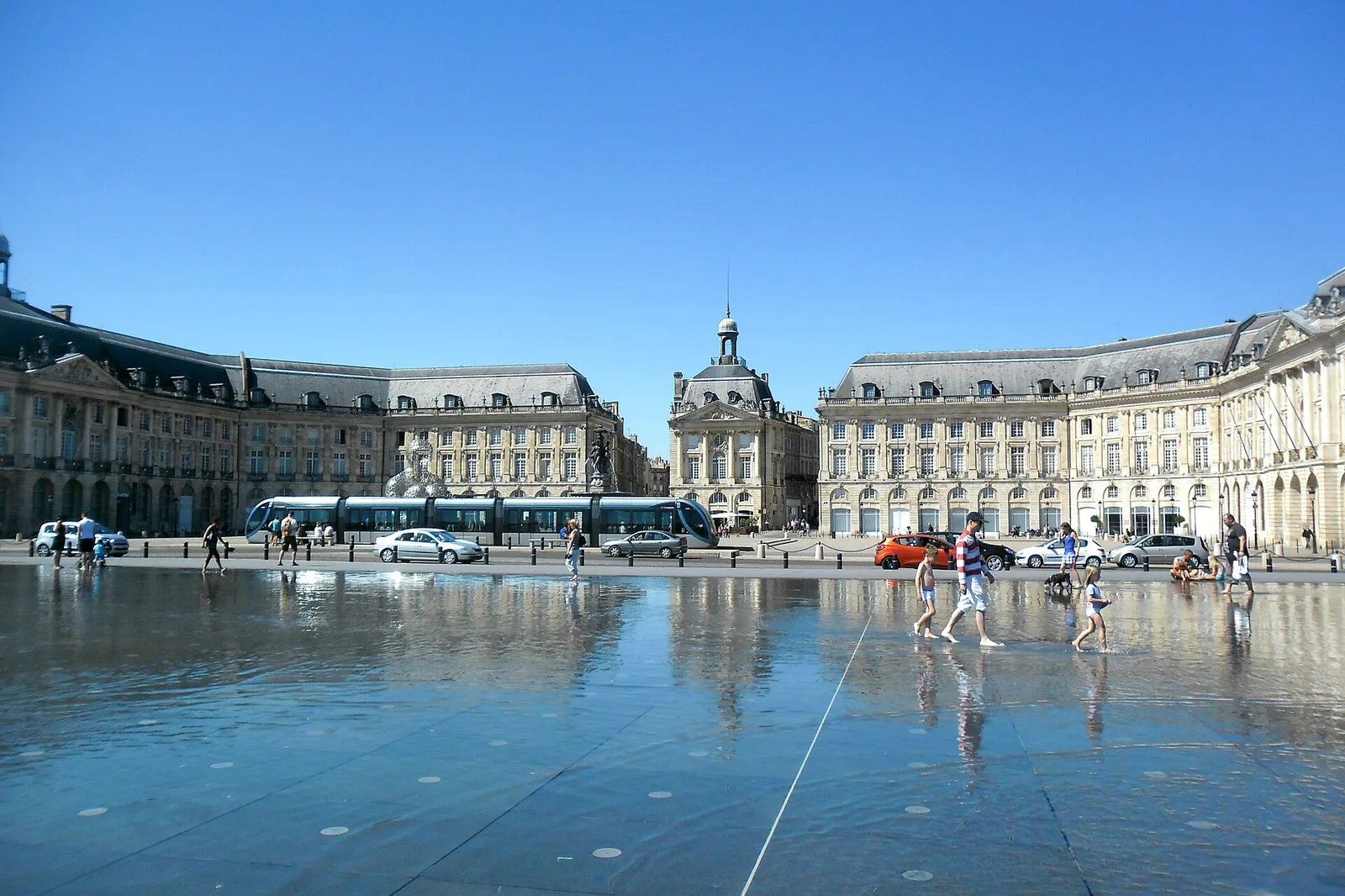
The figures are provisional and may change; the sources are press articles, not verified on site by JAPANITIES. Most demonstrators did not take part in the violence. If you are in Bordeaux, follow official traffic and security information. The national tally is in “17 October mobilisation: the tally”; the fire at Limoges town hall is covered in another article. The photo is an archive photo of a demonstration in Bordeaux.
Learn the grammar
French grammar
Learn sentence patterns and usage from the article’s own sentences.
01The present indicative
est / sont + attribute (noun, adjective, prepositional phrase)
Les chiffres sont provisoires et peuvent changer ; les sources sont des articles de presse, non vérifiés sur place par JAPANITIES.Key pointsÊtre in the present is est for a singular subject and sont for a plural one. It describes nature, state or place (“is”, “is located”). If what follows (the attribute) is a noun, adjective or prepositional phrase, it is not a passive. If a past participle follows, it is a passive (est annoncé). Headlines and summaries often use the present to describe the current situation.
02The passé composé
present of avoir + past participle
Selon ICI, 7 000 personnes ont manifesté à Bordeaux selon la préfecture, 100 000 selon la CGT.Key pointsThe passé composé is the most common past tense, used for “did” and “has done” — actions completed in the past. It is formed with the auxiliary avoir (a / ont…) in the present + a past participle. Past participles of -er verbs end in -é (annoncer → annoncé); learn the irregular ones (faire → fait, prendre → pris, voir → vu). In the negative, ne … pas wraps the auxiliary (n’a pas annoncé). In the news it reports facts that have already happened, such as “announced” or “voted”.
03The imparfait
stem (nous form of the present) + -ais / -ait / -ions / -iez / -aient
France 3 parle d’au moins 5 000 personnes place de la Bourse et rapporte que la préfecture en comptait au moins 7 000 dans le cortège déclaré.Key pointsThe imparfait describes states, background, habits and actions in progress in the past (il était, elle avait, ils pensaient). Take the nous form of the present, drop -ons, and add -ais / -ais / -ait / -ions / -iez / -aient. If the passé composé gives “the event itself”, the imparfait paints “the situation at the time”.
04The passive voice in the present
être (est / sont) + past participle (+ par / de)
La préfecture indique que de nombreux commerces ont été visés et que l’activité du centre-ville est fragilisée.Key pointsThe passive means “is done” or “is being done”. It is formed with être + past participle, which agrees with the subject in gender and number (la mesure est adoptée / les mesures sont adoptées). The agent is introduced by par (or de). In the news it is common when the event, rather than the actor, is the focus (est prévu / est annoncé / est connu).
05The passive in the passé composé
a / ont été + past participle
Vers 15 h 30, un Carrefour Express et une agence LCL ont été attaqués et des commerces pillés dans le centre (ICI).Key pointsThe past passive means “was done”. Its form is present of avoir + été (past participle of être) + past participle. Été does not change, but the last participle agrees with the subject in gender and number (la loi a été votée / les textes ont été votés). It is frequent in news reporting results such as votes, decisions and announcements.
06Pronominal verbs
se / s’ + verb
Selon ICI, la tête du cortège défilait calmement tandis que les casseurs se trouvaient surtout à l’arrière, et les manifestants pacifiques les ont hués ; France 3 relève aussi des familles défilant dans une atmosphère plus calme.Key pointsA pronominal verb is used with a reflexive pronoun (me, te, se, nous, vous) before the verb. It can mean “do to oneself”, “be done” or “do to each other”. In the news, se traduire (to result in), se tenir (to take place), s’agir de (to be a matter of) and se diffuser (to spread) are frequent. The pronoun changes with the subject (il se tient / ils se tiennent / je me souviens).
07Negation and its scope
ne / n’ … pas · ne … plus
L’écart dépend de qui compte ; cet article ne tranche pas.Key pointsNormally ne and pas wrap the verb. Before a vowel, ne becomes n’. Check which part of the sentence the negation covers. Ne … plus means “no longer”.
08Citing a source with selon
selon + noun / organisation
Selon ICI, 7 000 personnes ont manifesté à Bordeaux selon la préfecture, 100 000 selon la CGT.Key pointsSelon means “according to”. Put a person or organisation after it as the source. It separates facts the writer checked directly from what another body or report said. Citing a source does not turn a forecast into an accomplished fact.
09Pouvoir: ability and possibility
peut / peuvent / pourrait + infinitive
Les chiffres sont provisoires et peuvent changer ; les sources sont des articles de presse, non vérifiés sur place par JAPANITIES.Key pointsPut a base-form verb after pouvoir. Peut means “can” or “may”; the conditional pourrait gives a more reserved possibility, “might”. It does not necessarily mean implementation is settled.
10Expressing a plan or a deadline
être prévu / prévoir / être envisagé
Pour la CCI, ICI écrit que la façade a été taguée et visée par des projectiles mais que les manifestants n’y sont pas entrés, alors que franceinfo (AFP) évoque une entrée dans les locaux ; France 3 signale des vitres brisées.Key pointsPrévoir means “to plan, to expect”. Être prévu means “to be scheduled” and être envisagé means “to be under consideration”. In the news, read them separately from expressions that describe events that have already happened. They do not say that the event has already taken place.
11The subject relative pronoun qui
noun + qui + verb
Les journalistes de l’AFP décrivent un cortège qui a « dégénéré » en affrontements entre des individus radicaux et les forces de l’ordre.Key pointsQui continues a description of the person or thing just mentioned (“the one that does…”). Because qui is itself the subject of the next verb, do not repeat the subject. The verb agrees with the noun qui refers to.
Japanese grammar
Understand the structure and usage from the text.
01Citing a source: によると
noun + によると
ICI(フランス・ブルー)によると、ボルドーの参加者は、県庁の発表で7,000人、CGTの発表で10万人です。Key pointsAs in “LCPによると”, it shows where the information comes from. What that source reported follows. It is used differently from “私にとって”, which gives one’s own opinion.
02Rejecting an interpretation
〜わけではない / 〜という意味ではない
デモに参加した人の多くが暴力に関わっていたわけではありません。Key pointsThese forms limit and deny an interpretation: “it does not necessarily follow” or “that is not what is meant”. They do not necessarily deny every fact in the sentence. Read what is being denied together with the earlier part.
03Polite negation and plain form
〜ではありません / 〜ではない
デモに参加した人の多くが暴力に関わっていたわけではありません。Key pointsThey negate a noun and similar content. “ではありません” is the polite form and “ではない” the plain form. “成立ではありません” shows that it cannot be said to have been concluded.
04Indicating the subject: について
noun + について
商工会議所について、ICIは「正面の壁にタグがあり物が投げられたが、デモ隊は中に入っていない」と書き、franceinfo(AFP)は「人が中に入った」と書いています。Key pointsAs in “予算について”, it shows the topic to be talked about or explained. In the form “〜についての報道”, の is added so that the group qualifies the following noun.
05Giving examples with など
noun / expression + など
逮捕の理由は、物を投げたこと、略奪、公権力に対する暴力などです。Key points“暴言など” gives “abusive language” as one example. It is not necessarily a closed list of only the things named. It also helps when reading the scope of a news story.
06The polite past ました
verb stem (連用形) + ました
17日の全国行動で、ボルドーでも、市の中心部で暴力や略奪が起きました。Key pointsIn “発表しました”, ました makes a verb polite past. The negative is “ませんでした”. Read the actual date together with the date and time in the text.