Limoges: town hall destroyed by fire, the prefect denounces a fire “set deliberately”, 19 in custody
Checked on
Published on
On 17 October, Limoges town hall burned late in the day. What the prefect and the mayor say, the known damage and what remains to be established.
In this article
What happened?
According to Euronews, around 2 pm, about 2,000 people gathered in the Casseaux district, east of Limoges. The prefecture says more than 500 of them had come looking for confrontation, some throwing projectiles at the security forces. Around 6 pm, rioters entered the town hall and set it on fire, according to the prefecture. Four police officers were injured, four police vehicles destroyed and shops on rue Jean-Jaurès looted.
The prefect’s and mayor’s words
Maurice Barate, prefect of Haute-Vienne, says: “The fire was set deliberately” and mentions “about 800 people” in front of the town hall facing the security forces; the article’s headline takes up his expression “a wild horde”. Guillaume Guérin, mayor of Limoges, says that “protesting is a right” and that “anger deserves to be heard”, while judging the violence unacceptable.
Where does the building stand?
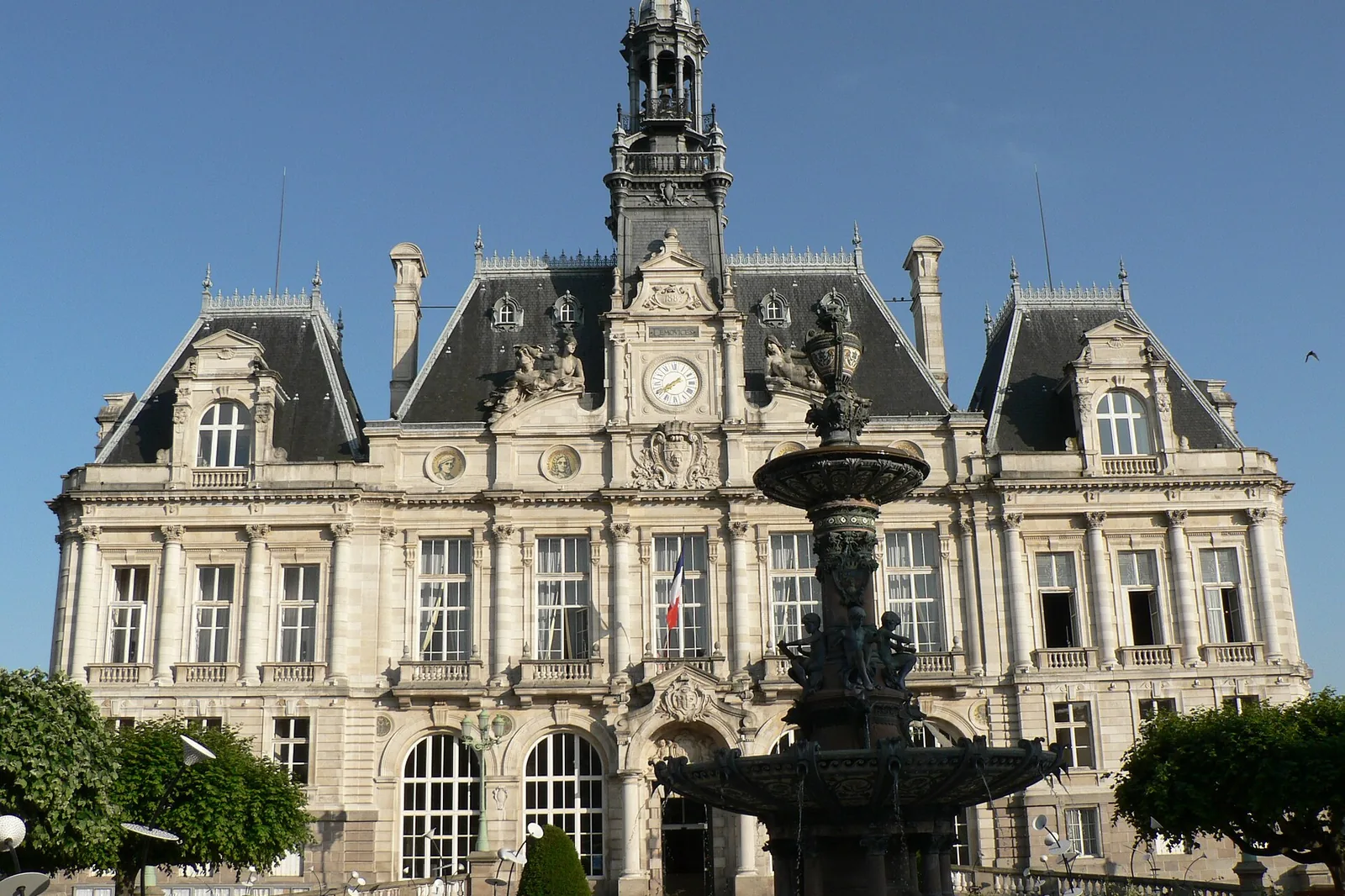
The town hall, whose construction began in 1879 and which was inaugurated on 14 July 1883, was largely destroyed, according to Euronews. Images show the spire collapsing during the night. Firefighters were mobilised in large numbers; the source does not say whether the fire is completely out.
Investigation and grey areas
Nineteen people were taken into custody in the region in connection with the demonstrations; the investigation continues. The identity of the perpetrators, their motives and the cost of the damage are not established by the source. The national tally for the day is in the article “17 October mobilisation: the tally”.
To keep in mind
The prefect’s and prefecture’s statements are the authorities’ version. Not all demonstrators took part in the violence. The figures (2,000, over 500, 800) correspond to different places, times and counting methods. The photo shows the town hall before the fire (archive photo).
Learn the grammar
French grammar
Learn sentence patterns and usage from the article’s own sentences.
01The present indicative
est / sont + attribute (noun, adjective, prepositional phrase)
Maurice Barate, préfet de la Haute-Vienne, déclare : « C’est sciemment que le feu a été mis » et évoque « à peu près 800 personnes » devant la mairie face aux forces de l’ordre ; le titre de l’article reprend son expression « une horde sauvage ».Key pointsÊtre in the present is est for a singular subject and sont for a plural one. It describes nature, state or place (“is”, “is located”). If what follows (the attribute) is a noun, adjective or prepositional phrase, it is not a passive. If a past participle follows, it is a passive (est annoncé). Headlines and summaries often use the present to describe the current situation.
02The passé composé
present of avoir + past participle
Le 17 octobre, l’hôtel de ville de Limoges a brûlé en fin de journée.Key pointsThe passé composé is the most common past tense, used for “did” and “has done” — actions completed in the past. It is formed with the auxiliary avoir (a / ont…) in the present + a past participle. Past participles of -er verbs end in -é (annoncer → annoncé); learn the irregular ones (faire → fait, prendre → pris, voir → vu). In the negative, ne … pas wraps the auxiliary (n’a pas annoncé). In the news it reports facts that have already happened, such as “announced” or “voted”.
03The passé composé of pronominal verbs
se + present of être + past participle
Selon Euronews, vers 14 h, environ 2 000 personnes se sont rassemblées dans le quartier des Casseaux, à l’est de Limoges.Key pointsThe passé composé of a pronominal verb (se + verb) always uses être as auxiliary (il s’est diffusé / elles se sont réunies). Se changes with the subject: me, te, se, nous, vous. The past participle usually agrees with the subject in gender and number.
04The imparfait
stem (nous form of the present) + -ais / -ait / -ions / -iez / -aient
La préfecture indique que plus de 500 d’entre elles étaient venues chercher l’affrontement, certaines lançant des projectiles sur les forces de l’ordre.Key pointsThe imparfait describes states, background, habits and actions in progress in the past (il était, elle avait, ils pensaient). Take the nous form of the present, drop -ons, and add -ais / -ais / -ait / -ions / -iez / -aient. If the passé composé gives “the event itself”, the imparfait paints “the situation at the time”.
05The passive voice in the present
être (est / sont) + past participle (+ par / de)
L’identité des auteurs, leurs motivations et le coût des dégâts ne sont pas établis par la source.Key pointsThe passive means “is done” or “is being done”. It is formed with être + past participle, which agrees with the subject in gender and number (la mesure est adoptée / les mesures sont adoptées). The agent is introduced by par (or de). In the news it is common when the event, rather than the actor, is the focus (est prévu / est annoncé / est connu).
06The passive in the passé composé
a / ont été + past participle
Quatre policiers ont été blessés, quatre véhicules de police détruits et des commerces de la rue Jean-Jaurès pillés.Key pointsThe past passive means “was done”. Its form is present of avoir + été (past participle of être) + past participle. Été does not change, but the last participle agrees with the subject in gender and number (la loi a été votée / les textes ont été votés). It is frequent in news reporting results such as votes, decisions and announcements.
07The gerund
en + present participle (-ant)
Guillaume Guérin, maire de Limoges, affirme que « protester est un droit » et que « la colère mérite d’être entendue », tout en jugeant les violences inacceptables.Key pointsThe gerund means “while doing”, “by doing” or “when doing”. Its form is en + present participle (-ant). Take the nous form of the present, drop -ons and add -ant (faire → faisant). The subject is normally that of the main clause. It shows things happening at the same time, or the means.
08Negation and its scope
ne / n’ … pas · ne … plus
Les pompiers ont été mobilisés en nombre ; la source ne dit pas si l’incendie est totalement éteint.Key pointsNormally ne and pas wrap the verb. Before a vowel, ne becomes n’. Check which part of the sentence the negation covers. Ne … plus means “no longer”.
09Citing a source with selon
selon + noun / organisation
Selon Euronews, vers 14 h, environ 2 000 personnes se sont rassemblées dans le quartier des Casseaux, à l’est de Limoges.Key pointsSelon means “according to”. Put a person or organisation after it as the source. It separates facts the writer checked directly from what another body or report said. Citing a source does not turn a forecast into an accomplished fact.
10The subject relative pronoun qui
noun + qui + verb
Ce que disent le préfet et le maire, les dégâts connus et ce qui reste à établir.Key pointsQui continues a description of the person or thing just mentioned (“the one that does…”). Because qui is itself the subject of the next verb, do not repeat the subject. The verb agrees with the noun qui refers to.
11Dates and their prepositions
le + 日付 / du … au …
Le 17 octobre, l’hôtel de ville de Limoges a brûlé en fin de journée.Key pointsLe 15 octobre means “on 15 October”. Distinguish the le before a date from the le that marks a weekly habit like a weekday. Du is de + le and au is à + le, so decide the meaning from the verb and period expressions around them. Their role depends on the group: a range of dates, the date of a bulletin or another complement.
12The uses of dans
dans + noun phrase
Dix-neuf personnes ont été placées en garde à vue dans la région en lien avec les manifestations ; l’enquête se poursuit.Key pointsDans means “in, inside” for places, but also for a scope such as a system or period. With future time, dans deux jours means “in two days”. In the article’s example, check what it is “inside” and which scope it marks. Identify the value of dans in the passage.
Japanese grammar
Understand the structure and usage from the text.
01Citing a source: によると
noun + によると
Euronewsによると、17日の昼ごろ、リモージュ東部のカソー地区に約2,000人が集まりました。Key pointsAs in “LCPによると”, it shows where the information comes from. What that source reported follows. It is used differently from “私にとって”, which gives one’s own opinion.
02Rejecting an interpretation
〜わけではない / 〜という意味ではない
デモに参加した人全員が暴力に関わったわけではありません。Key pointsThese forms limit and deny an interpretation: “it does not necessarily follow” or “that is not what is meant”. They do not necessarily deny every fact in the sentence. Read what is being denied together with the earlier part.
03Polite negation and plain form
〜ではありません / 〜ではない
デモに参加した人全員が暴力に関わったわけではありません。Key pointsThey negate a noun and similar content. “ではありません” is the polite form and “ではない” the plain form. “成立ではありません” shows that it cannot be said to have been concluded.
04The polite past ました
verb stem (連用形) + ました
17日の全国行動の日、リモージュでは夕方に市役所が燃えました。Key pointsIn “発表しました”, ました makes a verb polite past. The negative is “ませんでした”. Read the actual date together with the date and time in the text.
05Quoting with と: content and report
plain-form sentence + と + verbe de parole (報じる, 説明する…)
県庁は、そのうち500人以上は衝突が目的で集まった人たちで、一部が治安部隊に物を投げたと説明しています。Key pointsと takes the content that is reported or explained. In “改定する方針だと報じました”, “改定する方針だ” is what the report said. Separating the content from who said it and how makes long sentences easier to read.
06Treating a clause like a noun with こと
plain-form sentence + こと + particle
県知事とリモージュ市長の発言、分かっている被害と、まだ分からないことを整理します。Key points“〜すること” treats an action or content like a noun. The particle after it (が・を・は…) shows its role in the sentence. “ことができる” is a fixed combination meaning “can”.