17 October mobilisation: 550,000 demonstrators according to the Interior Minister, 800,000 according to organisers, about 400 arrests (provisional)
Checked on
Published on
Why this 17 October day, and the tally the next day (participants, arrests, damage). The number of participants depends on who counts; the arrest tally is provisional.
In this article
Why this 17 October day?
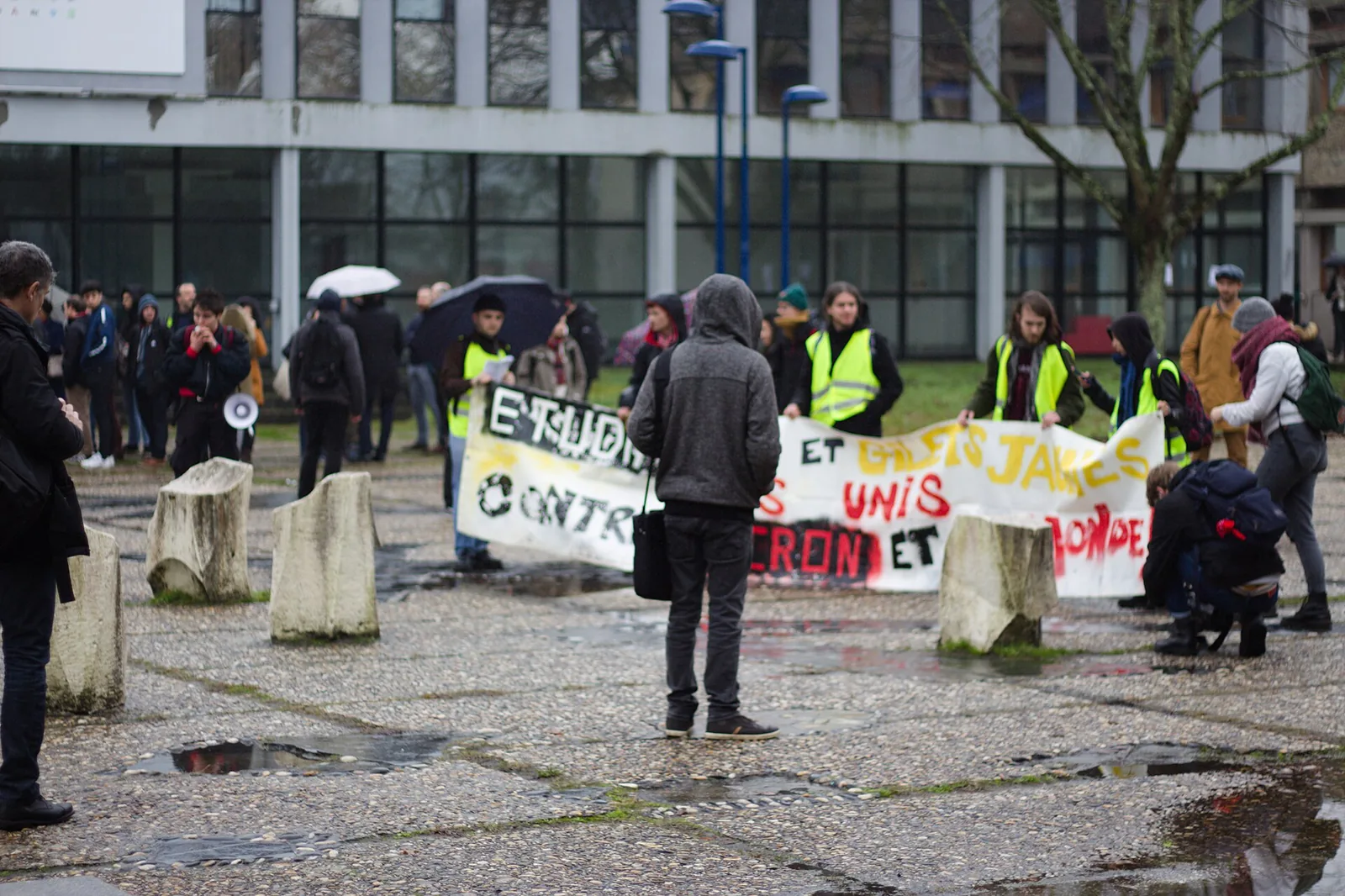
According to franceinfo, 17 October was a “day of social mobilisation” that brought together varied grievances: former gilets jaunes against the cost of living, high-school students, university students, climate activists, farmers. The call began on TikTok: franceinfo describes one of the first videos citing this date, by a young man who justifies the choice by the fact that it is a Saturday of school holidays when “everyone can be there”, and who says he does not want to organise the demonstration. Seven days after its posting, on 8 September, it had nearly 300,000 “likes” and 30,000 shares. The context is the rise in fuel prices, which “are approaching 3 euros a litre” at some stations. The high-school movement was added to it: its starting point is the Lycée Saint-Exupéry in Créteil, where, on 17 September, the day after a teachers’ strike against lack of resources and staff, pupils held a blockade. They denounce lack of resources and staff, overcrowded classes, a lack of desks; other sources also cite the scrapping of Parcoursup, unsanitary school buildings and a shortage of teachers.
What do we know?
Europe 1 reports that the 17 October day gathered 800,000 participants according to the organisers and 550,000 according to Interior Minister Laurent Nuñez. According to franceinfo, Laurent Nuñez announced on the evening of the 17th about 400 arrests across France; he specifies that this is a provisional count. Most of those arrested are adults, he says, and therefore far from the high-school students’ demands.
Why do the figures differ?
The number of participants varies greatly between the Interior Ministry and the organisers: the method and time of counting are not the same. This article does not settle it. The number of arrests also changes with the time and scope. A related franceinfo headline mentions 1,200 arrests, a figure attributed to Sébastien Lecornu; the article does not link it to Laurent Nuñez’s 400.
What happened in the cities?
franceinfo cites in particular: in Marseille, a municipal police station ransacked, town halls and shops attacked; in Lyon, the tourist office ransacked and set on fire; in Limoges, the town hall destroyed by fire; in Paris, tensions on the Champs-Élysées, attempts to approach the Élysée and fires; in Lille, several entrances to the town hall forced; in Saint-Étienne, a demonstrator lost a hand after a police grenade exploded.
To keep in mind
Distinguish provisional figures from final ones. The incidents are separate facts: this does not mean that all participants were violent. Avoid attributing causes and responsibilities before investigations or court decisions. The situation in Bordeaux is detailed in a separate article.
Learn the grammar
French grammar
Learn sentence patterns and usage from the article’s own sentences.
01The present indicative
est / sont + attribute (noun, adjective, prepositional phrase)
Le nombre de participants dépend de qui compte ; le bilan des interpellations est provisoire.Key pointsÊtre in the present is est for a singular subject and sont for a plural one. It describes nature, state or place (“is”, “is located”). If what follows (the attribute) is a noun, adjective or prepositional phrase, it is not a passive. If a past participle follows, it is a passive (est annoncé). Headlines and summaries often use the present to describe the current situation.
02The passé composé
present of avoir + past participle
Selon franceinfo, le 17 octobre était une « journée de mobilisation sociale » qui a réuni des colères variées : anciens gilets jaunes contre la vie chère, lycéens, étudiants, militants du climat, agriculteurs.Key pointsThe passé composé is the most common past tense, used for “did” and “has done” — actions completed in the past. It is formed with the auxiliary avoir (a / ont…) in the present + a past participle. Past participles of -er verbs end in -é (annoncer → annoncé); learn the irregular ones (faire → fait, prendre → pris, voir → vu). In the negative, ne … pas wraps the auxiliary (n’a pas annoncé). In the news it reports facts that have already happened, such as “announced” or “voted”.
03The imparfait
stem (nous form of the present) + -ais / -ait / -ions / -iez / -aient
Sept jours après sa publication, le 8 septembre, elle comptait près de 300 000 « J’aime » et 30 000 partages.Key pointsThe imparfait describes states, background, habits and actions in progress in the past (il était, elle avait, ils pensaient). Take the nous form of the present, drop -ons, and add -ais / -ais / -ait / -ions / -iez / -aient. If the passé composé gives “the event itself”, the imparfait paints “the situation at the time”.
04The passive voice in the present
être (est / sont) + past participle (+ par / de)
S’y est ajouté le mouvement lycéen : son point de départ est le lycée Saint-Exupéry de Créteil, où, le 17 septembre, au lendemain d’une grève des enseignants contre le manque de moyens et de personnel, des élèves ont organisé un blocus.Key pointsThe passive means “is done” or “is being done”. It is formed with être + past participle, which agrees with the subject in gender and number (la mesure est adoptée / les mesures sont adoptées). The agent is introduced by par (or de). In the news it is common when the event, rather than the actor, is the focus (est prévu / est annoncé / est connu).
05The imperative
present vous form (-ez) / nous (-ons) / tu
Distinguez les chiffres provisoires des chiffres définitifs.Key pointsThe imperative expresses commands, requests and advice. It has no subject: the sentence starts with the verb (Consultez les informations.). The vous form ends in -ez, nous in -ons (Restons prudents.), and tu in -e for -er verbs (Consulte). It is very common in notices and warnings (Vérifiez, Consultez, Restez informé).
06Pronominal verbs
se / s’ + verb
Le contexte est la hausse des carburants, dont les prix « s’approchent des 3 euros le litre » dans certaines stations.Key pointsA pronominal verb is used with a reflexive pronoun (me, te, se, nous, vous) before the verb. It can mean “do to oneself”, “be done” or “do to each other”. In the news, se traduire (to result in), se tenir (to take place), s’agir de (to be a matter of) and se diffuser (to spread) are frequent. The pronoun changes with the subject (il se tient / ils se tiennent / je me souviens).
07Negation and its scope
ne / n’ … pas · ne … plus
L’appel est parti de TikTok : franceinfo décrit l’une des premières vidéos citant cette date, d’un jeune homme qui justifie le choix par le fait que c’est un samedi de vacances scolaires où « tout le monde peut être là », et qui dit ne pas vouloir organiser la manifestation.Key pointsNormally ne and pas wrap the verb. Before a vowel, ne becomes n’. Check which part of the sentence the negation covers. Ne … plus means “no longer”.
08Citing a source with selon
selon + noun / organisation
Selon franceinfo, le 17 octobre était une « journée de mobilisation sociale » qui a réuni des colères variées : anciens gilets jaunes contre la vie chère, lycéens, étudiants, militants du climat, agriculteurs.Key pointsSelon means “according to”. Put a person or organisation after it as the source. It separates facts the writer checked directly from what another body or report said. Citing a source does not turn a forecast into an accomplished fact.
09Pouvoir: ability and possibility
peut / peuvent / pourrait + infinitive
L’appel est parti de TikTok : franceinfo décrit l’une des premières vidéos citant cette date, d’un jeune homme qui justifie le choix par le fait que c’est un samedi de vacances scolaires où « tout le monde peut être là », et qui dit ne pas vouloir organiser la manifestation.Key pointsPut a base-form verb after pouvoir. Peut means “can” or “may”; the conditional pourrait gives a more reserved possibility, “might”. It does not necessarily mean implementation is settled.
10The construction il s’agit de
il s’agit de + noun / infinitive
Selon franceinfo, Laurent Nuñez a annoncé le soir du 17 environ 400 interpellations dans toute la France ; il précise qu’il s’agit d’un décompte provisoire.Key pointsIt explains what something is about: “it is a matter of…”. The il is not a particular man but a formal subject of this construction. The negative il ne s’agit pas de means “this is not about…”.
Japanese grammar
Understand the structure and usage from the text.
01Citing a source: によると
noun + によると
franceinfoによると、17日は「社会的動員の日」で、物価高に怒る元「黄色いベスト」の人たち、高校生、大学生、気候の活動家、農家などの、さまざまな不満が重なりました。Key pointsAs in “LCPによると”, it shows where the information comes from. What that source reported follows. It is used differently from “私にとって”, which gives one’s own opinion.
02Rejecting an interpretation
〜わけではない / 〜という意味ではない
参加した人全員が暴力に関わったという意味ではありません。Key pointsThese forms limit and deny an interpretation: “it does not necessarily follow” or “that is not what is meant”. They do not necessarily deny every fact in the sentence. Read what is being denied together with the earlier part.
03Polite negation and plain form
〜ではありません / 〜ではない
参加した人全員が暴力に関わったという意味ではありません。Key pointsThey negate a noun and similar content. “ではありません” is the polite form and “ではない” the plain form. “成立ではありません” shows that it cannot be said to have been concluded.
04Indicating the subject: について
noun + について
Europe 1は、17日の全国行動の参加者について、主催者の発表が80万人、内務大臣ローラン・ヌニェス氏の発表が55万人だったと伝えています。Key pointsAs in “予算について”, it shows the topic to be talked about or explained. In the form “〜についての報道”, の is added so that the group qualifies the following noun.
05Giving examples with など
noun / expression + など
生徒たちは、予算と人員の不足、クラスの人数が多すぎること、机の不足などを訴えています。Key points“暴言など” gives “abusive language” as one example. It is not necessarily a closed list of only the things named. It also helps when reading the scope of a news story.
06The polite past ました
verb stem (連用形) + ました
17日の全国行動が起きた理由(物価高、高校生の運動)と、翌日までにわかった結果と被害を整理しました。Key pointsIn “発表しました”, ました makes a verb polite past. The negative is “ませんでした”. Read the actual date together with the date and time in the text.