Uniqlo: an enlarged store in Bordeaux and an opening in Tours planned for spring 2027
Checked on
Published on
The project announced on 28 October replaces the Bordeaux store with a larger space, along with an opening in Tours in spring 2027.
In this article
The announcement
According to Le Parisien and AFP, Uniqlo announced on 28 October plans in Bordeaux and Tours for spring 2027. The stores concerned have therefore not just opened: this is an announced schedule.
The Bordeaux case
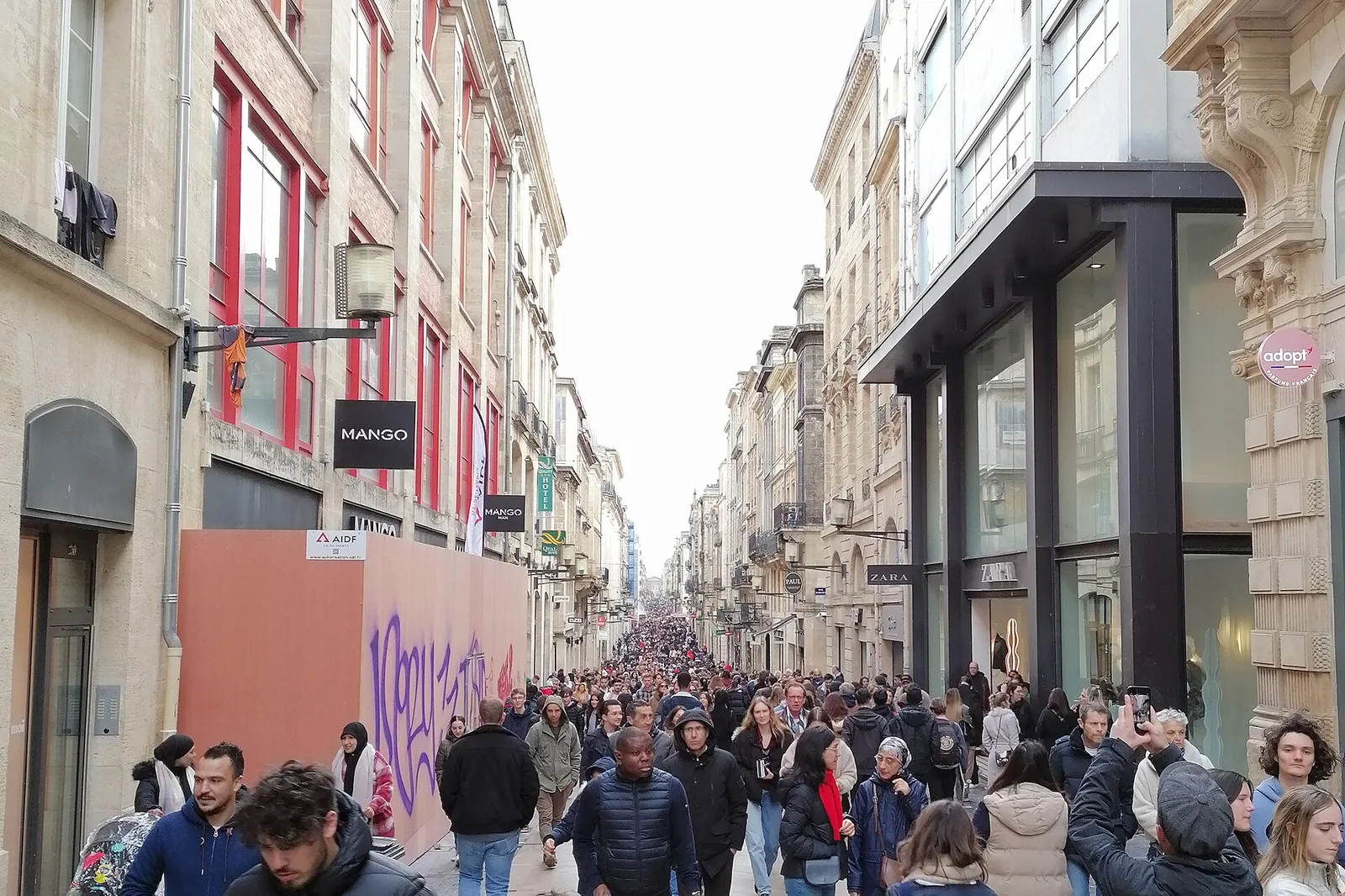
The store on rue Sainte-Catherine is to be replaced by a space of 1,400 square metres. A new location therefore does not necessarily mean an additional store in the city.
Tours and the hiring
In Tours, the project is for 850 square metres in the city centre. The announcement provides for 40 hires in Tours and 30 in Bordeaux. These are announced hires, not confirmation that all the posts are already filled.
A useful word: sales floor area
The sales floor area is the space given over to selling to customers. It is different from the total surface of the building, which may include stockrooms. The exact date and the opening arrangements remain to be checked in announcements to come.
Learn the grammar
French grammar
Learn sentence patterns and usage from the article’s own sentences.
01Negation and its scope
ne / n’ … pas · ne … plus
Les magasins concernés ne viennent donc pas d’ouvrir : il s’agit d’un calendrier annoncé.Key pointsNormally ne and pas wrap the verb. Before a vowel, ne becomes n’. Check which part of the sentence the negation covers. Ne … plus means “no longer”.
02Citing a source with selon
selon + noun / organisation
Selon Le Parisien et l’AFP, Uniqlo a annoncé le 28 octobre des projets à Bordeaux et à Tours pour le printemps 2027.Key pointsSelon means “according to”. Put a person or organisation after it as the source. It separates facts the writer checked directly from what another body or report said. Citing a source does not turn a forecast into an accomplished fact.
03Pouvoir: ability and possibility
peut / peuvent / pourrait + infinitive
Elle se distingue de la surface totale du bâtiment, qui peut comprendre des réserves.Key pointsPut a base-form verb after pouvoir. Peut means “can” or “may”; the conditional pourrait gives a more reserved possibility, “might”. It does not necessarily mean implementation is settled.
04Expressing a plan or a deadline
être prévu / prévoir / être envisagé
Le projet annoncé le 28 octobre prévoit le remplacement du magasin bordelais par un espace plus vaste, ainsi qu’une ouverture à Tours au printemps 2027.Key pointsPrévoir means “to plan, to expect”. Être prévu means “to be scheduled” and être envisagé means “to be under consideration”. In the news, read them separately from expressions that describe events that have already happened. They do not say that the event has already taken place.
05The construction il s’agit de
il s’agit de + noun / infinitive
Les magasins concernés ne viennent donc pas d’ouvrir : il s’agit d’un calendrier annoncé.Key pointsIt explains what something is about: “it is a matter of…”. The il is not a particular man but a formal subject of this construction. The negative il ne s’agit pas de means “this is not about…”.
06The passé composé for events
present of avoir + past participle
Selon Le Parisien et l’AFP, Uniqlo a annoncé le 28 octobre des projets à Bordeaux et à Tours pour le printemps 2027.Key pointsIt reports past events, as in “announced” or “explained”. A / ont is the auxiliary avoir and the next word is the past participle. The passé composé alone does not tell you the date of the event.
Japanese grammar
Understand the structure and usage from the text.
01Citing a source: によると
noun + によると
Le ParisienとAFPによると、ユニクロは28日、ボルドーとトゥールで2027年春に店舗を開く計画を発表しました。Key pointsAs in “LCPによると”, it shows where the information comes from. What that source reported follows. It is used differently from “私にとって”, which gives one’s own opinion.
02Rejecting an interpretation
〜わけではない / 〜という意味ではない
人数は採用予定で、すでに全員が働き始めたという意味ではありません。Key pointsThese forms limit and deny an interpretation: “it does not necessarily follow” or “that is not what is meant”. They do not necessarily deny every fact in the sentence. Read what is being denied together with the earlier part.
03Plan, outlook and policy
〜の予定 / 〜見込み / 〜方針
開店したというニュースではなく、来年の予定についての発表です。Key points予定 is a plan, 見込み a forecast and 方針 a course of action or intention. None of them asserts that something has already been carried out. Note the difference from expressions such as “決まりました”.
04Polite negation and plain form
〜ではありません / 〜ではない
ボルドーは既存店を広い店舗に置き換える計画で、新たに2店舗目を増やす話ではありません。Key pointsThey negate a noun and similar content. “ではありません” is the polite form and “ではない” the plain form. “成立ではありません” shows that it cannot be said to have been concluded.
05Indicating the subject: について
noun + について
具体的な開店日や営業案内については、今後の正式な発表を確認してください。Key pointsAs in “予算について”, it shows the topic to be talked about or explained. In the form “〜についての報道”, の is added so that the group qualifies the following noun.
06Cause or purpose with ため
〜ため / 〜ために
surface de vente は、お客さんに商品を販売するための面積です。Key pointsため is used for both reason and purpose. “成立ではないため” is a reason and “運転手を守るため” a purpose. Decide from the whole sentence whether what precedes is a cause or a goal.