Why paving stones in demonstrations? Barricades, May 68 and “Sous les pavés, la plage!”
Checked on
Published on
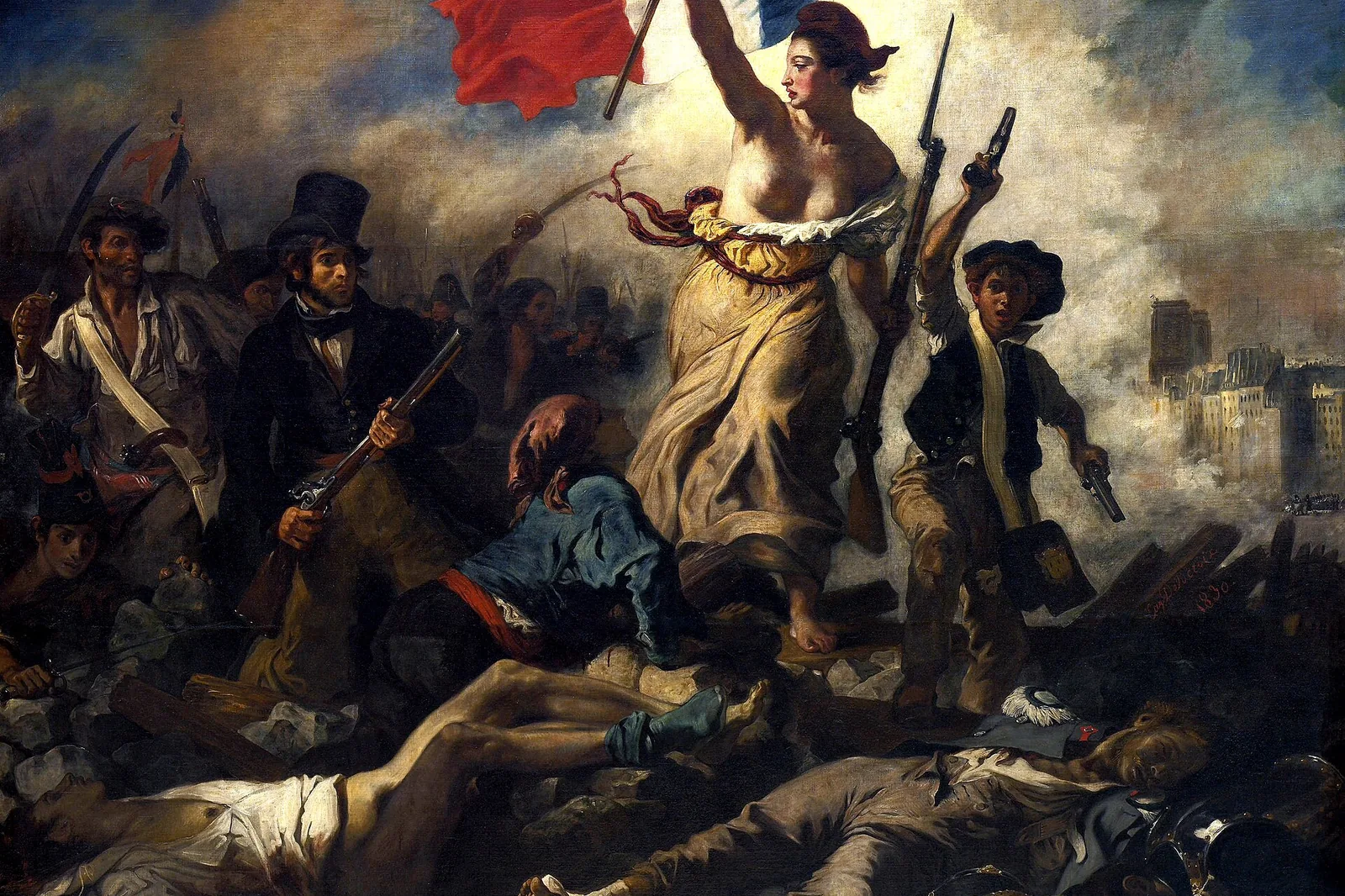
- In Paris, paving stones (pavés) have been torn up to build barricades since the 19th century.
- More than 4,000 barricades in 1830 (an estimate) and 1,512 in February 1848; on 3 May 1968 a first paving stone was thrown.
- “Sous les pavés, la plage!” comes from the sand under the paving stones; its origin is debated and it cannot be firmly tied to May 1968.
In this article
Answer: since the 19th century, the paving stone has served as barricade material
Paving stones come back into the news about demonstrations because, in Paris, they have been torn up to build barricades since the 19th century. According to Histoire par l’image, barricades were made of planks, barrels and above all “paving stones torn up from the street”. The source does not explain why paving stones were chosen; they were on the spot, which is a hypothesis. This article is a historical explainer and does not encourage violence or illegal acts.
Historical background (1): the barricades of 1830, 1848 and 1871
According to Histoire par l’image, barricades multiplied in 1830: during the Three Glorious Days (27–29 July), their number “would have exceeded 4,000” in the working-class districts of Paris (the source uses the conditional). In February 1848, 1,512 barricades were counted. According to Paris Zigzag, during the 1871 Commune the barricade on the place de la Concorde, nicknamed “Château-Gaillard”, became a “people’s fortress”. Originally the paving stone was a symbol of order in the city; Paris Zigzag explains that it became a political weapon in the 19th century.
Historical background (2): May 1968
According to Paris Zigzag, on 3 May 1968 a first paving stone was thrown at a police sergeant in front of the Lycée Saint-Louis, boulevard Saint-Michel, in the Latin Quarter. Students began to rip up the streets and build barricades; against tear gas and grenades, the insurgents answered with paving stones and Molotov cocktails. May 68 is known as the moment when a student movement became a broad social movement (a point not detailed in the sources cited here).
The meaning of “Sous les pavés, la plage!”
The slogan means that there is a beach under the paving stones. Around 1930, the blocks were laid by hand on a layer of sand (Paris Zigzag). When the paving stones are torn up, the sand shows: the slogan evokes freedom under the established order. It is famous as a symbol of May 68, but its origin is debated.
Historical background (3): the origin of the slogan is debated
According to Wikipédia, the slogan is often tied to May 1968, but only one photo shows it (June 1968, Roger-Viollet agency, painted freehand on a wall) and it is not among the roughly 450 slogans of the Beaux-Arts workshop. Two people claim authorship: Jean-Edern Hallier (a 1982 book, a blackboard at the Sorbonne in May 1968) and Bernard Cousin (created with a friend on 21 May 1968 at the café La Chope, place de la Contrescarpe). One witness account also mentions a line from an Armand Gatti play in March 1968. We do not settle the question.
After May 68: asphalt in place of paving stones
According to Paris Zigzag, the new prefect of Paris then had the large paving stones replaced with asphalt, though the article gives no precise date. Asphalt is hard to move, more durable, quiet and easy to maintain. Today most Paris roads are covered with bituminous asphalt, but some old districts keep their paving stones.
Frequently asked questions
Q: What does “Sous les pavés, la plage!” mean? A: That there is a beach under the paving stones. The expression comes from the sand under the paving stones and evokes freedom under the established order. Q: Why were paving stones torn up in demonstrations? A: Since the 19th century they have served as barricade material; the source does not explain this choice. Q: What happened on 3 May 1968? A: According to Paris Zigzag, a first paving stone was thrown at a police sergeant in the Latin Quarter. Q: Was the slogan born in May 1968? A: That is not certain: only one photo (June 1968) shows it and two people claim to have coined it.
The link with current events
On 2 and 3 November, blockades of lycées and universities continue in France and an important day is planned for the 5th (see our other article on what has changed since 2 November). This article explains, on the historical level, why paving stones come back into the debate. We have not checked whether paving stones were used in the current mobilisations.
Learn the grammar
French grammar
Learn sentence patterns and usage from the article’s own sentences.
01Negation and its scope
ne / n’ … pas · ne … plus
Selon Wikipédia, le slogan est souvent rattaché à mai 1968, mais une seule photo le montre (juin 1968, agence Roger-Viollet, peint à main levée sur un mur) et il ne figure pas parmi les quelque 450 slogans de l’atelier des Beaux-Arts.Key pointsNormally ne and pas wrap the verb. Before a vowel, ne becomes n’. Check which part of the sentence the negation covers. Ne … plus means “no longer”.
02Citing a source with selon
selon + noun / organisation
Selon Histoire par l’image, les barricades étaient faites de planches, de tonneaux et surtout de « pavés arrachés à la rue ».Key pointsSelon means “according to”. Put a person or organisation after it as the source. It separates facts the writer checked directly from what another body or report said. Citing a source does not turn a forecast into an accomplished fact.
03Expressing a plan or a deadline
être prévu / prévoir / être envisagé
Les 2 et 3 novembre, les blocages de lycées et de facs se poursuivent en France et une journée importante est prévue le 5 (voir notre autre article sur les changements depuis le 2 novembre).Key pointsPrévoir means “to plan, to expect”. Être prévu means “to be scheduled” and être envisagé means “to be under consideration”. In the news, read them separately from expressions that describe events that have already happened. They do not say that the event has already taken place.
04Purpose with pour
pour + infinitive
Si les pavés reviennent dans l’actualité des manifestations, c’est que, à Paris, on arrache des pavés pour dresser des barricades depuis le XIXe siècle.Key pointsThis is the purpose, “in order to…”. Put the base form of a verb after pour. The purpose stated here is separate from whether the effect was actually achieved.
05The present of être
est / sont + complement
La source n’explique pas pourquoi on choisissait les pavés ; ils étaient sur place, ce qui est une hypothèse.Key pointsEst is third-person singular and sont third-person plural of être. They express “is / are” — a state or description. If a past participle follows, it is a different structure such as the passive, so check the words that follow.
06The subject relative pronoun qui
noun + qui + verb
La source n’explique pas pourquoi on choisissait les pavés ; ils étaient sur place, ce qui est une hypothèse.Key pointsQui continues a description of the person or thing just mentioned (“the one that does…”). Because qui is itself the subject of the next verb, do not repeat the subject. The verb agrees with the noun qui refers to.
Japanese grammar
Understand the structure and usage from the text.
01Citing a source: によると
noun + によると
Histoire par l’imageによると、バリケードは、板や樽のほかに、とくに「道から剥がした石畳」で作られました。Key pointsAs in “LCPによると”, it shows where the information comes from. What that source reported follows. It is used differently from “私にとって”, which gives one’s own opinion.
02Defining a term with とは
noun + とは
Q:「Sous les pavés, la plage !」とは?Key pointsIt takes up a word, as in “在留資格とは?”, and asks for its meaning. In explanations it is used as “〜とは、…です”. Here the quotation と and the topic は are combined.
03Polite negation and plain form
〜ではありません / 〜ではない
この記事は歴史の解説で、暴力や違法な行為をすすめるものではありません。Key pointsThey negate a noun and similar content. “ではありません” is the polite form and “ではない” the plain form. “成立ではありません” shows that it cannot be said to have been concluded.
04Cause or purpose with ため
〜ため / 〜ために
道にあって、その場で手に入ったためだと考えられますが、ここでは推測です。Key pointsため is used for both reason and purpose. “成立ではないため” is a reason and “運転手を守るため” a purpose. Decide from the whole sentence whether what precedes is a cause or a goal.
05The polite past ました
verb stem (連用形) + ました
Paris Zigzagによると、1871年のパリ・コミューンでは、コンコルド広場のバリケード「Château-Gaillard」が「庶民の要塞」になりました。Key pointsIn “発表しました”, ました makes a verb polite past. The negative is “ませんでした”. Read the actual date together with the date and time in the text.
06Quoting with と: content and report
plain-form sentence + と + verbe de parole (報じる, 説明する…)
Paris Zigzagは、それが19世紀に政治的な武器になったと説明しています。Key pointsと takes the content that is reported or explained. In “改定する方針だと報じました”, “改定する方針だ” is what the report said. Separating the content from who said it and how makes long sentences easier to read.