Gifi placed in receivership: nearly 500 stores, 6,000 employees, six months of observation
Checked on
Published on
- The Toulouse commercial court has placed Gifi in redressement judiciaire, at the company’s own request.
- Nearly 500 stores, 6,000 employees; six months of observation, hearing on 8 January.
- Causes cited: competition, the IT system, four CEOs in two years, weather; 2025 EBITDA was −€100 million against €9 million expected.
- A redressement is not a liquidation; possible closures could not be verified.
In this article
The decision
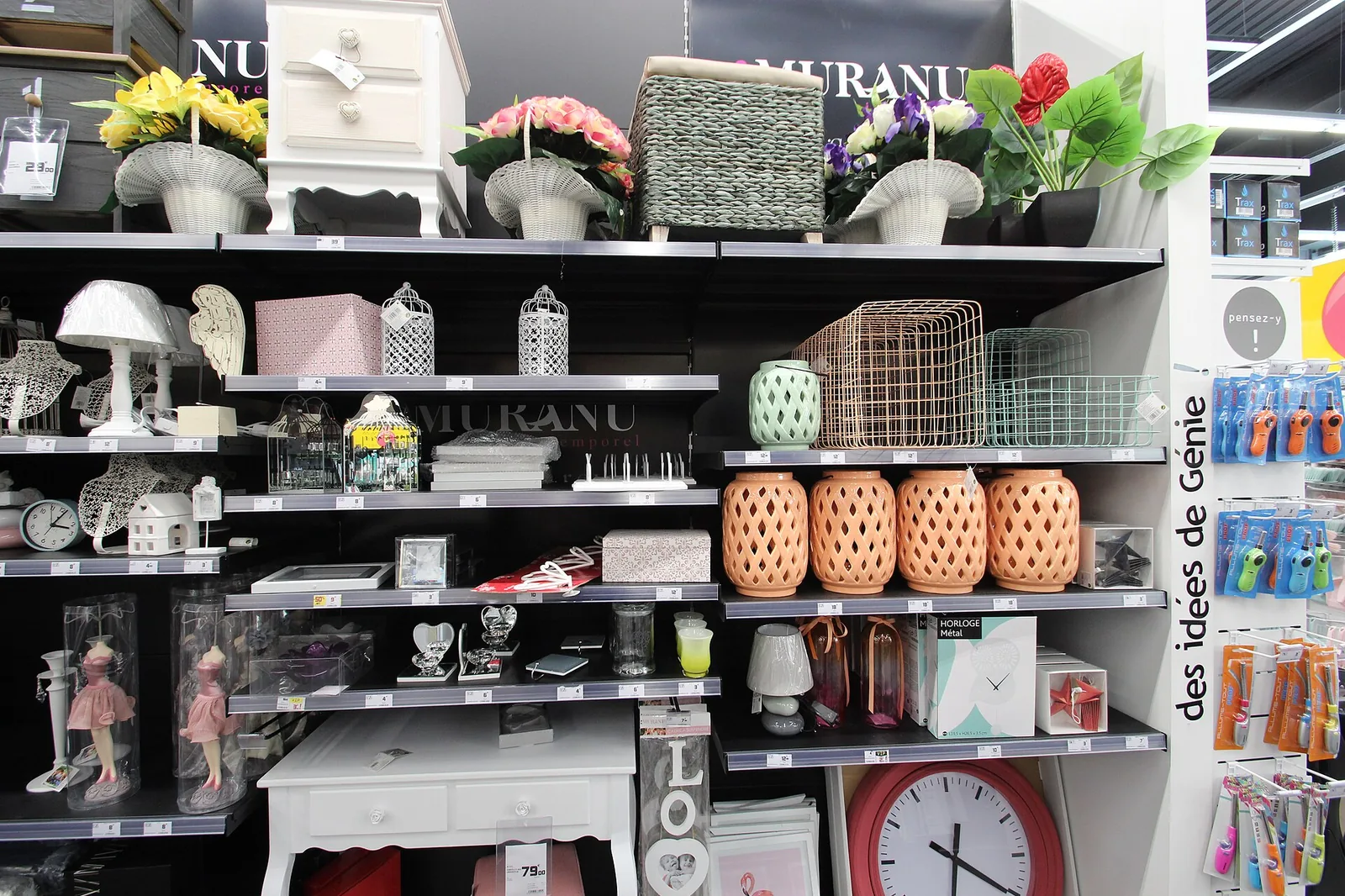
According to franceinfo, the Toulouse commercial court has placed the Gifi chain in redressement judiciaire (a court-supervised reorganisation), at the company’s own request. Founded in 1981, Gifi has nearly 500 stores and about 6,000 employees in France. The court ordered an observation period of six months; a hearing on 8 January is to decide whether the company has the financial capacity to continue operating. The exact date of the decision could not be verified: the article places it only a few hours before a store visit on a Tuesday.
The reasons put forward
The article cites several factors: competition (the rise of Action, the smaller Normal, Chinese platforms such as Temu); a new integrated IT system (ERP) introduced in 2023, which disrupted purchasing, stock and supply, according to the court; unstable management, with four CEOs in two years (the latest, Patrick Puy, appointed in October 2025); and unfavourable weather since April 2024, an explanation an internal source doubts.
Figures and earlier attempts
EBITDA, an indicator of profitability, was meant to reach 9 million euros in 2025; it came to −100 million euros according to the court. The company had already used conciliation procedures to renegotiate its debt, and a plan to cut the workforce by 5% planned in 2025 was halted. Thirty-two of its roughly 500 stores were sold to Grand Frais, about twenty already transferred. Employees were told not to speak out, and the article mentions hope that a buyer will come forward in the coming weeks.
What is a redressement judiciaire?
A redressement judiciaire is a procedure that lets a company that can no longer pay its debts keep operating while it tries to recover; it is not a liquidation. We explain the difference in our article on BHV (news-fr-20261030-bhv-audience-redressement). Gifi’s fate depends on the 8 January hearing and on whether a buyer appears. Whether stores will close could not be verified here.
Learn the grammar
French grammar
Learn sentence patterns and usage from the article’s own sentences.
01Negation and its scope
ne / n’ … pas · ne … plus
La date exacte de la décision n’a pas pu être vérifiée : l’article la situe seulement quelques heures avant une visite de magasin un mardi.Key pointsNormally ne and pas wrap the verb. Before a vowel, ne becomes n’. Check which part of the sentence the negation covers. Ne … plus means “no longer”.
02Citing a source with selon
selon + noun / organisation
Selon franceinfo, le tribunal de commerce de Toulouse a placé la chaîne Gifi en redressement judiciaire, à la demande de l’entreprise elle-même.Key pointsSelon means “according to”. Put a person or organisation after it as the source. It separates facts the writer checked directly from what another body or report said. Citing a source does not turn a forecast into an accomplished fact.
03Pouvoir: ability and possibility
peut / peuvent / pourrait + infinitive
Le redressement judiciaire est une procédure qui permet à une entreprise qui ne peut plus payer ses dettes de continuer son activité tout en cherchant à se redresser ; ce n’est pas une liquidation.Key pointsPut a base-form verb after pouvoir. Peut means “can” or “may”; the conditional pourrait gives a more reserved possibility, “might”. It does not necessarily mean implementation is settled.
04Expressing a plan or a deadline
être prévu / prévoir / être envisagé
L’entreprise avait déjà recouru à des procédures de conciliation pour renégocier sa dette, et un plan de réduction de 5 % des effectifs prévu en 2025 a été arrêté.Key pointsPrévoir means “to plan, to expect”. Être prévu means “to be scheduled” and être envisagé means “to be under consideration”. In the news, read them separately from expressions that describe events that have already happened. They do not say that the event has already taken place.
05Purpose with pour
pour + infinitive
L’entreprise avait déjà recouru à des procédures de conciliation pour renégocier sa dette, et un plan de réduction de 5 % des effectifs prévu en 2025 a été arrêté.Key pointsThis is the purpose, “in order to…”. Put the base form of a verb after pour. The purpose stated here is separate from whether the effect was actually achieved.
06The present of être
est / sont + complement
L’excédent brut d’exploitation (EBE), indicateur de rentabilité, devait atteindre 9 millions d’euros en 2025 ; il s’est établi à −100 millions d’euros selon le tribunal.Key pointsEst is third-person singular and sont third-person plural of être. They express “is / are” — a state or description. If a past participle follows, it is a different structure such as the passive, so check the words that follow.
Japanese grammar
Understand the structure and usage from the text.
01Citing a source: によると
noun + によると
franceinfoによると、トゥールーズの商事裁判所が、生活雑貨チェーンGifiを再建手続き(redressement judiciaire)に入れました。Key pointsAs in “LCPによると”, it shows where the information comes from. What that source reported follows. It is used differently from “私にとって”, which gives one’s own opinion.
02Plan, outlook and policy
〜の予定 / 〜見込み / 〜方針
会社の収益力を示す指標(EBE:営業の総余剰)は、2025年に900万ユーロの見込みでしたが、裁判所によれば実際は1億ユーロのマイナスでした。Key points予定 is a plan, 見込み a forecast and 方針 a course of action or intention. None of them asserts that something has already been carried out. Note the difference from expressions such as “決まりました”.
03Giving examples with など
noun / expression + など
(1)競争:急速に店を増やしたAction、小さなライバルのNormal、Temuなど中国のネット通販が客足に影響しました。Key points“暴言など” gives “abusive language” as one example. It is not necessarily a closed list of only the things named. It also helps when reading the scope of a news story.
04The polite past ました
verb stem (連用形) + ました
生活雑貨チェーンGifiが、トゥールーズの商事裁判所で再建手続きに入りました。Key pointsIn “発表しました”, ました makes a verb polite past. The negative is “ませんでした”. Read the actual date together with the date and time in the text.
05Possibility in Japanese: できる・られる
verb potential form / 〜ことができる
決定の日は、記事に「火曜日」の店舗訪問の数時間前とあるだけで、正確な日付はここでは確認できませんでした。Key pointsできる is the basic verb for ability. The potential form of 受ける is 受けられる. The same られる can also be passive or honorific, so decide from the meaning of the sentence.
06Linking actions with the て-form
verb て-form + next expression
理由として挙げられた点と、これからの流れを整理します。Key pointsThe て-form links actions in a series, in order or as a reason. In “確認して、出発する” the relation is judged from the content. In “〜ている” it can show an action in progress or a continuing state.