Iran: Trump says a deal “could happen”, with Hormuz and oil at the heart of the talks
Checked on
Published on
- On 2 November Trump said a deal with Iran “could happen”, changing tone after his weekend threats.
- Iran acknowledges “intense” talks and says it could reopen the Strait of Hormuz in two days, but with conditions.
- The statements of both governments do not mean a deal is close.
In this article
Trump’s statements
According to France 24 (2 November), Donald Trump had threatened over the weekend to deal Iran a “sledgehammer blow” and said he needed to “take care of” one or two nuclear sites. On Monday he said a deal “could happen”, linking the fall in oil prices to people not expecting a war. Vice President J.D. Vance said he was “fairly optimistic” about a negotiated outcome, without giving a timetable. Asked whether strikes would resume after Tuesday’s midterm elections, Trump answered “No”.
The Iranian position
Iran’s foreign minister, Abbas Araghchi, speaks of “intense” exchanges with active mediation by Qatar and Pakistan. Tehran says it could reopen the Strait of Hormuz in two days (against seven in its September plan), but only if it obtains a ceasefire on all regional fronts, the unfreezing of assets abroad, the lifting of oil sanctions, the end of the US naval blockade of its ports and acceptance of a transit route with Oman. The spokesman says what follows “depends” on Washington and promises an immediate response in the event of an attack.
Context and markets
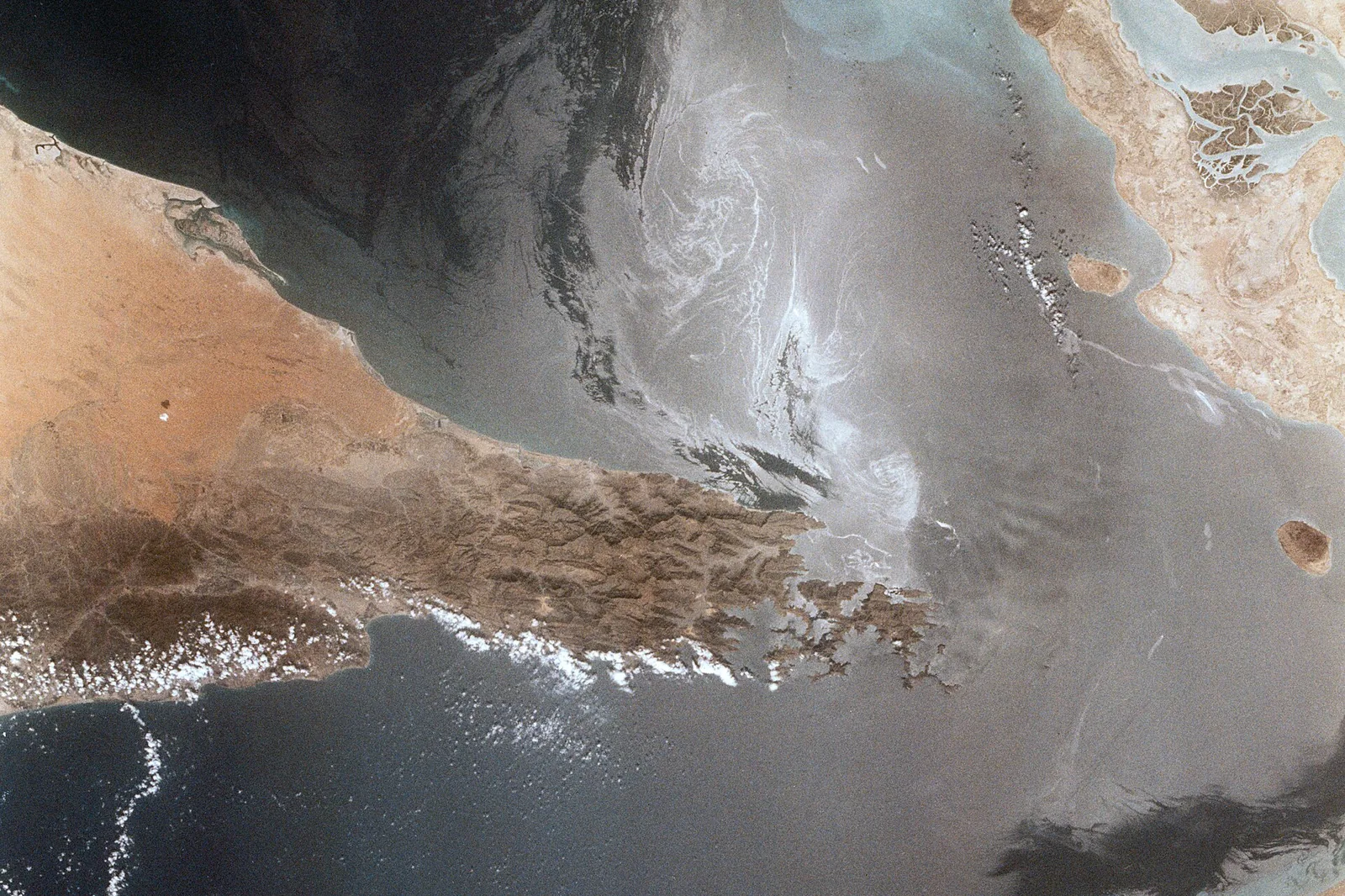
According to France 24, the war began on 28 February with Israeli-US strikes on Iran, which has since blocked the Strait of Hormuz and targeted ships. On 2 November Brent fell 7.64% to $104.77 a barrel (about $70 before the war); another article from the same outlet speaks of a fall of about 6% to $106, the figures varying with the time of measurement. The Wall Street Journal reportedly described a limited US strike on Qeshm island, information we could not independently confirm.
Reading with caution
The statements of the two governments reflect their respective positions and do not mean that a deal is close. An analyst quoted by France 24 sees a possibly tactical signal on the eve of the midterm elections. Follow the news agencies’ reports for developments.
Learn the grammar
French grammar
Learn sentence patterns and usage from the article’s own sentences.
01The present indicative
est / sont + attribute (noun, adjective, prepositional phrase)
Les déclarations des deux gouvernements reflètent leurs positions respectives et ne signifient pas qu’un accord est proche.Key pointsÊtre in the present is est for a singular subject and sont for a plural one. It describes nature, state or place (“is”, “is located”). If what follows (the attribute) is a noun, adjective or prepositional phrase, it is not a passive. If a past participle follows, it is a passive (est annoncé). Headlines and summaries often use the present to describe the current situation.
02The passé composé
present of avoir + past participle
Après avoir menacé Téhéran ce week-end, Donald Trump a évoqué lundi un accord possible.Key pointsThe passé composé is the most common past tense, used for “did” and “has done” — actions completed in the past. It is formed with the auxiliary avoir (a / ont…) in the present + a past participle. Past participles of -er verbs end in -é (annoncer → annoncé); learn the irregular ones (faire → fait, prendre → pris, voir → vu). In the negative, ne … pas wraps the auxiliary (n’a pas annoncé). In the news it reports facts that have already happened, such as “announced” or “voted”.
03The passé composé of pronominal verbs
se + present of être + past participle
Vance s’est dit « plutôt optimiste » sur une issue négociée, sans calendrier.Key pointsThe passé composé of a pronominal verb (se + verb) always uses être as auxiliary (il s’est diffusé / elles se sont réunies). Se changes with the subject: me, te, se, nous, vous. The past participle usually agrees with the subject in gender and number.
04The imparfait
stem (nous form of the present) + -ais / -ait / -ions / -iez / -aient
Selon France 24 (2 novembre), Donald Trump avait menacé ce week-end de porter à l’Iran un « coup de massue » et dit devoir « s’occuper » d’un ou deux sites nucléaires.Key pointsThe imparfait describes states, background, habits and actions in progress in the past (il était, elle avait, ils pensaient). Take the nous form of the present, drop -ons, and add -ais / -ais / -ait / -ions / -iez / -aient. If the passé composé gives “the event itself”, the imparfait paints “the situation at the time”.
05The present conditional
stem (infinitive) + -ais / -ait / -ions / -iez / -aient
Iran : Trump dit qu’un accord « pourrait arriver », Ormuz et pétrole au centre des tractationsKey pointsThe conditional expresses possibility, supposition, unconfirmed information and polite requests (“would”, “might”). It uses the same stem as the future and the same endings as the imparfait (-ais, -ait, -ions, -iez, -aient): pouvoir → il pourrait. In the news it is used to avoid asserting, as in “is reported to…” or “there is a possibility…”.
06The passive voice in the present
être (est / sont) + past participle (+ par / de)
Les dates des faits et des annonces sont précisées dans le texte.Key pointsThe passive means “is done” or “is being done”. It is formed with être + past participle, which agrees with the subject in gender and number (la mesure est adoptée / les mesures sont adoptées). The agent is introduced by par (or de). In the news it is common when the event, rather than the actor, is the focus (est prévu / est annoncé / est connu).
07The imperative
present vous form (-ez) / nous (-ons) / tu
Suivez les dépêches des agences pour la suite.Key pointsThe imperative expresses commands, requests and advice. It has no subject: the sentence starts with the verb (Consultez les informations.). The vous form ends in -ez, nous in -ons (Restons prudents.), and tu in -e for -er verbs (Consulte). It is very common in notices and warnings (Vérifiez, Consultez, Restez informé).
08Negation and its scope
ne / n’ … pas · ne … plus
Lundi, il a estimé qu’un accord « pourrait arriver », reliant la baisse du pétrole au fait que les gens n’anticipent pas de guerre.Key pointsNormally ne and pas wrap the verb. Before a vowel, ne becomes n’. Check which part of the sentence the negation covers. Ne … plus means “no longer”.
09Citing a source with selon
selon + noun / organisation
Selon France 24 (2 novembre), Donald Trump avait menacé ce week-end de porter à l’Iran un « coup de massue » et dit devoir « s’occuper » d’un ou deux sites nucléaires.Key pointsSelon means “according to”. Put a person or organisation after it as the source. It separates facts the writer checked directly from what another body or report said. Citing a source does not turn a forecast into an accomplished fact.
10Pouvoir: ability and possibility
peut / peuvent / pourrait + infinitive
Un analyste cité par France 24 y voit un signal peut-être tactique à la veille des élections de mi-mandat.Key pointsPut a base-form verb after pouvoir. Peut means “can” or “may”; the conditional pourrait gives a more reserved possibility, “might”. It does not necessarily mean implementation is settled.
11The subject relative pronoun qui
noun + qui + verb
Selon France 24, la guerre a commencé le 28 février par des frappes israélo-américaines sur l’Iran, qui bloque depuis le détroit d’Ormuz et vise des navires.Key pointsQui continues a description of the person or thing just mentioned (“the one that does…”). Because qui is itself the subject of the next verb, do not repeat the subject. The verb agrees with the noun qui refers to.
12Delimiting an interval
de … à … / du … au …
Le 2 novembre, le Brent a reculé de 7,64 % à 104,77 dollars le baril (environ 70 avant la guerre) ; un autre article du même média parle d’une baisse d’environ 6 % à 106 dollars, les chiffres variant selon le moment de la mesure.Key pointsDe…à… shows the start and end, “from … to …”, and is also used for changes in figures. With dates, de + le becomes du and à + le becomes au, giving forms like du 13 au 15. Check whether the interval concerns dates, times or amounts.
Japanese grammar
Understand the structure and usage from the text.
01Citing a source: によると
noun + によると
France 24(11月2日付)によると、トランプ氏は週末にイランへ「強い一撃(coup de massue)」を加えるかもしれないと警告し、核施設を1、2か所「片づける」必要があるとも述べていました。Key pointsAs in “LCPによると”, it shows where the information comes from. What that source reported follows. It is used differently from “私にとって”, which gives one’s own opinion.
02Rejecting an interpretation
〜わけではない / 〜という意味ではない
両政府の発言は、それぞれの立場を示すもので、合意が近いという意味ではありません。Key pointsThese forms limit and deny an interpretation: “it does not necessarily follow” or “that is not what is meant”. They do not necessarily deny every fact in the sentence. Read what is being denied together with the earlier part.
03Expressing a possibility
〜可能性がある / 〜かもしれない
週末に「強い一撃」を警告していたトランプ米大統領が、2日には合意の可能性に言及しました。Key pointsThese forms say something may happen. Even when “possibility” is written, it does not mean it will certainly happen. Check whose forecast it is, plus the time and conditions.
04Polite negation and plain form
〜ではありません / 〜ではない
両政府の発言は、それぞれの立場を示すもので、合意が近いという意味ではありません。Key pointsThey negate a noun and similar content. “ではありません” is the polite form and “ではない” the plain form. “成立ではありません” shows that it cannot be said to have been concluded.
05Cause or purpose with ため
〜ため / 〜ために
しかし月曜には、イランとの合意は「あり得る」と話し、原油価格の下落を、人々が戦争を想定していないためだと説明しました。Key pointsため is used for both reason and purpose. “成立ではないため” is a reason and “運転手を守るため” a purpose. Decide from the whole sentence whether what precedes is a cause or a goal.
06The polite past ました
verb stem (連用形) + ました
ヴァンス副大統領は、交渉による戦争の終結に「かなり楽観的」だとしましたが、時期は示していません。Key pointsIn “発表しました”, ました makes a verb polite past. The negative is “ませんでした”. Read the actual date together with the date and time in the text.