Hamaoka nuclear plant: Shizuoka court rejects residents’ request to halt operation
Checked on
Published on
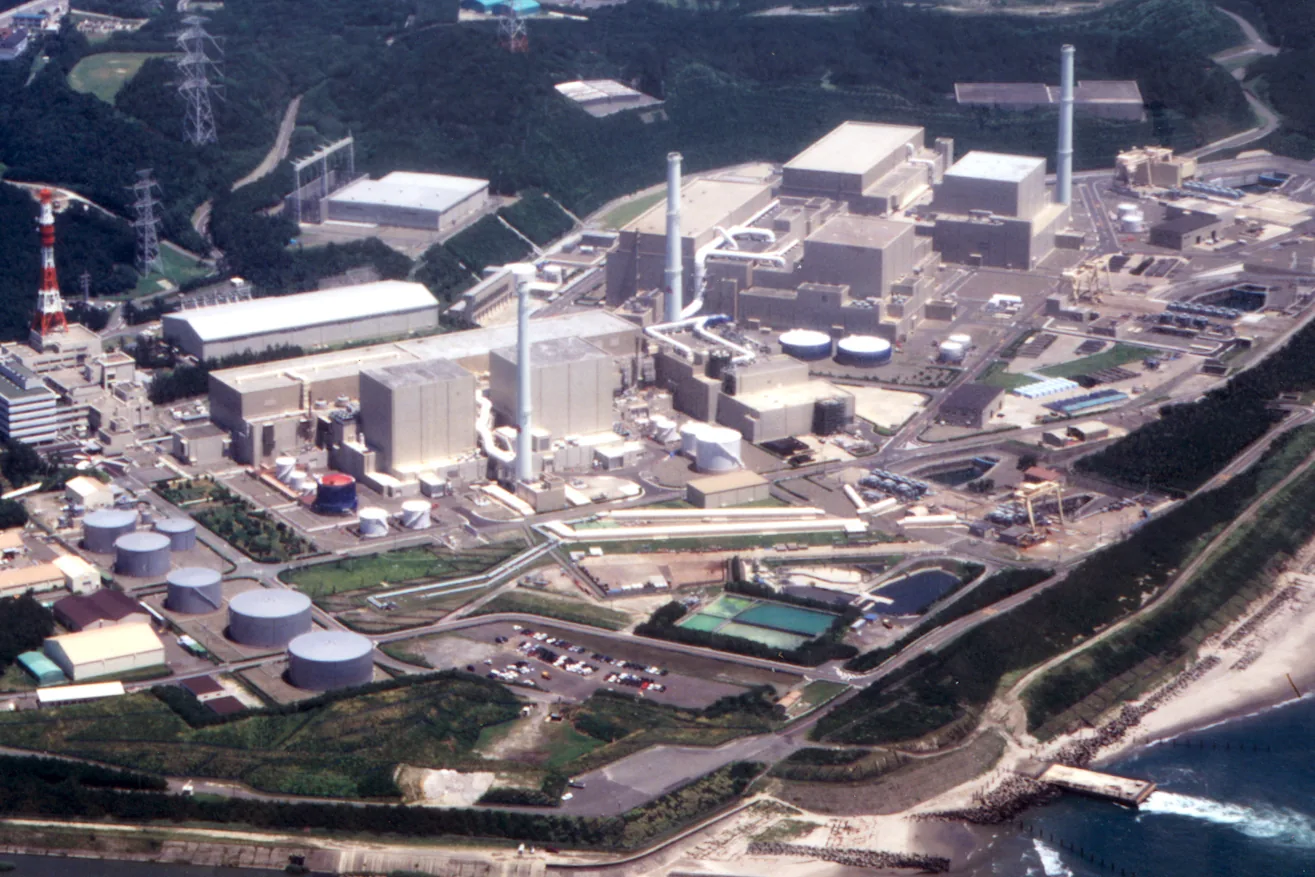
NHK reports that on 27 October the Shizuoka court rejected a request from local residents who demanded a halt to the operation of reactors 3 to 5 at Chubu Electric Power’s Hamaoka plant.
In this article
The essentials
According to NHK, on 27 October the Shizuoka court rejected the request of residents who wanted to stop the operation of reactors 3 to 5 at Chubu Electric Power’s Hamaoka nuclear power plant, located in Omaezaki (Shizuoka Prefecture).
What lawsuit is this?
The plaintiffs asked for an “injunction to cease” operation of reactors 3 to 5, that is, a court order to end it. NHK says safety was at the heart of the dispute. As the request was rejected, no order to halt was issued.
What had been reported before the ruling
According to NHK’s related headlines, a “falsification” of data on seismic assumptions had caused a scandal in January. On 25 September, a report on these irregularities was published, with a headline saying Chubu Electric is “not qualified to operate a plant”. The same day, the company withdrew its application for review towards restarting Hamaoka. On 8 October, its president Minoru Yasui reportedly said the seismic data would be recalculated.
What we do not know yet
The NHK text could only be read in part: the court’s reasons, the number of plaintiffs, the reactions of the plaintiffs and of Chubu Electric, and any appeal are not in what could be consulted.
Learn the grammar
French grammar
Learn sentence patterns and usage from the article’s own sentences.
01The present indicative
est / sont + attribute (noun, adjective, prepositional phrase)
Les dates d’annonce, des faits et de vérification sont distinctes.Key pointsÊtre in the present is est for a singular subject and sont for a plural one. It describes nature, state or place (“is”, “is located”). If what follows (the attribute) is a noun, adjective or prepositional phrase, it is not a passive. If a past participle follows, it is a passive (est annoncé). Headlines and summaries often use the present to describe the current situation.
02The passé composé
present of avoir + past participle
NHK rapporte que le 27 octobre, le tribunal de Shizuoka a rejeté la demande de riverains qui réclamaient l’arrêt de l’exploitation des réacteurs 3 à 5 de la centrale de Hamaoka, de Chubu Electric Power.Key pointsThe passé composé is the most common past tense, used for “did” and “has done” — actions completed in the past. It is formed with the auxiliary avoir (a / ont…) in the present + a past participle. Past participles of -er verbs end in -é (annoncer → annoncé); learn the irregular ones (faire → fait, prendre → pris, voir → vu). In the negative, ne … pas wraps the auxiliary (n’a pas annoncé). In the news it reports facts that have already happened, such as “announced” or “voted”.
03The imparfait
stem (nous form of the present) + -ais / -ait / -ions / -iez / -aient
Selon NHK, le 27 octobre, le tribunal de Shizuoka a rejeté la demande des habitants qui voulaient faire arrêter l’exploitation des réacteurs 3 à 5 de la centrale nucléaire de Hamaoka, de Chubu Electric Power, située à Omaezaki (préfecture de Shizuoka).Key pointsThe imparfait describes states, background, habits and actions in progress in the past (il était, elle avait, ils pensaient). Take the nous form of the present, drop -ons, and add -ais / -ais / -ait / -ions / -iez / -aient. If the passé composé gives “the event itself”, the imparfait paints “the situation at the time”.
04The present conditional
stem (infinitive) + -ais / -ait / -ions / -iez / -aient
Le 8 octobre, son président Minoru Yasui aurait indiqué que les données sismiques seraient recalculées.Key pointsThe conditional expresses possibility, supposition, unconfirmed information and polite requests (“would”, “might”). It uses the same stem as the future and the same endings as the imparfait (-ais, -ait, -ions, -iez, -aient): pouvoir → il pourrait. In the news it is used to avoid asserting, as in “is reported to…” or “there is a possibility…”.
05The passive voice in the present
être (est / sont) + past participle (+ par / de)
Le 25 septembre, un rapport sur ces irrégularités a été publié, avec un titre indiquant que Chubu Electric « n’est pas qualifiée pour exploiter une centrale ».Key pointsThe passive means “is done” or “is being done”. It is formed with être + past participle, which agrees with the subject in gender and number (la mesure est adoptée / les mesures sont adoptées). The agent is introduced by par (or de). In the news it is common when the event, rather than the actor, is the focus (est prévu / est annoncé / est connu).
06The passive in the passé composé
a / ont été + past participle
La demande ayant été rejetée, aucun ordre d’arrêt n’a été prononcé.Key pointsThe past passive means “was done”. Its form is present of avoir + été (past participle of être) + past participle. Été does not change, but the last participle agrees with the subject in gender and number (la loi a été votée / les textes ont été votés). It is frequent in news reporting results such as votes, decisions and announcements.
07Pronominal verbs
se / s’ + verb
De quel procès s’agit-il ?Key pointsA pronominal verb is used with a reflexive pronoun (me, te, se, nous, vous) before the verb. It can mean “do to oneself”, “be done” or “do to each other”. In the news, se traduire (to result in), se tenir (to take place), s’agir de (to be a matter of) and se diffuser (to spread) are frequent. The pronoun changes with the subject (il se tient / ils se tiennent / je me souviens).
08Negation and its scope
ne / n’ … pas · ne … plus
La demande ayant été rejetée, aucun ordre d’arrêt n’a été prononcé.Key pointsNormally ne and pas wrap the verb. Before a vowel, ne becomes n’. Check which part of the sentence the negation covers. Ne … plus means “no longer”.
09Citing a source with selon
selon + noun / organisation
Selon NHK, le 27 octobre, le tribunal de Shizuoka a rejeté la demande des habitants qui voulaient faire arrêter l’exploitation des réacteurs 3 à 5 de la centrale nucléaire de Hamaoka, de Chubu Electric Power, située à Omaezaki (préfecture de Shizuoka).Key pointsSelon means “according to”. Put a person or organisation after it as the source. It separates facts the writer checked directly from what another body or report said. Citing a source does not turn a forecast into an accomplished fact.
10Purpose with pour
pour + infinitive
Le 25 septembre, un rapport sur ces irrégularités a été publié, avec un titre indiquant que Chubu Electric « n’est pas qualifiée pour exploiter une centrale ».Key pointsThis is the purpose, “in order to…”. Put the base form of a verb after pour. The purpose stated here is separate from whether the effect was actually achieved.
Japanese grammar
Understand the structure and usage from the text.
01Citing a source: によると
noun + によると
NHKによると、27日、静岡地方裁判所は、中部電力の浜岡原子力発電所の3号機から5号機について、運転を止めるよう住民らが求めた裁判で、訴えを退ける判決を言い渡しました。Key pointsAs in “LCPによると”, it shows where the information comes from. What that source reported follows. It is used differently from “私にとって”, which gives one’s own opinion.
02Indicating the subject: について
noun + について
9月25日には、不正についての報告書が公表され、「中部電力に原発を運転する資格がない」という見出しの記事が出ました。Key pointsAs in “予算について”, it shows the topic to be talked about or explained. In the form “〜についての報道”, の is added so that the group qualifies the following noun.
03Qualifying a noun with に関する
noun + に関する + noun
NHKの関連の記事の見出しによると、今年の1月に、地震の想定に関するデータの「改ざん」が問題になりました。Key pointsAs in “税控除に関する採決”, it explains what the following noun relates to. It is close to “about” and is common in headlines and descriptions.
04The polite past ました
verb stem (連用形) + ました
NHKは、27日、静岡地方裁判所が、中部電力の浜岡原発3号機から5号機の運転を止めるよう求めた住民らの訴えを、退ける判決を言い渡したと伝えました。Key pointsIn “発表しました”, ました makes a verb polite past. The negative is “ませんでした”. Read the actual date together with the date and time in the text.
05Quoting with と: content and report
plain-form sentence + と + verbe de parole (報じる, 説明する…)
10月8日には、安井稔社長が、浜岡の地震の想定のデータを、計算し直す方針を示したと伝えられています。Key pointsと takes the content that is reported or explained. In “改定する方針だと報じました”, “改定する方針だ” is what the report said. Separating the content from who said it and how makes long sentences easier to read.
06Possibility in Japanese: できる・られる
verb potential form / 〜ことができる
NHKの記事は、本文が途中までしか読めず、裁判所の判断の理由、原告の人数、原告と中部電力のコメント、控訴するかどうかは、確認できませんでした。Key pointsできる is the basic verb for ability. The potential form of 受ける is 受けられる. The same られる can also be passive or honorific, so decide from the meaning of the sentence.