Seven years after the Shuri fire, the castle prepares to reopen
Checked on
Published on
- 31 October is seven years since the 2019 fire at Shuri Castle.
- Restoration work on the main hall was completed in September, and public opening is planned for 23 November.
- Besides restoring its historic appearance, work on fire-protection equipment and passing on traditional skills is under way.
In this article
An anniversary today
According to Jiji Press, seven years have passed since the fire at Shuri Castle in Naha on 31 October 2019. Reconstruction of the main building was completed in September; preparations to welcome the public continue.
When can it be visited?
The official schedule provides for a ceremony on 22 November and the opening of the main building on the 23rd. The end of the works does not mean an immediate interior visit is possible. Check the park’s official information before travelling.
What the reconstruction passes on
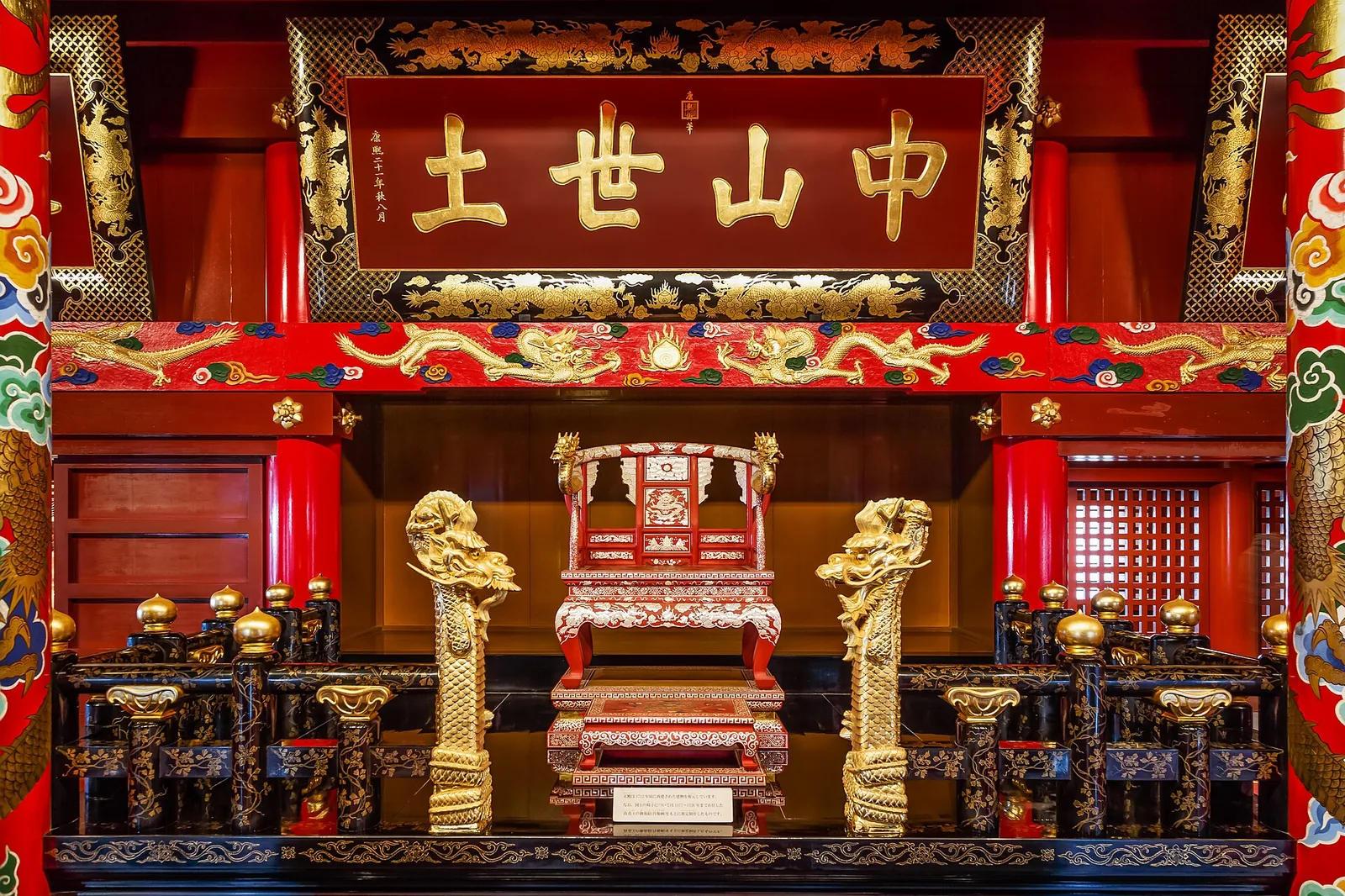
Shuri bears witness to the history and culture of the Ryūkyū Kingdom. The seiden is the main building. The reconstruction also passes on building and decorative techniques, beyond reproducing an appearance.
Fire prevention
Jiji Press reports in particular the installation of sprinklers and an automatic alert system to the fire brigade. Restoring an old appearance and preventing a new fire are two complementary goals: passing on history and protecting the site.
Learn the grammar
French grammar
Learn sentence patterns and usage from the article’s own sentences.
01Negation and its scope
ne / n’ … pas · ne … plus
La fin du chantier ne signifie pas une visite intérieure immédiatement possible.Key pointsNormally ne and pas wrap the verb. Before a vowel, ne becomes n’. Check which part of the sentence the negation covers. Ne … plus means “no longer”.
02Citing a source with selon
selon + noun / organisation
Selon Jiji Press, sept ans se sont écoulés depuis l’incendie du château de Shuri, à Naha, le 31 octobre 2019.Key pointsSelon means “according to”. Put a person or organisation after it as the source. It separates facts the writer checked directly from what another body or report said. Citing a source does not turn a forecast into an accomplished fact.
03Expressing a plan or a deadline
être prévu / prévoir / être envisagé
Le calendrier officiel prévoit une cérémonie le 22 novembre et l’ouverture du bâtiment principal le 23.Key pointsPrévoir means “to plan, to expect”. Être prévu means “to be scheduled” and être envisagé means “to be under consideration”. In the news, read them separately from expressions that describe events that have already happened. They do not say that the event has already taken place.
04The present of être
est / sont + complement
La fin des travaux et l’ouverture au public sont deux étapes distinctes.Key pointsEst is third-person singular and sont third-person plural of être. They express “is / are” — a state or description. If a past participle follows, it is a different structure such as the passive, so check the words that follow.
05Dates and their prepositions
le + 日付 / du … au …
Le 31 octobre marque les sept ans de l’incendie de 2019.Key pointsLe 15 octobre means “on 15 October”. Distinguish the le before a date from the le that marks a weekly habit like a weekday. Du is de + le and au is à + le, so decide the meaning from the verb and period expressions around them. Their role depends on the group: a range of dates, the date of a bulletin or another complement.
06Marking a starting point
dès / depuis / à partir de + point in time
Selon Jiji Press, sept ans se sont écoulés depuis l’incendie du château de Shuri, à Naha, le 31 octobre 2019.Key pointsDès means “as early as” or “as soon as”, and à partir de means “from … onwards”. Depuis basically shows a state or period continuing from a point in time. All deal with a start, but they are not used the same way.
Japanese grammar
Understand the structure and usage from the text.
01Citing a source: によると
noun + によると
時事通信によると、那覇市の首里城で2019年10月31日に起きた火災から7年となりました。Key pointsAs in “LCPによると”, it shows where the information comes from. What that source reported follows. It is used differently from “私にとって”, which gives one’s own opinion.
02Polite negation and plain form
〜ではありません / 〜ではない
建物の工事が終わった日と、観光客が内部を見学できる日は同じではありません。Key pointsThey negate a noun and similar content. “ではありません” is the polite form and “ではない” the plain form. “成立ではありません” shows that it cannot be said to have been concluded.
03Qualifying a noun with に関する
noun + に関する + noun
復元は外見を作り直すだけでなく、建築や装飾に関する技術を次の世代へ受け継ぐ機会にもなります。Key pointsAs in “税控除に関する採決”, it explains what the following noun relates to. It is close to “about” and is common in headlines and descriptions.
04Giving examples with など
noun / expression + など
時事通信は、新しい復元でスプリンクラーや消防への自動通報などが導入されたと報じています。Key points“暴言など” gives “abusive language” as one example. It is not necessarily a closed list of only the things named. It also helps when reading the scope of a news story.
05The polite past ました
verb stem (連用形) + ました
時事通信によると、那覇市の首里城で2019年10月31日に起きた火災から7年となりました。Key pointsIn “発表しました”, ました makes a verb polite past. The negative is “ませんでした”. Read the actual date together with the date and time in the text.
06Quoting with と: content and report
plain-form sentence + と + verbe de parole (報じる, 説明する…)
時事通信は、新しい復元でスプリンクラーや消防への自動通報などが導入されたと報じています。Key pointsと takes the content that is reported or explained. In “改定する方針だと報じました”, “改定する方針だ” is what the report said. Separating the content from who said it and how makes long sentences easier to read.