Shibuya Halloween: packed streets on 31 October and 394 fines for littering and smoking
Checked on
Published on
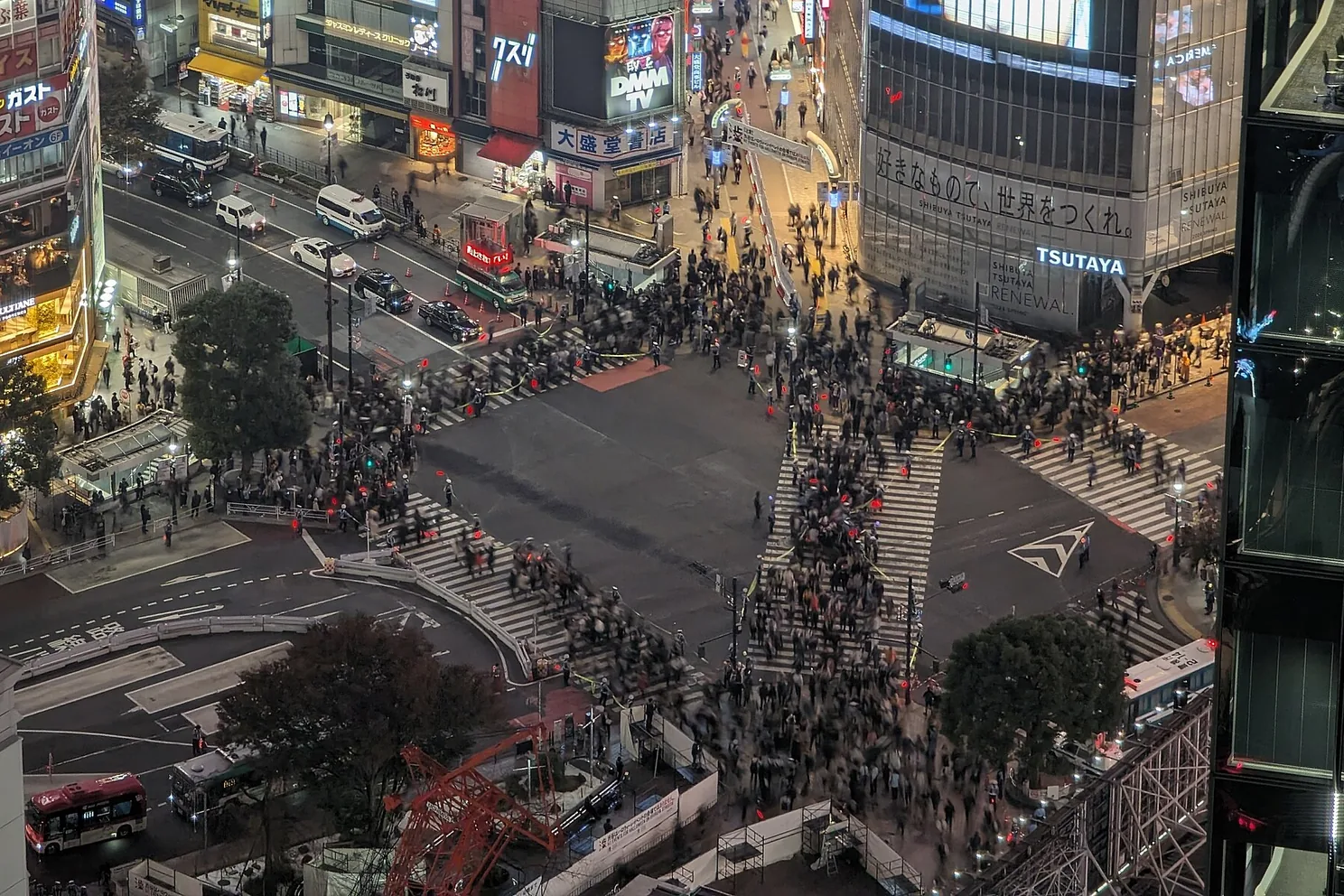
- Halloween fell on a Saturday for the first time in six years; around 9 pm, Shibuya’s Center Gai was almost impossible to move through.
- On 31 October there were 394 fines for smoking or littering in the street, and police deployed several hundred officers, including “DJ police”.
- The number of people present, arrests and injuries is not given in the articles consulted.
In this article
What happened in Shibuya
According to a 1 November article by KAB (an ANN network station), Halloween fell on a Saturday for the first time in six years. Around 9 pm, Shibuya’s Center Gai street was so crowded that people could barely move. Shibuya’s visitor numbers peaked at about 40,000 in 2019 and then declined; an increase was feared this year.
Security and restrictions
The Tokyo Metropolitan Police deployed several hundred officers, including “DJ police”. At the Scramble Crossing, cones kept vehicles out. In Center Gai, barriers created a one-way flow, and yellow tape was put up shortly before 10 pm.
Nuisance behaviour and fines
The article cites groups walking while playing loud music, street dancing at the crossing, photo sessions blocking restaurant entrances, and cars revving their engines in front of a police box. Shibuya Ward has charged a 2,000-yen fine for littering in the street since June. On 31 October, fines for smoking or littering in the street totalled 394.
Measures announced beforehand
According to the ward’s measures as relayed by SoraNews24, the slogan is “GOODBYE BAD HALLOWEEN”. Drinking in the street is banned every day from 6 pm to 5 am (since October 2024). 62 nearby shops were asked not to sell alcohol from 6 pm on the 31st to 5 am the next morning. The Hachiko statue was fenced off from 6 am on 30 October to 5 pm on 1 November, and LUUP and Lime scooters were suspended around the station from 5 pm on 30 October to 5 am on the 31st. 185 private security guards and 70 ward employees were planned, at a reported cost of about 74 million yen. These are advance announcements: how they were carried out on the night could not be verified here.
What could not be verified
The exact number of people present, arrests and injuries is not given in the articles consulted. The peak the ward expected in Center Gai (about 18,000 people, against about 4,200 last year) is a forecast, not a counted figure.
What 過料 (karyō) means
A karyō is an administrative monetary penalty, distinct from a criminal fine (罰金, bakkin). The 2,000 yen for littering in Shibuya falls into this administrative category.
Learn the grammar
French grammar
Learn sentence patterns and usage from the article’s own sentences.
01Negation and its scope
ne / n’ … pas · ne … plus
Il a été demandé à 62 commerces voisins de ne pas vendre d’alcool de 18 heures le 31 à 5 heures le lendemain.Key pointsNormally ne and pas wrap the verb. Before a vowel, ne becomes n’. Check which part of the sentence the negation covers. Ne … plus means “no longer”.
02Citing a source with selon
selon + noun / organisation
Selon un article de KAB (réseau ANN) du 1er novembre, Halloween est tombé un samedi pour la première fois depuis six ans.Key pointsSelon means “according to”. Put a person or organisation after it as the source. It separates facts the writer checked directly from what another body or report said. Citing a source does not turn a forecast into an accomplished fact.
03Expressing a plan or a deadline
être prévu / prévoir / être envisagé
La statue de Hachiko a été entourée de barrières du 30 octobre à 6 heures au 1er novembre à 17 heures, et les trottinettes LUUP et Lime ont été suspendues autour de la gare du 30 octobre à 17 heures au 31 à 5 heures. 185 agents de sécurité privés et 70 employés de l’arrondissement étaient prévus, pour un coût annoncé d’environ 74 millions de yens.Key pointsPrévoir means “to plan, to expect”. Être prévu means “to be scheduled” and être envisagé means “to be under consideration”. In the news, read them separately from expressions that describe events that have already happened. They do not say that the event has already taken place.
04Purpose with pour
pour + infinitive
Le 31 octobre, les amendes pour fumer ou jeter des déchets dans la rue se sont élevées à 394 au total.Key pointsThis is the purpose, “in order to…”. Put the base form of a verb after pour. The purpose stated here is separate from whether the effect was actually achieved.
05The passé composé for events
present of avoir + past participle
Ce que les médias ont confirmé sur la foule, la sécurité et les nuisances, les mesures annoncées avant l’événement et ce qui reste inconnu.Key pointsIt reports past events, as in “announced” or “explained”. A / ont is the auxiliary avoir and the next word is the past participle. The passé composé alone does not tell you the date of the event.
06The present of être
est / sont + complement
D’après les mesures de l’arrondissement relayées par SoraNews24, le slogan est « GOODBYE BAD HALLOWEEN ».Key pointsEst is third-person singular and sont third-person plural of être. They express “is / are” — a state or description. If a past participle follows, it is a different structure such as the passive, so check the words that follow.
Japanese grammar
Understand the structure and usage from the text.
01Citing a source: によると
noun + によると
熊本朝日放送(ANN系)の11月1日の記事によると、31日のハロウィンは6年ぶりに土曜日と重なりました。Key pointsAs in “LCPによると”, it shows where the information comes from. What that source reported follows. It is used differently from “私にとって”, which gives one’s own opinion.
02Polite negation and plain form
〜ではありません / 〜ではない
前年は約4200人)は予想の数字で、実際の人数ではありません。Key pointsThey negate a noun and similar content. “ではありません” is the polite form and “ではない” the plain form. “成立ではありません” shows that it cannot be said to have been concluded.
03Giving examples with など
noun / expression + など
記事は、大きな音で音楽を流しながら歩く集団、交差点での路上ダンス、飲食店の入口をふさぐ撮影会、交番の前で車のエンジンを空ぶかしする行為などを伝えています。Key points“暴言など” gives “abusive language” as one example. It is not necessarily a closed list of only the things named. It also helps when reading the scope of a news story.
04The polite past ました
verb stem (連用形) + ました
夜9時すぎ、渋谷のセンター街は身動きがとれないほど混雑しました。Key pointsIn “発表しました”, ました makes a verb polite past. The negative is “ませんでした”. Read the actual date together with the date and time in the text.
05Quoting with と: content and report
plain-form sentence + と + verbe de parole (報じる, 説明する…)
警備員185人と区の職員70人も配置され、費用は約7400万円と伝えられています。Key pointsと takes the content that is reported or explained. In “改定する方針だと報じました”, “改定する方針だ” is what the report said. Separating the content from who said it and how makes long sentences easier to read.
06Treating a clause like a noun with こと
plain-form sentence + こと + particle
渋谷の人出は2019年の約4万人をピークに減っていましたが、今年は増えることが心配されていました。Key points“〜すること” treats an action or content like a noun. The particle after it (が・を・は…) shows its role in the sentence. “ことができる” is a fixed combination meaning “can”.