Japan’s Constitution turns 80: the revision push and the “emergency clause” debate
Checked on
Published on
- 3 November marks 80 years since the Constitution was promulgated (it took effect on 3 May 1947).
- The ruling parties want to start the amendment procedure but do not have a majority in the House of Councillors.
- Experts are divided on a disaster “emergency clause”: some support it, others urge caution.
In this article
Eighty years of the Constitution
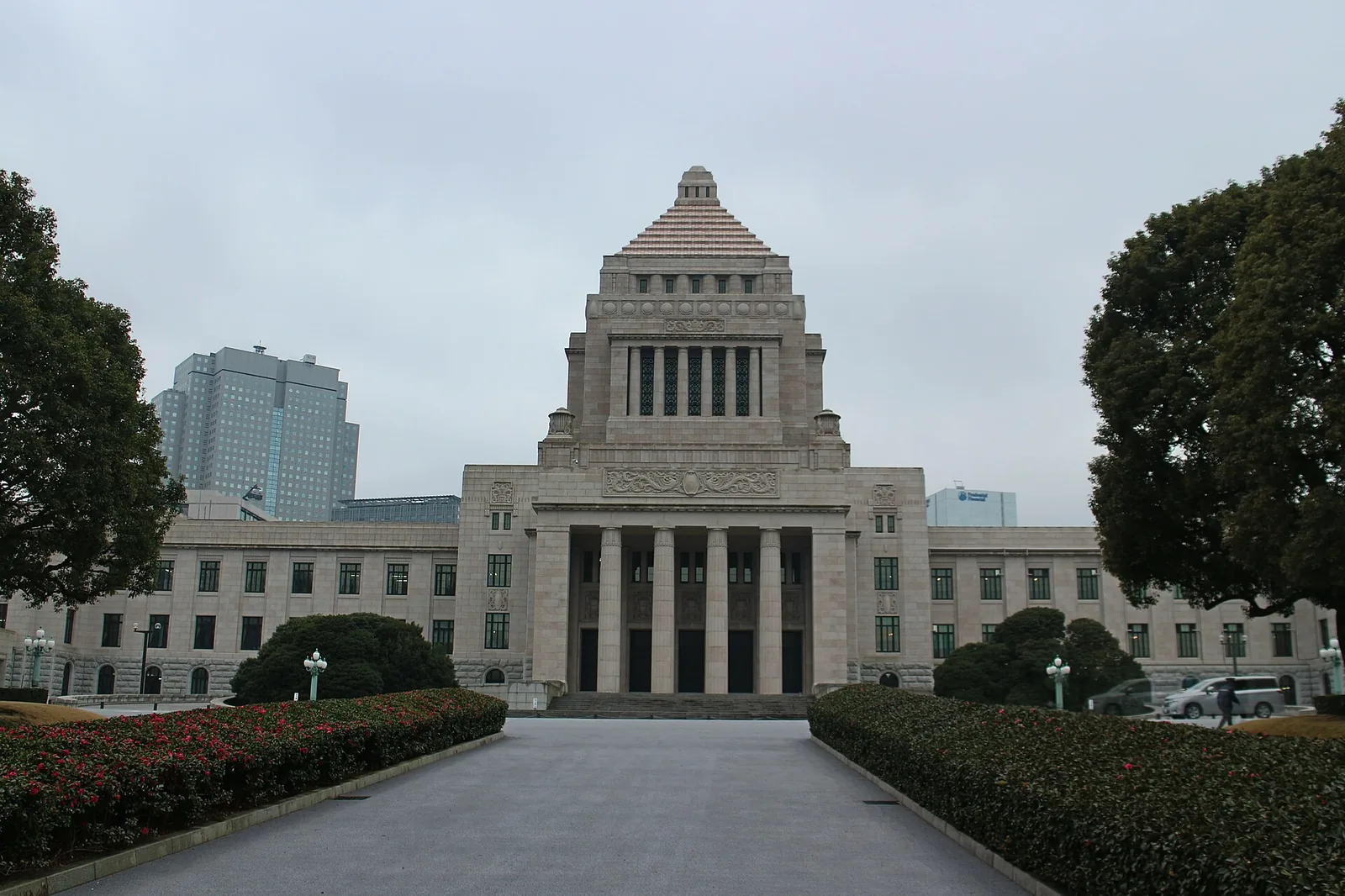
According to Jiji Press, relayed by Nippon.com, 3 November 2026 marks 80 years since the promulgation of the Japanese Constitution, promulgated on 3 November 1946 and in force from 3 May 1947. Created by revising the Meiji Constitution after the war, it rests on popular sovereignty, respect for fundamental human rights and pacifism.
The push for revision
The ruling Liberal Democratic Party (LDP) and the Japan Innovation Party (Ishin) want to start the Diet procedure for proposing an amendment, which would be a first. In February’s general election, the coalition won well over two-thirds of the seats in the House of Representatives. But a proposal requires two-thirds of the members of each chamber, and the coalition lacks a majority in the House of Councillors. Consensus-building between the ruling and opposition parties is making little progress and public debate remains subdued, the article notes.
The emergency clause debate
In another Jiji Press report, the debate continues over adding to the Constitution an emergency clause that would temporarily expand government powers during major disasters. Yoshiaki Kawata, a professor at Kansai University specialising in natural disasters, sees it as a tool for speeding up the initial response to a major earthquake beneath Tokyo or along the Nankai Trough: the Disaster Countermeasures Basic Act already provides for a state of emergency, but coordination between ministries takes time while the damage spreads. Others fear a concentration of powers; the lawyer Koju Nagai is cautious.
What could not be verified
The precise content of a draft amendment, the timing of a proposal, the detailed positions of the opposition parties and opinion polls are not in the articles consulted. General reminder of the mechanism (outside the cited articles): after a proposal by the Diet, an amendment must still be approved in a referendum.
Learn the grammar
French grammar
Learn sentence patterns and usage from the article’s own sentences.
01The passé composé
present of avoir + past participle
Aux élections législatives de février, la coalition a obtenu bien plus des deux tiers des sièges de la Chambre des représentants.Key pointsThe passé composé is the most common past tense, used for “did” and “has done” — actions completed in the past. It is formed with the auxiliary avoir (a / ont…) in the present + a past participle. Past participles of -er verbs end in -é (annoncer → annoncé); learn the irregular ones (faire → fait, prendre → pris, voir → vu). In the negative, ne … pas wraps the auxiliary (n’a pas annoncé). In the news it reports facts that have already happened, such as “announced” or “voted”.
02The present conditional
stem (infinitive) + -ais / -ait / -ions / -iez / -aient
Le Parti libéral-démocrate (PLD) et le Parti de l’innovation du Japon (Ishin), au pouvoir, veulent engager à la Diète la procédure de proposition d’amendement, qui serait une première.Key pointsThe conditional expresses possibility, supposition, unconfirmed information and polite requests (“would”, “might”). It uses the same stem as the future and the same endings as the imparfait (-ais, -ait, -ions, -iez, -aient): pouvoir → il pourrait. In the news it is used to avoid asserting, as in “is reported to…” or “there is a possibility…”.
03The passive voice in the present
être (est / sont) + past participle (+ par / de)
Les dates des faits et des annonces sont précisées dans le texte.Key pointsThe passive means “is done” or “is being done”. It is formed with être + past participle, which agrees with the subject in gender and number (la mesure est adoptée / les mesures sont adoptées). The agent is introduced by par (or de). In the news it is common when the event, rather than the actor, is the focus (est prévu / est annoncé / est connu).
04Pronominal verbs
se / s’ + verb
D’autres craignent une concentration des pouvoirs ; l’avocat Kôju Nagai se montre prudent.Key pointsA pronominal verb is used with a reflexive pronoun (me, te, se, nous, vous) before the verb. It can mean “do to oneself”, “be done” or “do to each other”. In the news, se traduire (to result in), se tenir (to take place), s’agir de (to be a matter of) and se diffuser (to spread) are frequent. The pronoun changes with the subject (il se tient / ils se tiennent / je me souviens).
05Negation and its scope
ne / n’ … pas · ne … plus
Mais la proposition exige les deux tiers des membres de chaque chambre, et la coalition n’a pas la majorité à la Chambre des conseillers.Key pointsNormally ne and pas wrap the verb. Before a vowel, ne becomes n’. Check which part of the sentence the negation covers. Ne … plus means “no longer”.
06Expressing a plan or a deadline
être prévu / prévoir / être envisagé
Yoshiaki Kawata, professeur à l’université Kansai spécialiste des catastrophes naturelles, y voit un outil pour accélérer la réaction initiale en cas de séisme majeur sous Tokyo ou le long de la fosse de Nankai : la loi de base sur les mesures contre les catastrophes prévoit déjà un état d’urgence, mais la coordination entre ministères prend du temps pendant que les dégâts s’étendent.Key pointsPrévoir means “to plan, to expect”. Être prévu means “to be scheduled” and être envisagé means “to be under consideration”. In the news, read them separately from expressions that describe events that have already happened. They do not say that the event has already taken place.
07Purpose with pour
pour + infinitive
Yoshiaki Kawata, professeur à l’université Kansai spécialiste des catastrophes naturelles, y voit un outil pour accélérer la réaction initiale en cas de séisme majeur sous Tokyo ou le long de la fosse de Nankai : la loi de base sur les mesures contre les catastrophes prévoit déjà un état d’urgence, mais la coordination entre ministères prend du temps pendant que les dégâts s’étendent.Key pointsThis is the purpose, “in order to…”. Put the base form of a verb after pour. The purpose stated here is separate from whether the effect was actually achieved.
08The subject relative pronoun qui
noun + qui + verb
Le Parti libéral-démocrate (PLD) et le Parti de l’innovation du Japon (Ishin), au pouvoir, veulent engager à la Diète la procédure de proposition d’amendement, qui serait une première.Key pointsQui continues a description of the person or thing just mentioned (“the one that does…”). Because qui is itself the subject of the next verb, do not repeat the subject. The verb agrees with the noun qui refers to.
09Dates and their prepositions
le + 日付 / du … au …
Le 3 novembre marque les 80 ans de la promulgation de la Constitution.Key pointsLe 15 octobre means “on 15 October”. Distinguish the le before a date from the le that marks a weekly habit like a weekday. Du is de + le and au is à + le, so decide the meaning from the verb and period expressions around them. Their role depends on the group: a range of dates, the date of a bulletin or another complement.
10Marking an opposition or a reservation
mais / cependant / toutefois / en revanche
Mais la proposition exige les deux tiers des membres de chaque chambre, et la coalition n’a pas la majorité à la Chambre des conseillers.Key pointsThese continue with something that contrasts with the preceding content, or a reservation to note. Mais is the widely usable “but” and en revanche stresses the contrast. After the connector, information may come that corrects the first impression.
Japanese grammar
Understand the structure and usage from the text.
01Citing a source: によると
noun + によると
時事通信(ニッポンドットコム掲載)によると、11月3日は日本国憲法の公布から80年にあたります。Key pointsAs in “LCPによると”, it shows where the information comes from. What that source reported follows. It is used differently from “私にとって”, which gives one’s own opinion.
02Polite negation and plain form
〜ではありません / 〜ではない
発議があっても、最終的には国民投票で過半数の賛成が必要です(この点は憲法の仕組みの一般的な説明で、今回の記事の内容ではありません)。Key pointsThey negate a noun and similar content. “ではありません” is the polite form and “ではない” the plain form. “成立ではありません” shows that it cannot be said to have been concluded.
03Cause or purpose with ため
〜ため / 〜ために
関西大学の河田惠昭教授(災害の専門家)は、首都直下地震や南海トラフ地震のような大災害に備えて、初動を早くするために必要だと考えています。Key pointsため is used for both reason and purpose. “成立ではないため” is a reason and “運転手を守るため” a purpose. Decide from the whole sentence whether what precedes is a cause or a goal.
04The polite past ました
verb stem (連用形) + ました
憲法は1946年11月3日に公布され、1947年5月3日に施行されました。Key pointsIn “発表しました”, ました makes a verb polite past. The negative is “ませんでした”. Read the actual date together with the date and time in the text.
05Quoting with と: content and report
plain-form sentence + と + verbe de parole (報じる, 説明する…)
戦後、明治憲法を改正するかたちで作られ、国民主権、基本的人権の尊重、平和主義を柱としています。Key pointsと takes the content that is reported or explained. In “改定する方針だと報じました”, “改定する方針だ” is what the report said. Separating the content from who said it and how makes long sentences easier to read.
06Treating a clause like a noun with こと
plain-form sentence + こと + particle
一方で、政府に権限が集中することを心配する見方もあり、憲法改正に詳しい弁護士の永井幸寿氏は、慎重な立場です。Key points“〜すること” treats an action or content like a noun. The particle after it (が・を・は…) shows its role in the sentence. “ことができる” is a fixed combination meaning “can”.