Hiroshima: remains of a brother who died after the atomic bombing returned to his sister 81 years later, thanks to a corrected name error
Checked on
Published on
- On 4 November, remains kept at the Genbaku Kuyoto were returned to the victim’s sister (91) after 81 years.
- The cause was an error in the register (“Ishimoto” for “Wakamoto”), found in the city’s general review, which turned up 37 errors.
- It is the first return prompted by a registry error.
- The monument holds the remains of about 70,000 people.
In this article
What happened
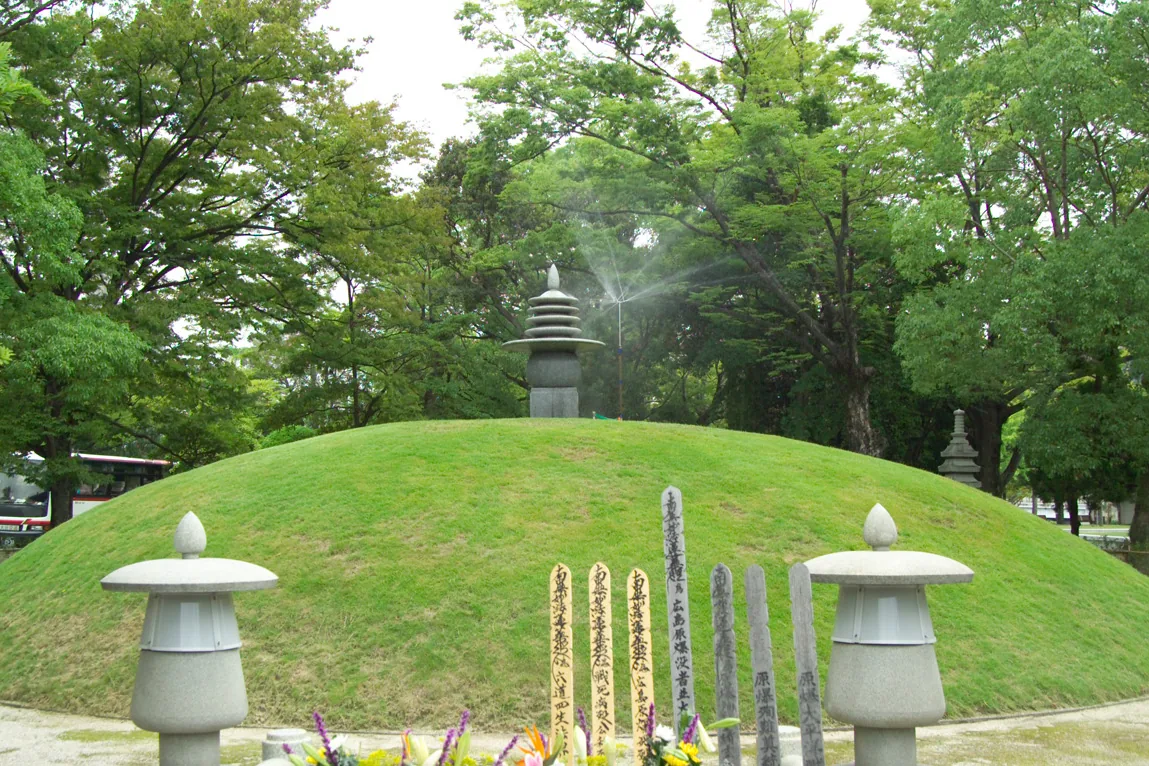
According to Jiji Press, on 4 November the remains of Wakamoto, kept at the atomic bomb memorial mound (Genbaku Kuyoto) in the Peace Memorial Park in Hiroshima, were handed to his family. He died at 13, just after the atomic bombing of 1945. After a minute of silence in front of the monument, the handover took place in the underground chamber. His sister, Mrs Miyoshi, 91, received them; she said she felt above all sadness, and regretted that they had not been found sooner. Their mother, it is reported, thought of him with pain every 6 August.
Why it took 81 years
The envelope of the urn bore “Wakamoto”, but the writing overlapped a fold in the paper, so the register had recorded “Ishimoto”. In a general review carried out by the city from February to March, 813 urns whose name was known but whose family had not been found were examined, and the error came to light. In all, errors in name or age were found for 37 people. It is the first return of remains prompted by an error in the register.
The Genbaku Kuyoto
According to the article, the Genbaku Kuyoto is a monument in the Peace Memorial Park that holds the remains of about 70,000 people. Those whose identity is unknown or whose family has not been found rest there. Reviews of records such as this one make it possible to return identified remains to families. We could not verify whether further returns will follow, nor the situation of the other people whose names contained errors.
Learn the grammar
French grammar
Learn sentence patterns and usage from the article’s own sentences.
01Negation and its scope
ne / n’ … pas · ne … plus
C’est sa sœur, Mme Miyoshi, 91 ans, qui les a reçus ; elle a dit avoir surtout de la tristesse, et regretté qu’ils n’aient pas été retrouvés plus tôt.Key pointsNormally ne and pas wrap the verb. Before a vowel, ne becomes n’. Check which part of the sentence the negation covers. Ne … plus means “no longer”.
02Citing a source with selon
selon + noun / organisation
Selon Jiji Press, le 4 novembre, les restes de Wakamoto, conservés au monument aux victimes de la bombe atomique (Genbaku Kuyoto) du parc du Mémorial de la paix à Hiroshima, ont été remis à sa famille.Key pointsSelon means “according to”. Put a person or organisation after it as the source. It separates facts the writer checked directly from what another body or report said. Citing a source does not turn a forecast into an accomplished fact.
03The present of être
est / sont + complement
C’est la première restitution de ce type.Key pointsEst is third-person singular and sont third-person plural of être. They express “is / are” — a state or description. If a past participle follows, it is a different structure such as the passive, so check the words that follow.
04The subject relative pronoun qui
noun + qui + verb
Selon l’article, le Genbaku Kuyoto est un monument du parc du Mémorial de la paix qui abrite les restes d’environ 70 000 personnes.Key pointsQui continues a description of the person or thing just mentioned (“the one that does…”). Because qui is itself the subject of the next verb, do not repeat the subject. The verb agrees with the noun qui refers to.
05Dates and their prepositions
le + 日付 / du … au …
Selon Jiji Press, le 4 novembre, les restes de Wakamoto, conservés au monument aux victimes de la bombe atomique (Genbaku Kuyoto) du parc du Mémorial de la paix à Hiroshima, ont été remis à sa famille.Key pointsLe 15 octobre means “on 15 October”. Distinguish the le before a date from the le that marks a weekly habit like a weekday. Du is de + le and au is à + le, so decide the meaning from the verb and period expressions around them. Their role depends on the group: a range of dates, the date of a bulletin or another complement.
06Marking an opposition or a reservation
mais / cependant / toutefois / en revanche
L’enveloppe de l’urne portait « Wakamoto », mais l’écriture chevauchait un pli du papier ; le registre avait donc consigné « Ishimoto ».Key pointsThese continue with something that contrasts with the preceding content, or a reservation to note. Mais is the widely usable “but” and en revanche stresses the contrast. After the connector, information may come that corrects the first impression.
Japanese grammar
Understand the structure and usage from the text.
01Citing a source: によると
noun + によると
時事通信によると、11月4日、広島市の平和記念公園にある原爆供養塔に納められていた若本敏明さんの遺骨が、遺族に返されました。Key pointsAs in “LCPによると”, it shows where the information comes from. What that source reported follows. It is used differently from “私にとって”, which gives one’s own opinion.
02Cause or purpose with ため
〜ため / 〜ために
骨つぼの封筒には「若本敏明」と書かれていましたが、文字が折り目に重なっていたため、名簿には「石本敏明」と記録されていました。Key pointsため is used for both reason and purpose. “成立ではないため” is a reason and “運転手を守るため” a purpose. Decide from the whole sentence whether what precedes is a cause or a goal.
03The polite past ました
verb stem (連用形) + ました
広島の原爆供養塔に納められていた遺骨が、名簿の誤記が分かったことで、81年ぶりに遺族に返されました。Key pointsIn “発表しました”, ました makes a verb polite past. The negative is “ませんでした”. Read the actual date together with the date and time in the text.
04Possibility in Japanese: できる・られる
verb potential form / 〜ことができる
返還が続くかどうかや、今回の他に誤記が見つかった人の状況は、ここでは確認できませんでした。Key pointsできる is the basic verb for ability. The potential form of 受ける is 受けられる. The same られる can also be passive or honorific, so decide from the meaning of the sentence.
05Linking actions with the て-form
verb て-form + next expression
名簿の誤記を理由にした返還は初めてです。Key pointsThe て-form links actions in a series, in order or as a reason. In “確認して、出発する” the relation is judged from the content. In “〜ている” it can show an action in progress or a continuing state.
06Linking two nouns with の
noun A + の + noun B
若本さんは1945年の原爆投下の直後に、13歳で亡くなりました。Key pointsA explains noun B that follows. It is not only possession: the relation can be belonging, target, content and more. In “政府の案” and “年金の税控除”, read the relation from the context.