Budō: nine disciplines to discover Japanese martial culture
Checked on
Published on
Jūdō, kendō, kyūdō, sumō, karatedō, aikidō, Shōrinji Kempō, naginata and jūkendō: discover their differences, their history and the spirit of the practice, with anime-style illustrations and parallel-language text.
In this article
Budō: learning a technique, building yourself
Budō is a culture of the body developed in Japan. You learn techniques while working on body, mind and respect for your partner. Even when a discipline includes competitions, victory does not sum up its purpose. Let us look at nine disciplines to find the one that sparks your curiosity.
A few historical landmarks
Some disciplines continue ancient practices; others took their form in the modern era. They were not all born at the same time. Kanō Jigorō founded the Kōdōkan in 1882. Aikidō was created by Ueshiba Morihei; according to the Aikikai’s chronology, its name was adopted in 1942. In 1987 the Japanese Budo Association adopted a charter that emphasises in particular courtesy and self-development.
The nine disciplines of the Japanese Budo Association
The definition published by the Japanese Budo Association lists the nine disciplines below. This is the framework adopted by that association, not a list of all the martial arts in the world or of all the old schools of Japan.
| Discipline | Japanese | A first pointer |
|---|---|---|
| Jūdō | 柔道 | Grips, throws and controls |
| Kendō | 剣道 | Shinai, protective gear and principles of the sword |
| Kyūdō | 弓道 | Bow, arrows and mastery of movement |
| Sumō | 相撲 | Pushing, gripping and unbalancing on a dohyō |
| Karatedō | 空手道 | Fists, feet, blocks, kata and kumite |
| Aikidō | 合気道 | Relationship with the partner and alternating roles |
| Shōrinji Kempō | 少林寺拳法 | Techniques in pairs and personal development |
| Naginata | なぎなた | Long-shafted training weapon |
| Jūkendō | 銃剣道 | Thrusts with a mokujū and protective gear |
1. Jūdō: learning with a partner
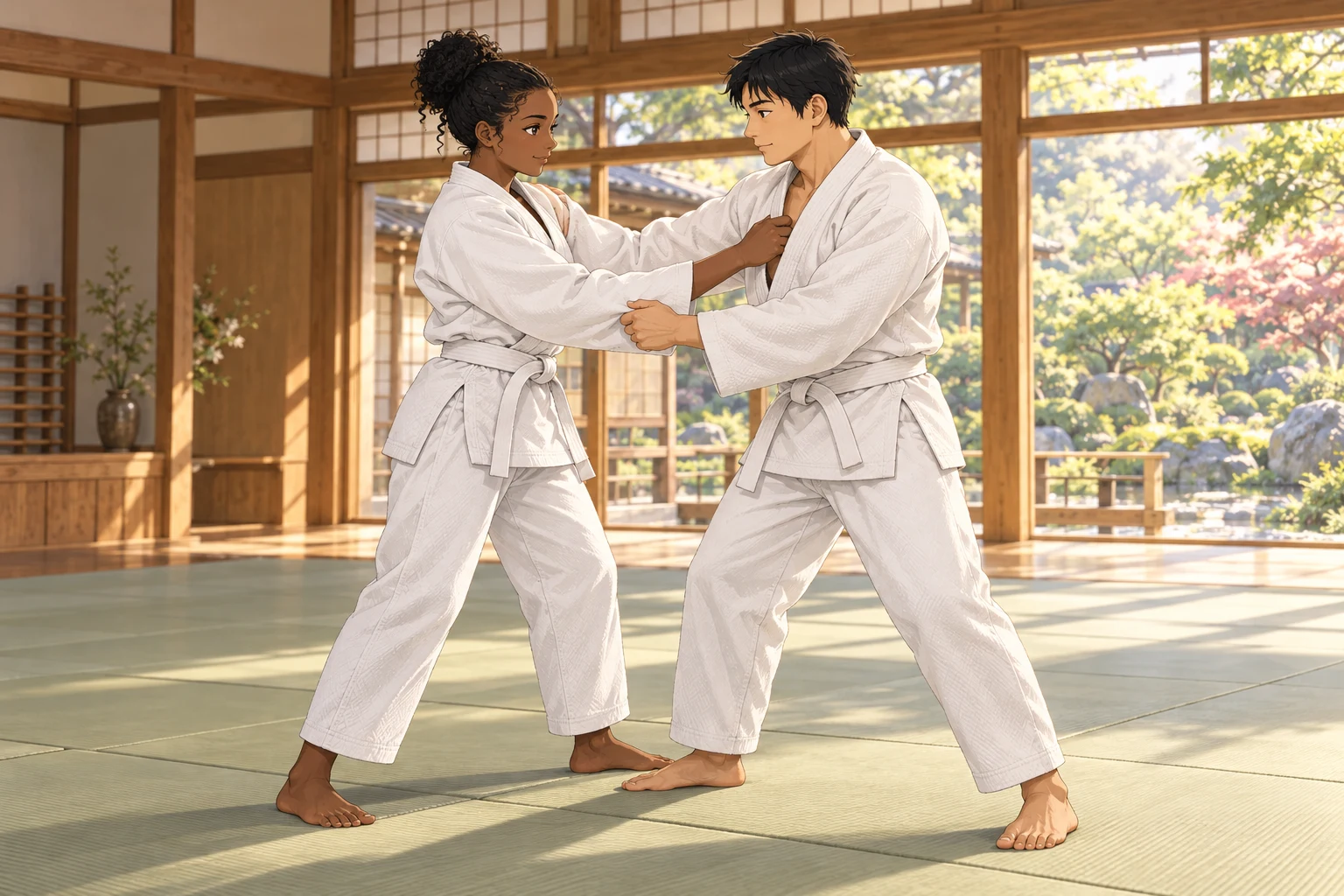
In jūdō, you grip your partner’s uniform to work on throws and controls. Beginners gradually learn ukemi, which help to break falls. The principles seiryoku zen’yō and jita kyōei, taught by Kanō Jigorō, encourage using your energy efficiently and progressing together.
2. Kendō: training through sword practice
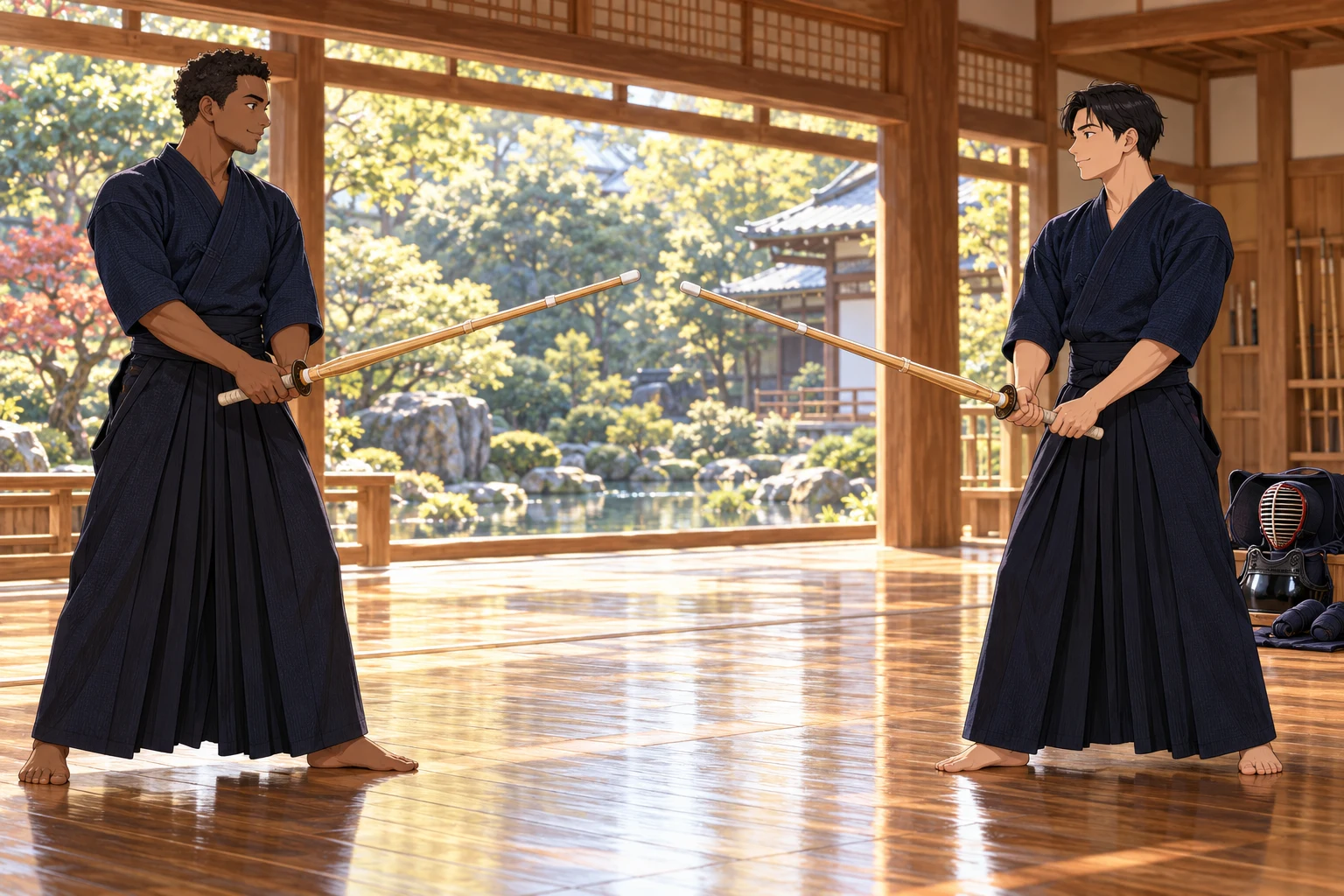
With the shinai and protective gear, you work on posture, footwork, distance and strikes. Hitting the opponent is not enough to sum up the practice. For the All Japan Kendo Federation, the study of the principles of the sword contributes to the formation of the person. The illustration shows guard work without exchanging strikes.
3. Kyūdō: focusing on a single shot
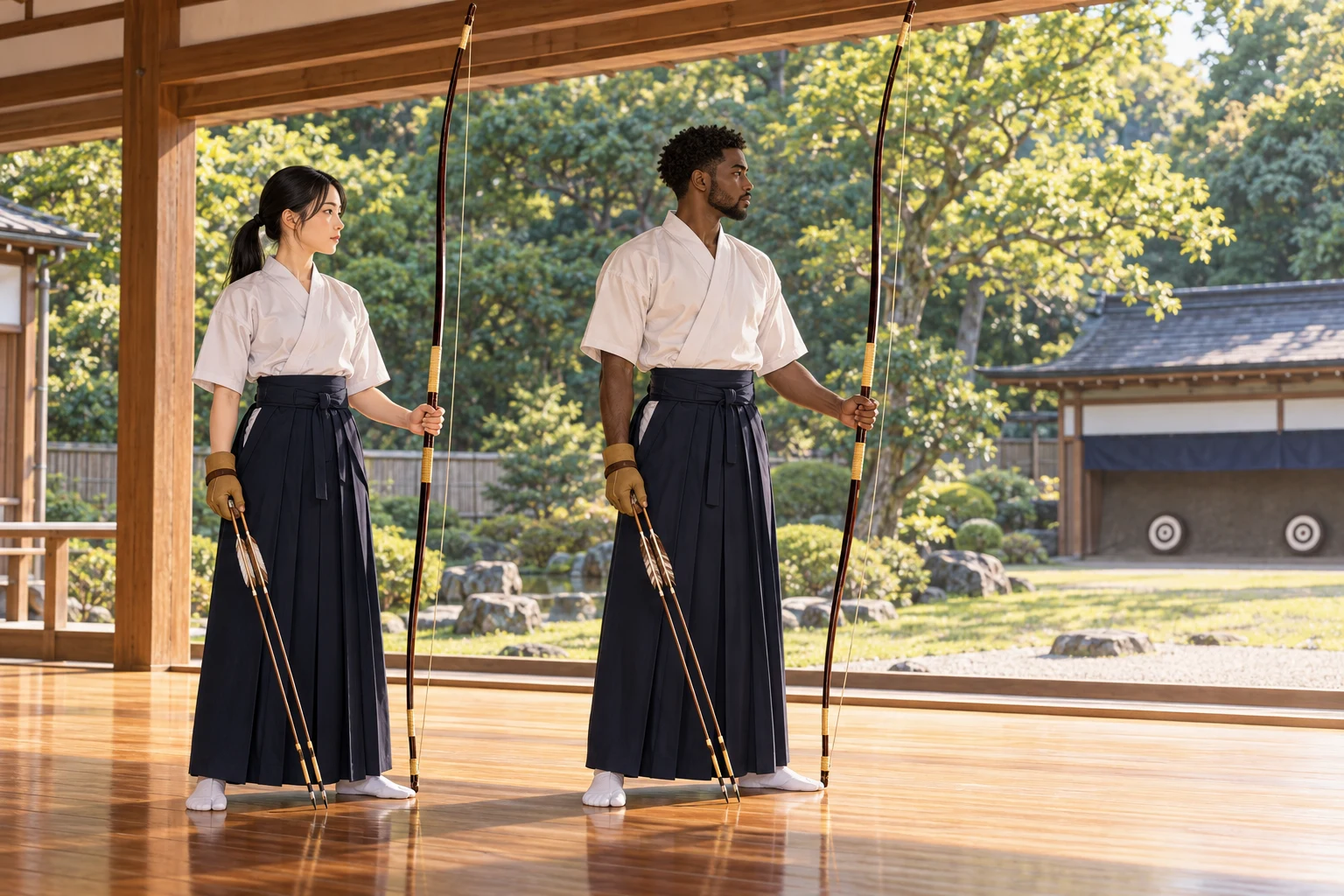
Kyūdō uses the Japanese bow and arrows. Attention goes to the target, but also to posture, breathing and the sequence of movements. The basics are organised in eight stages, the shaho hassetsu. Behind this apparent stillness, the whole body and attention are engaged.
4. Sumō: meeting on the dohyō
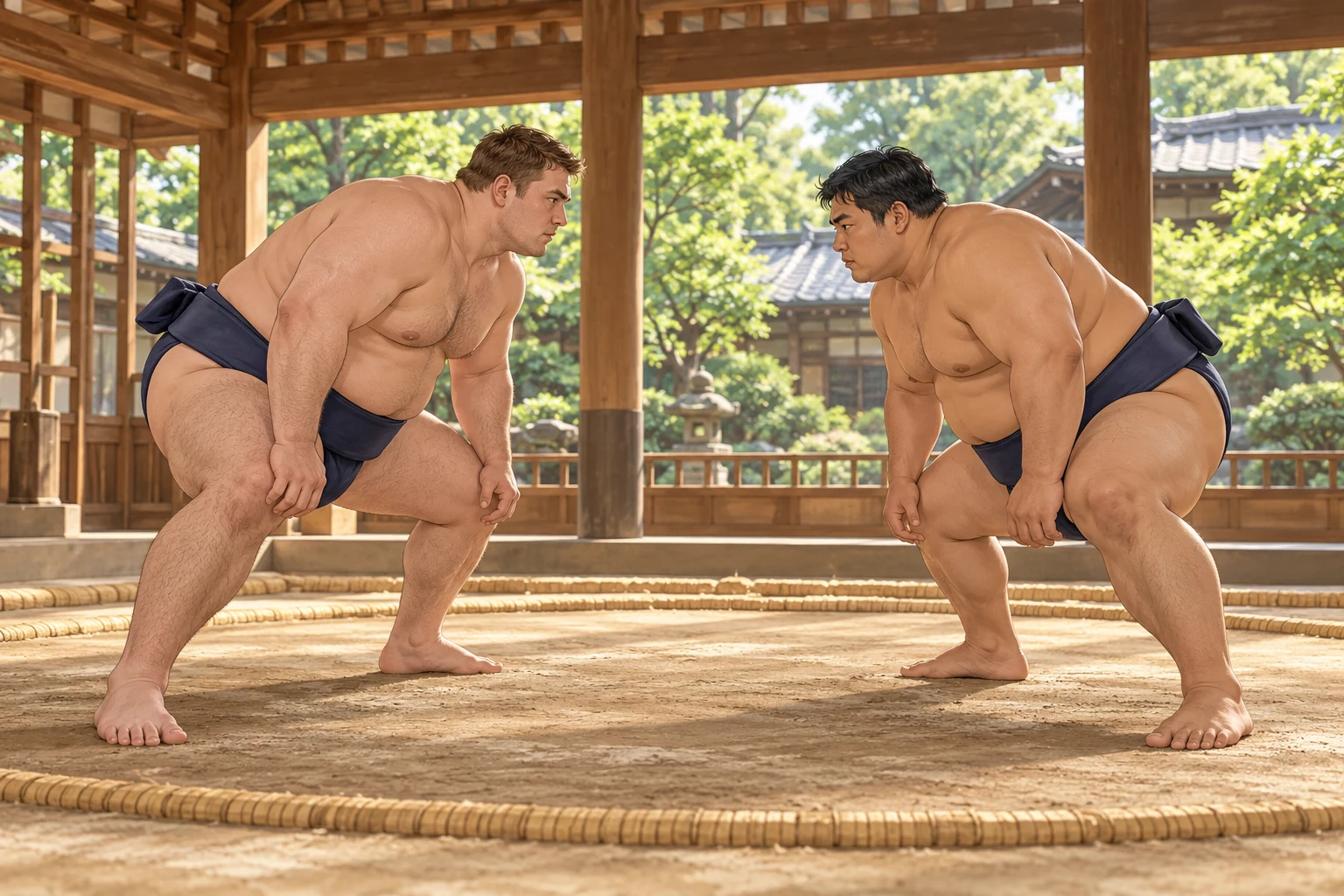
The principle is to push the opponent out of the circle or make them touch the ground with a part of the body other than the soles of the feet. Pushes, grips and throws also require posture and balance. Sumō is not limited to the professional circuit seen on television: there is also amateur practice, notably in schools and clubs.
5. Karatedō: kata and kumite
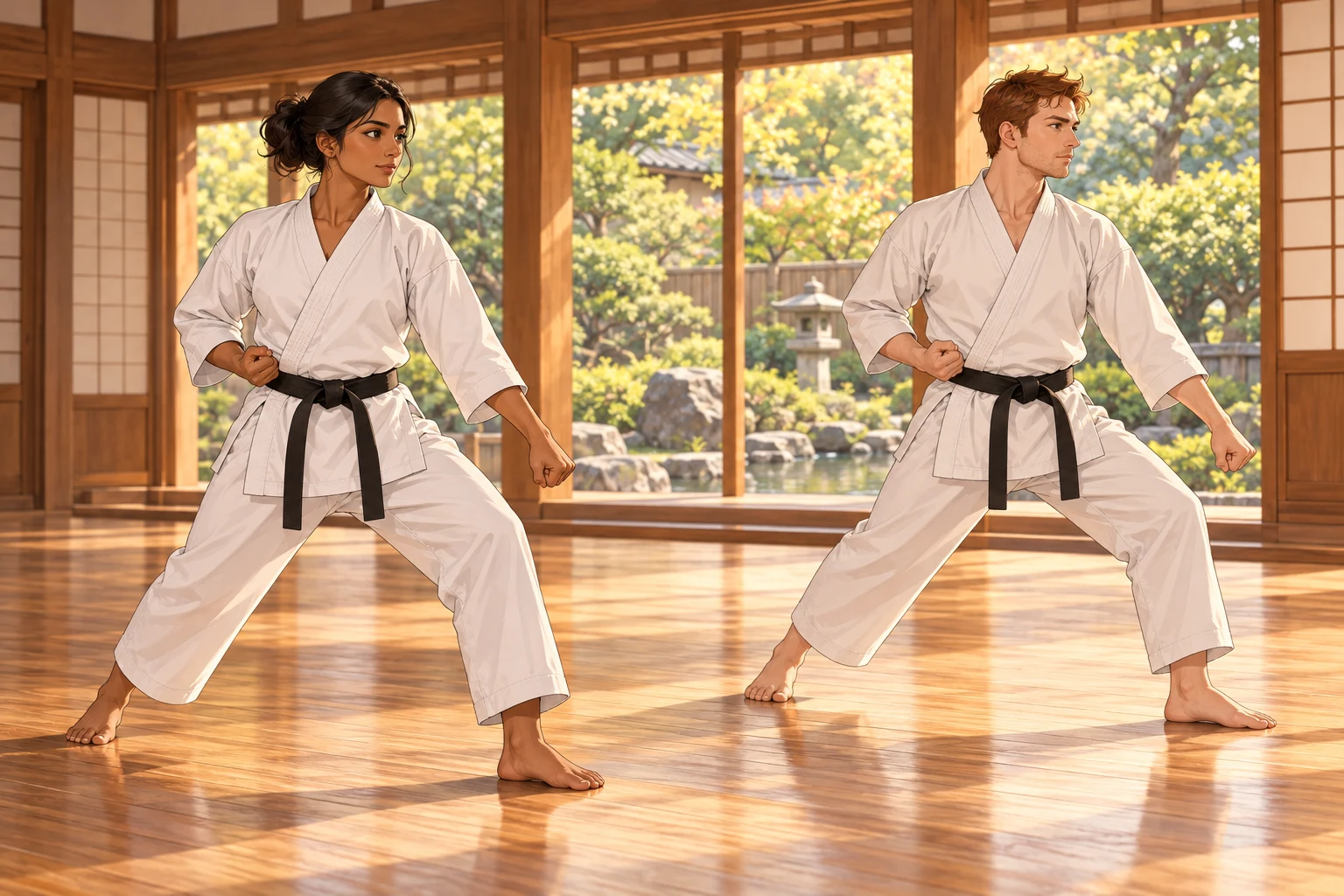
Karatedō developed from the martial arts of Okinawa. You learn in particular punches, kicks and blocks. Kata links codified movements; kumite is practised against a partner. Rules vary between schools and organisations. Precision and control matter as much as the energy of the movement.
6. Aikidō: alternating roles
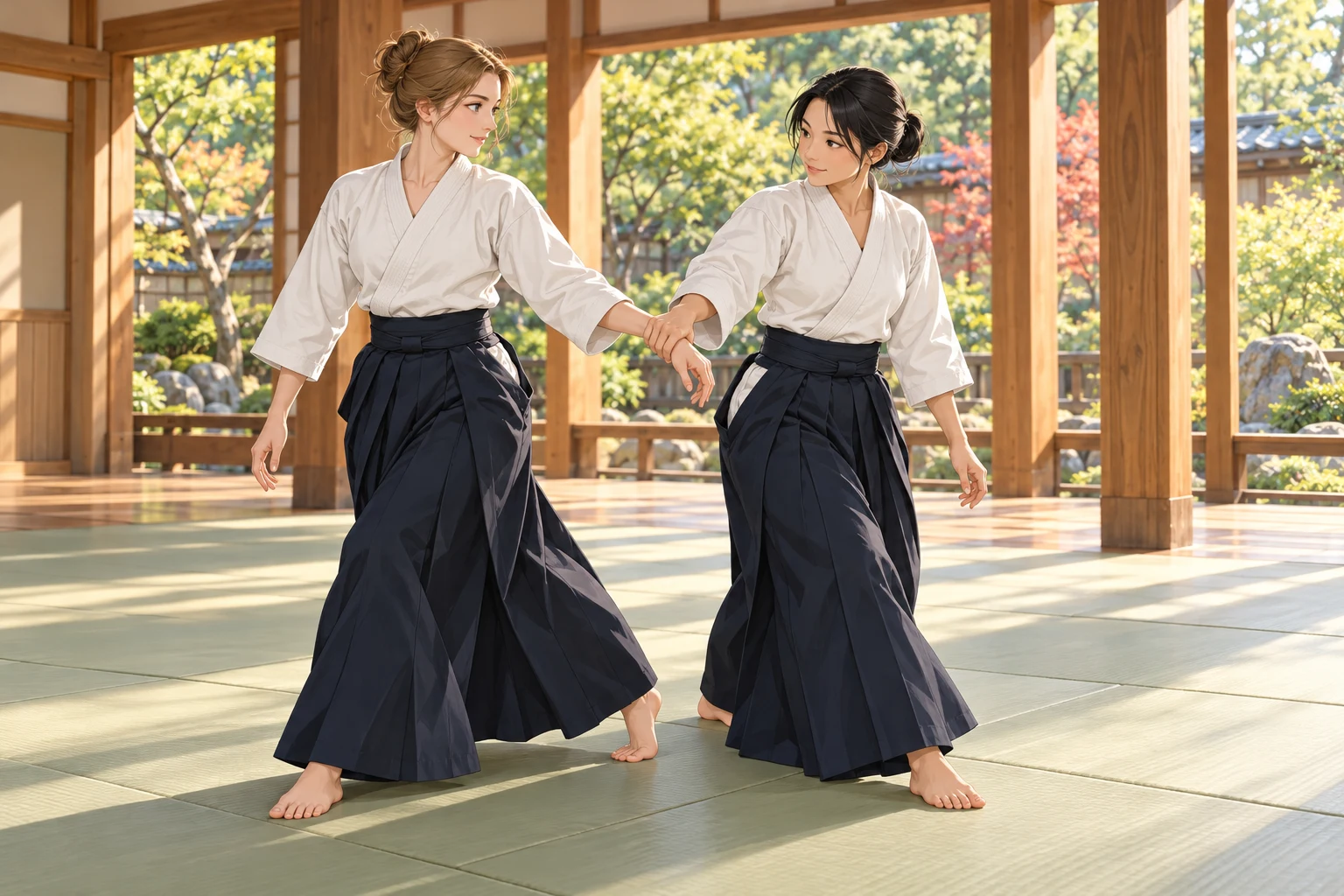
Aikidō was created by Ueshiba Morihei. You study in particular throws and joint controls, taking account of the partner’s movement and the direction of their force. At the Aikikai, practice includes no competition: partners alternate the roles of tori and uke. This presentation follows the Aikikai; methods differ between schools.
7. Shōrinji Kempō: progressing in pairs
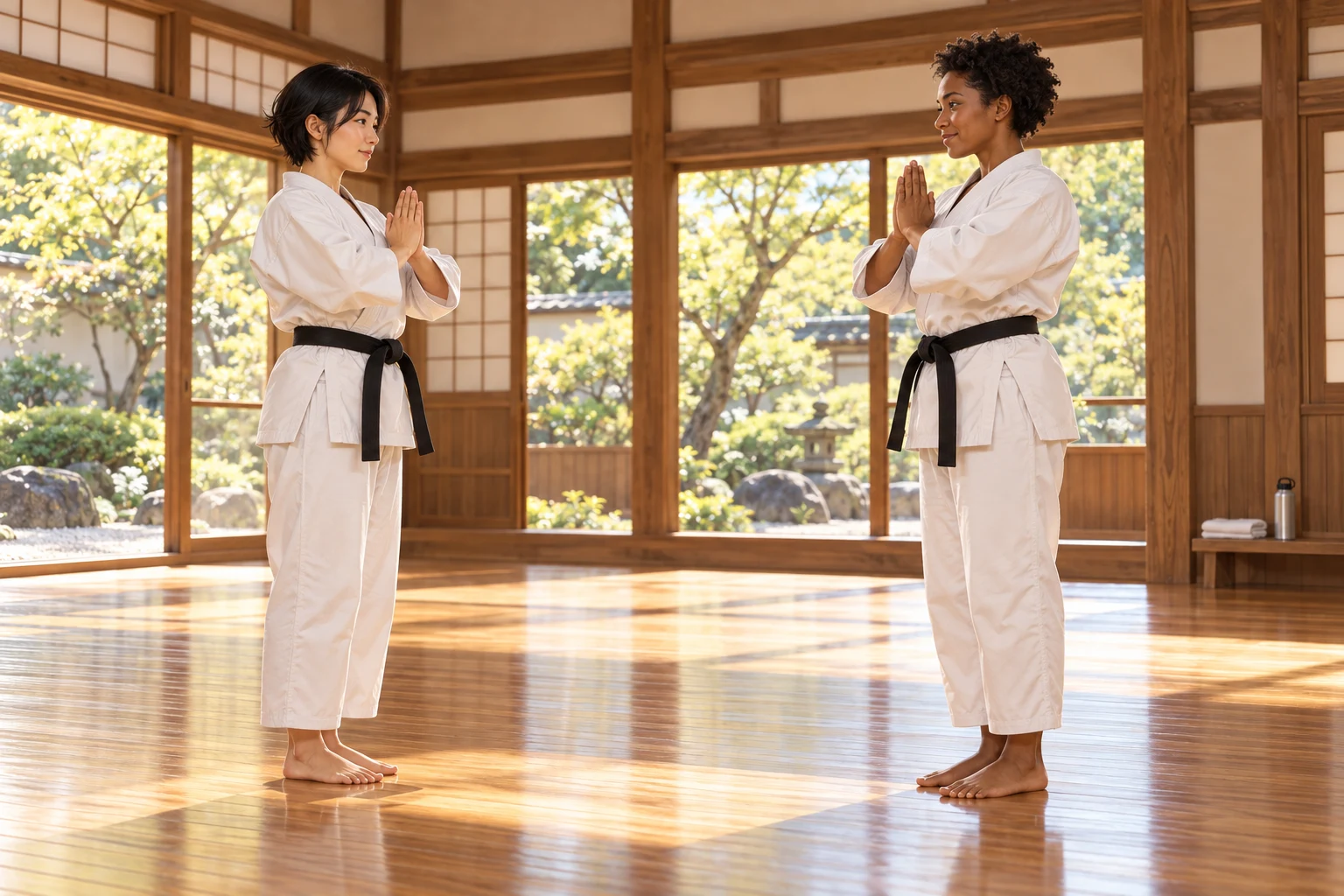
Sō Dōshin founded Shōrinji Kempō in 1947 in Tadotsu, Kagawa Prefecture. Technical learning is tied to forming people able to contribute to society. Working in pairs lets you train strength, but also attention to the other and judgement. The illustration shows the gasshō-rei, a greeting with palms together.
8. Naginata: mastering a long training weapon
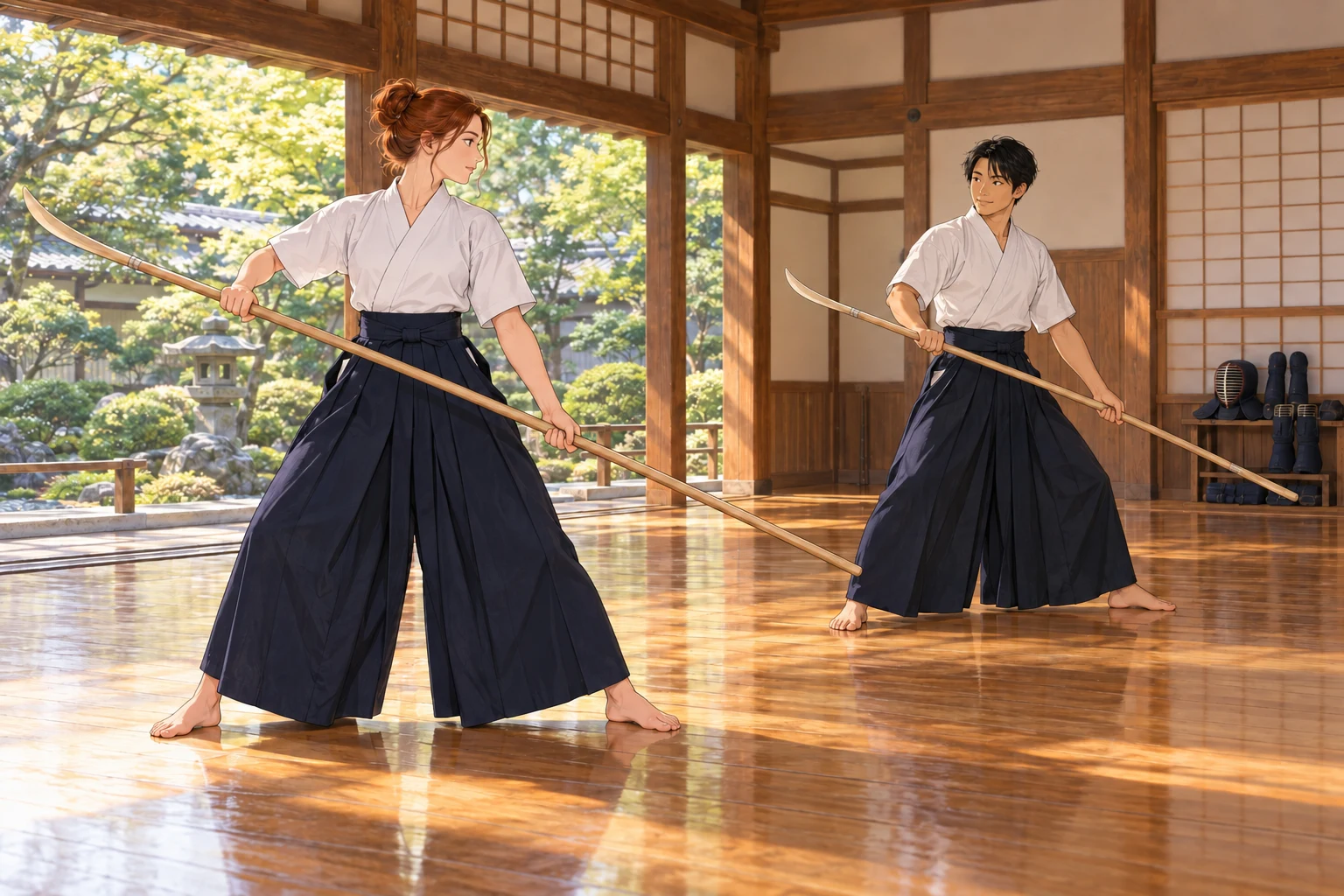
The naginata has a long shaft extended by a blade-shaped part. Modern practice works on strikes, changes of grip and footwork. It includes combat events and technical events. Movements on both sides of the body and managing distance have an important place. It is practised by women as well as men.
9. Jūkendō: the thrust and distance with the mokujū
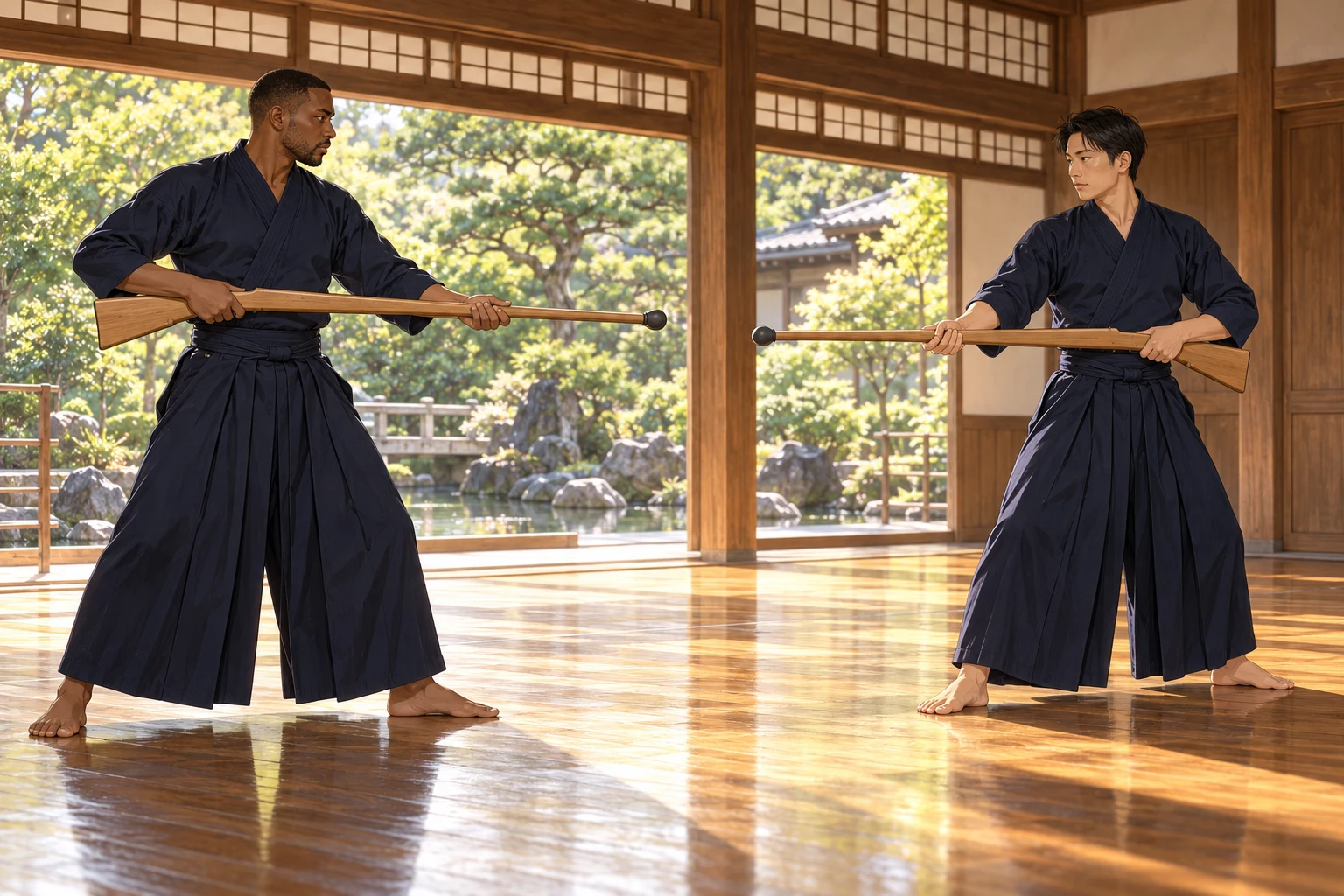
Jūkendō uses a wooden instrument called a mokujū and protective gear to practise thrusting techniques. It is not shooting. Its origins combine French bayonet fencing and Japanese spear techniques: a historical link between the two countries. The illustration shows a study of the guard without contact.
Common landmarks: bowing, practice and respect
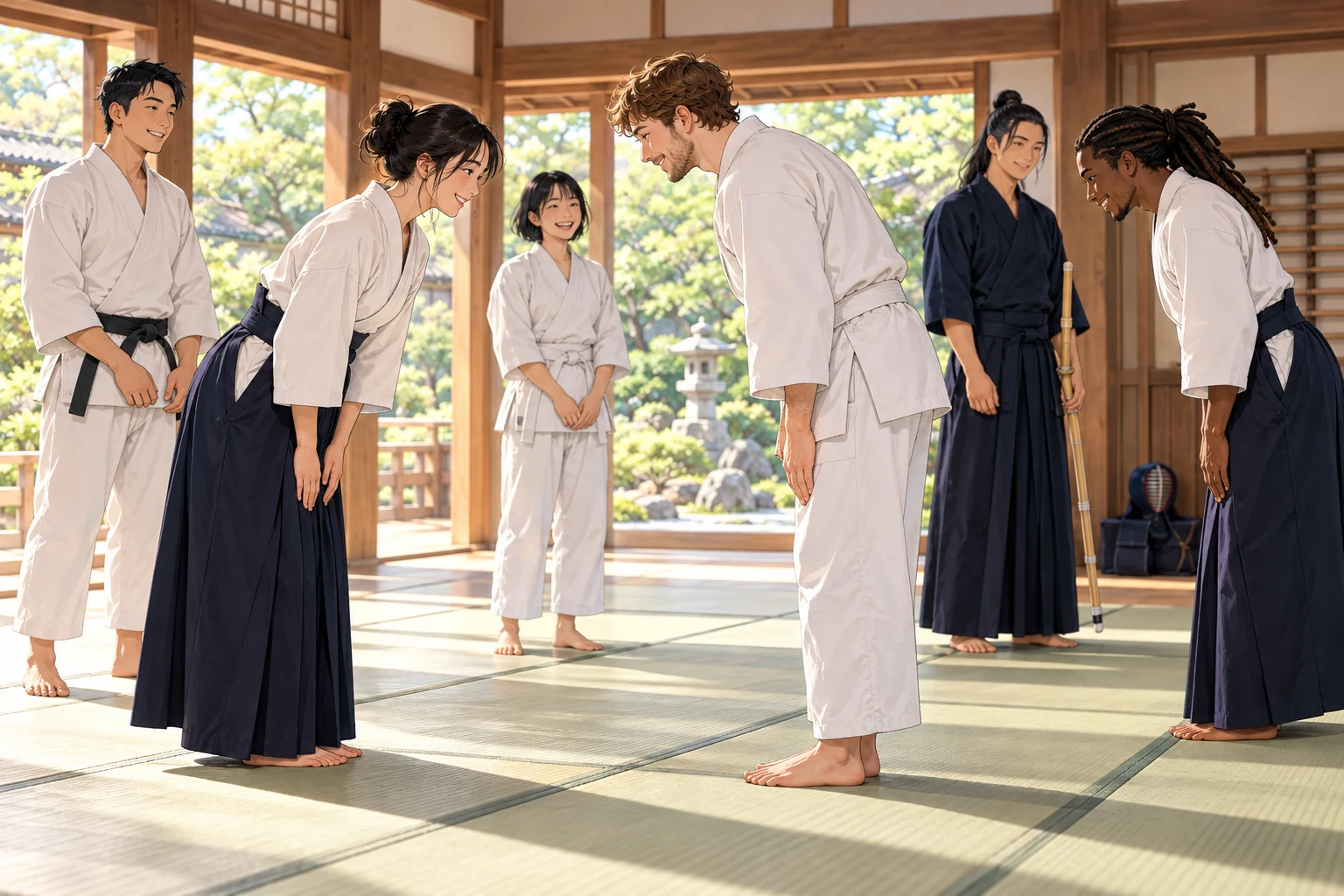
The disciplines differ, but they share the idea of learning regularly with respect. The dōjō is also a place where you work on your attention and attitude. Bows and the way equipment is handled vary: they are learned from the teacher. Strength takes on meaning when it comes with self-control.
Where to start?
A visit or a trial session lets you discover a dōjō. Ask about beginner classes, the atmosphere, equipment and fees. Nationality, age or build are not enough to tell whether a discipline will suit you. Look for a setting that respects your pace and teaches practice safely. Throws and strikes are learned with suitable supervision.
Frequently asked questions
Are budō and sport opposed? A practice can be both competitive and oriented towards respect and the formation of the person. Do you have to be Japanese? No. These disciplines are also practised outside Japan. You can learn their words and customs with partners from different cultures. Are all black belts equivalent? No. Grading and belt systems vary between disciplines and organisations.
What follows in our series
This introduction presents the nine disciplines. JAPANITIES then plans features devoted to jūdō, aikidō and kendō: history, equipment, how a session runs and vocabulary, in Japanese, French and English.
Learn the grammar
French grammar
Learn sentence patterns and usage from the article’s own sentences.
01Expressing purpose with pour + infinitive
pour + infinitive of a verb
On saisit la tenue du partenaire pour travailler les projections et les contrôles.Key pointsPour followed by an infinitive expresses purpose, “in order to…”. Here pour travailler means “to practise throws and holds”. On does not mean one particular person but people training in general.
02Selon + noun: “depending on”
selon + noun
Les règles varient selon les écoles et les organisations.Key pointsThe selon in this sentence shows the standard on which a difference depends, “depending on…”. Varient is the third-person plural present of varier, matching the subject Les règles. As in selon la chronologie, selon can also name a source, “according to”.
03The gerund
en + present participle
On étudie notamment les projections et les contrôles articulaires en tenant compte du mouvement et de la direction de la force du partenaire.Key pointsEn tenant compte de means “while taking … into account”. Put en before tenant, the present participle of tenir. The subject on both learns techniques and takes the partner’s movement into account.
04The passive voice
être + past participle
Elle est pratiquée par des femmes comme par des hommes.Key pointsEst pratiquée is a passive meaning “is practised”. Because the subject Elle refers to the feminine noun la naginata, the past participle pratiquer → pratiqué takes an e. After par comes the person doing the action.
05The negation ne … pas
ne + verb + pas
Elles ne sont pas toutes nées au même moment.Key pointsNe and pas wrap the verb sont. Pas toutes is a partial negation, “not all”. This sentence means “not all were born at the same time”. The -es of nées agrees with the feminine plural subject Elles (disciplines).
Japanese grammar
Understand the structure and usage from the text.
01Doing two things at once: 〜ながら
stem of the ます form + ながら
技を身につけながら、心と体を鍛えます。Key pointsながら links two simultaneous actions by the same subject. Remove ます: 身につけます → 身につけながら. The main action comes next: here, developing body and mind while learning techniques.
02Not only: 〜だけでなく
noun + だけでなく + another element
強さだけでなく、思いやりや判断力も育てます。Key pointsだけでなく means “not only … but also …”. も stresses the second element. The sentence thus combines strength, attention to others and judgement.
03Varying according to: 〜によって
noun + によって
流派や団体によって稽古や試合のルールは異なります。Key pointsによって shows here the criterion on which a variation depends: “depending on the schools and organisations”. 異なります is the polite form of 異なる, “to be different”. や gives examples without claiming to list every possibility.
04Without doing: 〜ずに
negative stem + ずに
挿絵は、打ち合わずに構えを確認する場面です。Key pointsずに means “without doing”. Start from the negative form: 打ち合わない → 打ち合わずに, “without exchanging blows”. The verb that follows shows the action carried out: 確認する, “to check”. Note the exception する → せずに.
05Not having to: 〜必要はありません
dictionary-form verb + 必要はありません
体格や年齢、国籍だけで向き不向きを決める必要はありません。Key points必要 means “necessity”. A dictionary-form verb says what is not necessary: 決める必要はありません, “you do not need to decide”. It is not a prohibition: the sentence removes an obligation.