What is shochu?
A Japanese spirit made by fermenting rice, barley, sweet potato, brown sugar and other ingredients with koji and yeast, then distilling. Unlike whisky, cask ageing is not the default; the ingredient’s aroma is the character.
JAPANITIES · SHOCHU & AWAMORI
Sweet potato, barley, rice, brown sugar: the ingredient and the koji change everything. Types, production, koji, regions, ways to drink it and how awamori differs.
Edited by JAPANITIES · Checked 5 November 2026
Three anchors: ingredient, koji, distillation.
A Japanese spirit made by fermenting rice, barley, sweet potato, brown sugar and other ingredients with koji and yeast, then distilling. Unlike whisky, cask ageing is not the default; the ingredient’s aroma is the character.
Sake is fermented (brewed); shochu is distilled. It is therefore stronger, with aromas varying widely by ingredient.
With hot water, water, ice or soda. Start light to learn the aroma, then find your favourite mix.
Sources : Agence nationale des impôts (NTA) · ABC du shōchū · JETRO · Fiche produit : boissons alcoolisées japonaises
↑ ContentsThe law separates them by the distillation method.
Distilled in a continuous still; under 36% ABV. Neutral in taste, often used as a base for chuhai and fruit liqueurs.
Distilled other than continuously (mainly in a pot still); 45% ABV or less. Made from designated ingredients such as grain, sweet potato or brown sugar with koji, with nothing added but water, it is called “honkaku”. It keeps the ingredient’s aroma.
Sweet potato tends to be sweet and full, barley light and toasty, rice softly sweet, brown sugar gently sweet, buckwheat light. These are tendencies; each product differs.
Sources : Agence nationale des impôts (NTA) · ABC du shōchū · Préfecture de Kagoshima · Brochure sur le shōchū
↑ ContentsSmell the glass first, then notice which aromas linger after a sip. These are typical profiles. Variety, koji, distillation and ageing all influence the result.
Kagoshima is a classic origin. Look for the rounded aroma of steamed sweet potato. Some varieties and production methods yield floral or fruity notes. Warm water can make those differences easier to smell.
Ōita and Iki are two classic origins. Vacuum distillation can give a delicate grain aroma, while atmospheric distillation can leave a toasted-barley finish. Look for barley with barley koji versus barley with rice koji on the label.
In Hitoyoshi-Kuma, rice is both the main ingredient and the base for koji. The aroma may recall freshly cooked rice. Other styles range from delicate and fruity to full-bodied.
In the Amami Islands, unrefined cane sugar is paired with rice koji. A caramel-like nose can lead to a dry finish. Compare the impression of sweetness on the nose with the taste on the palate.
Made in regions including Miyazaki, it can have a gentle buckwheat-kernel aroma and a light texture. Compare its finish with a toasty barley shochu to pick out the difference.
Sources : Japan Sake and Shochu Makers Association · Les matières premières
↑ ContentsIt starts with koji, as sake does.
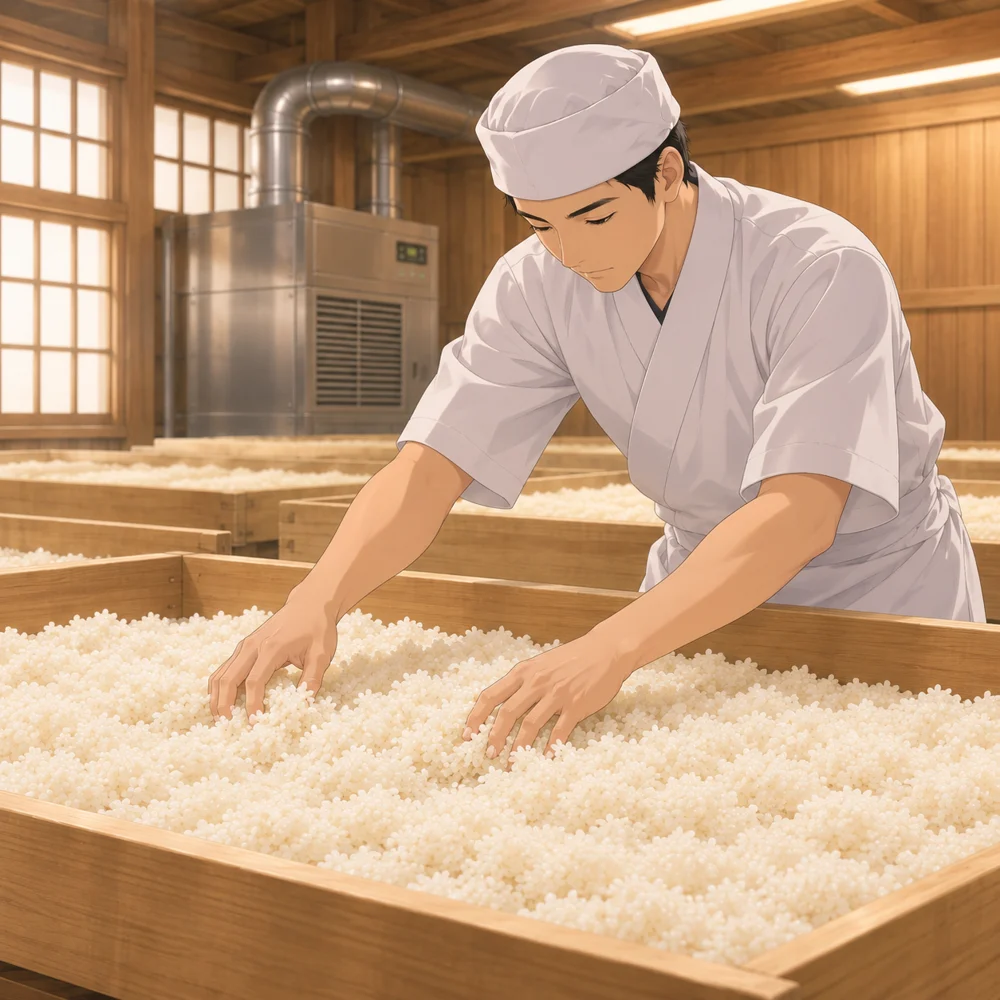
Koji mould is grown on rice or barley to produce enzymes that turn starch into sugar. White, black or yellow koji is used.
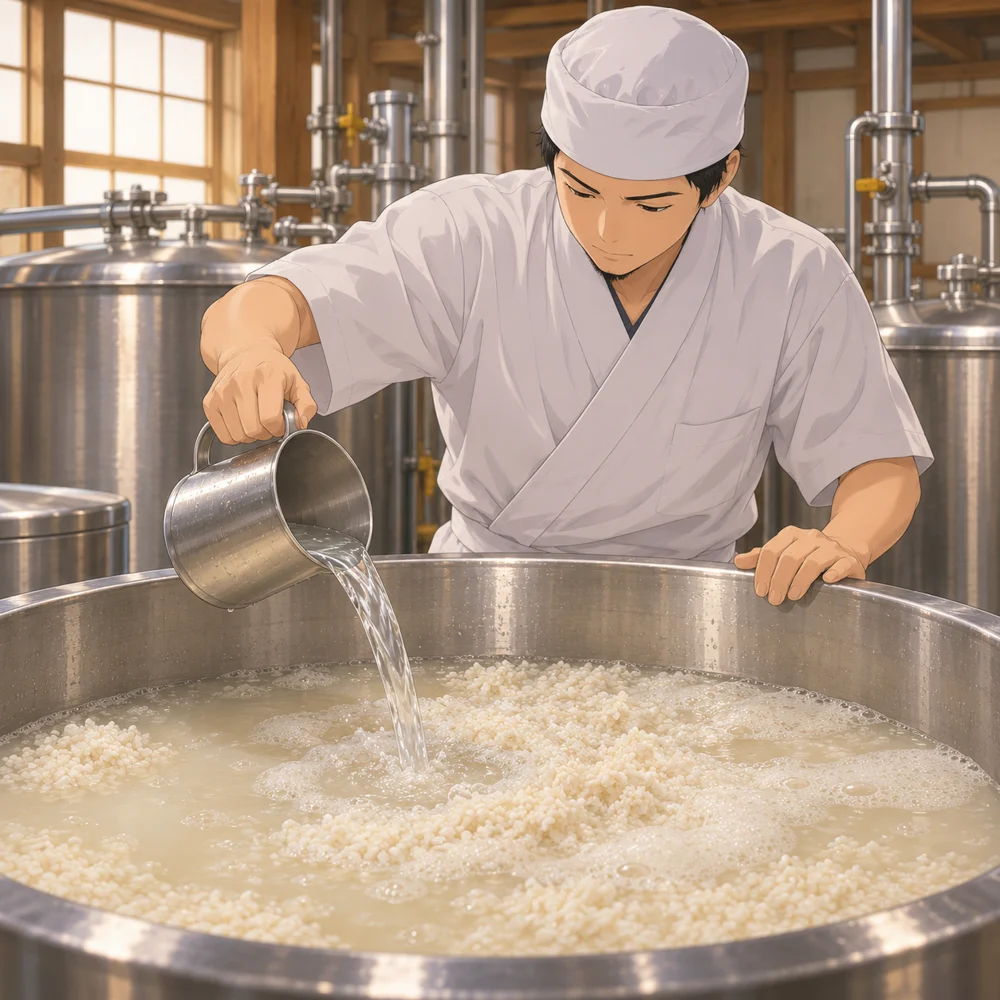
Koji, water and yeast are combined to build up the yeast.
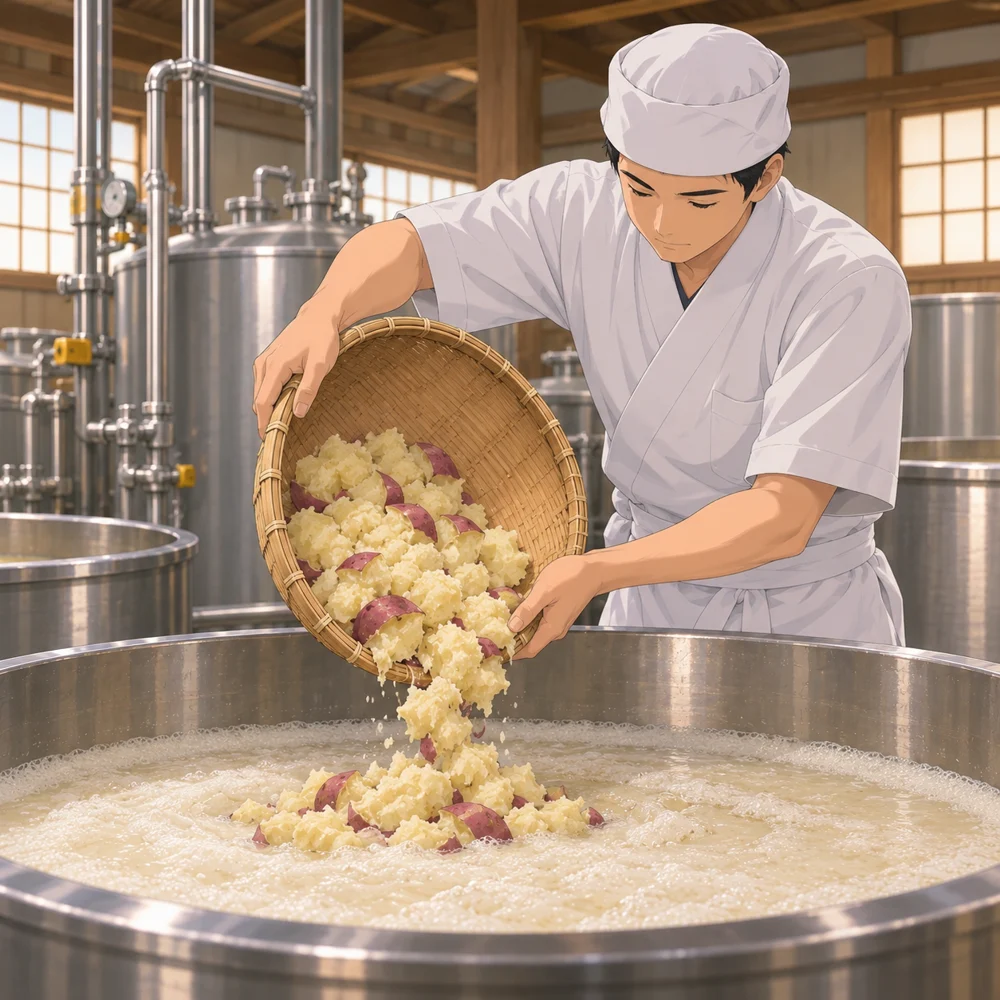
The main ingredient (sweet potato, barley, rice and so on), steamed, is added and fermentation continues. This is where the character is formed.
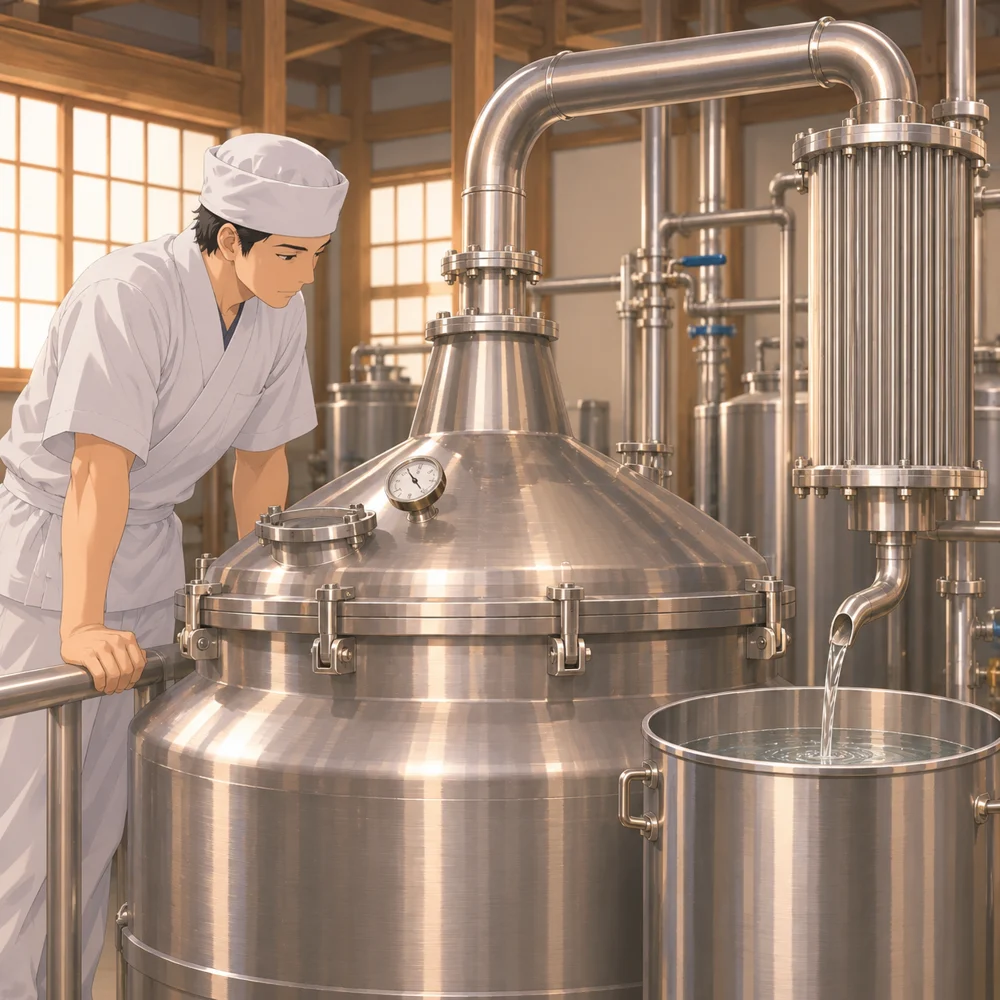
The fermented mash is heated in a still and the vapour is condensed.
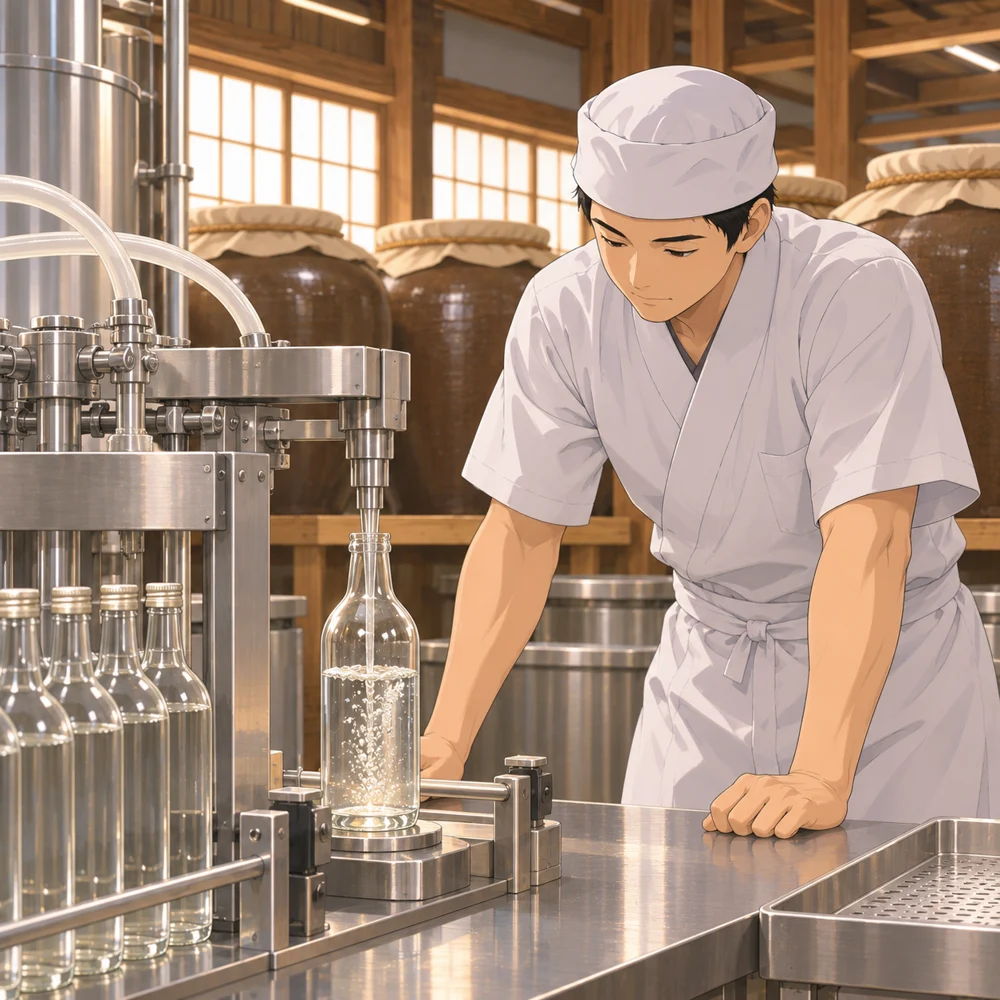
Rested in tanks or jars, then diluted with water to bottling strength.
Sources : Agence nationale des impôts (NTA) · ABC du shōchū · Préfecture de Kagoshima · Brochure sur le shōchū
↑ ContentsEven with the same ingredient, the koji steers the flavour.
Derived from black koji; tends to be soft, clean and easy to drink. Widely used today.
Tends towards a robust, rich taste; also used for awamori.
The same kind as sake koji; tends towards fruity, floral aromas.
Sources : Agence nationale des impôts (NTA) · ABC du shōchū
↑ ContentsThe distillation method also shapes the taste.
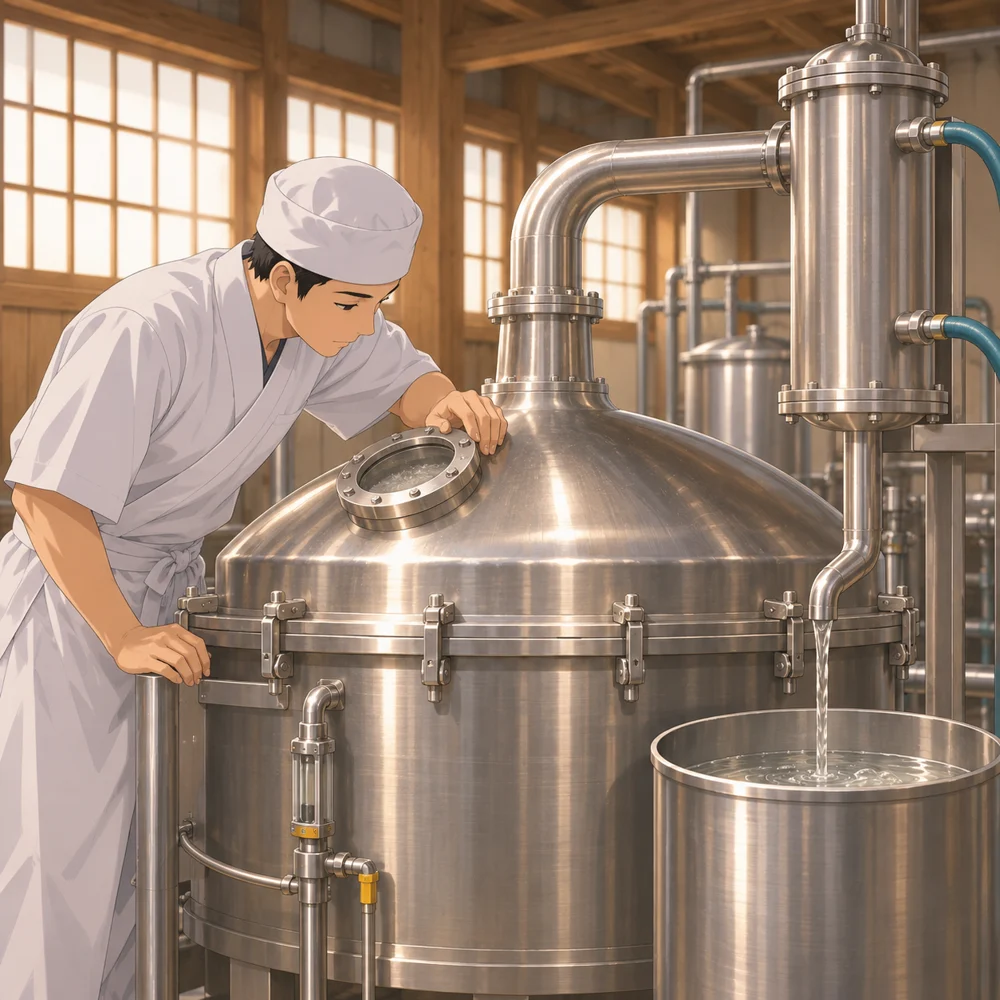
At normal pressure: strong ingredient aromas and flavours, a richer body.
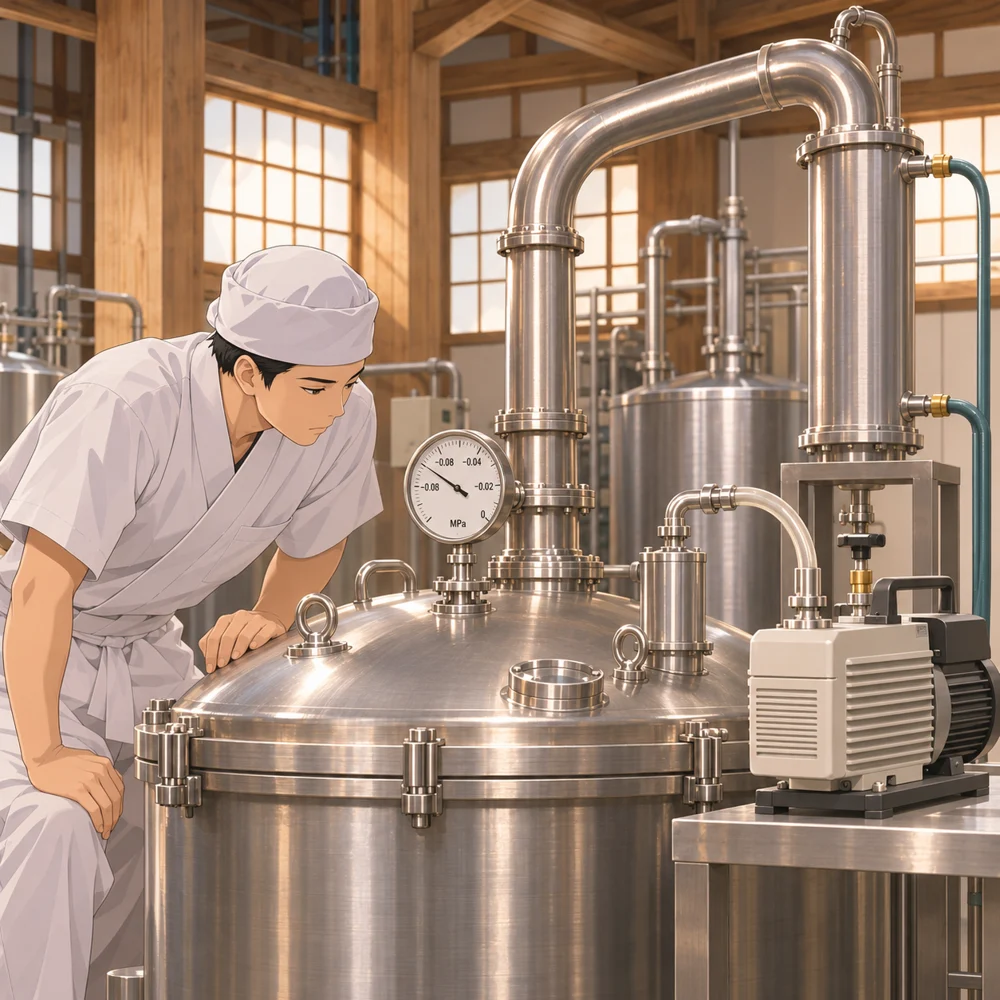
A pump lowers the pressure and therefore the boiling point of the mash. Distilling at a lower temperature tends to give a lighter, cleaner taste.
Sources : Japan Sake and Shochu Makers Association · La fabrication · Préfecture de Kagoshima · Brochure sur le shōchū
↑ ContentsThe land that grows the ingredient is tied to the style.
The heartland of sweet-potato shochu; “Satsuma” is a protected geographical indication (GI).
Known for rice shochu; “Kuma” is also a GI.
Known for barley shochu.
A tradition of pairing barley with rice koji; “Iki” is a GI.
Also known for buckwheat shochu.
Made from brown sugar and rice koji in the Amami Islands.
Sources : Agence nationale des impôts (NTA) · ABC du shōchū · Préfecture de Kagoshima · Brochure sur le shōchū
↑ ContentsThe same shochu feels different depending on the mix.
Pour hot water first, then the shochu. A 6:4 ratio of shochu to hot water is classic. The aroma opens up; especially popular with sweet-potato shochu.
With water it suits meals; on ice the taste changes as it melts.
Light and refreshing, easy for beginners; add lemon if you like.
Shochu and water are mixed in advance and left to rest; the texture softens.
A traditional Kagoshima clay pot used to warm diluted shochu.
Sources : Préfecture de Kagoshima · Brochure sur le shōchū
↑ ContentsRelated to shochu, but distinct in ingredient and koji.
An Okinawan spirit made from long-grain Thai rice and black koji, fermented in a single stage and single-distilled. Shochu is often made in two stages.
Awamori aged at least three years is called kusu; it grows mellower and sweeter. Check each product’s label to see whether it is fully aged or a blend.
Sources : Gouvernement du Japon (Highlighting Japan) · Awamori, mars 2025
↑ ContentsLook first at ingredients, strength and distillation.
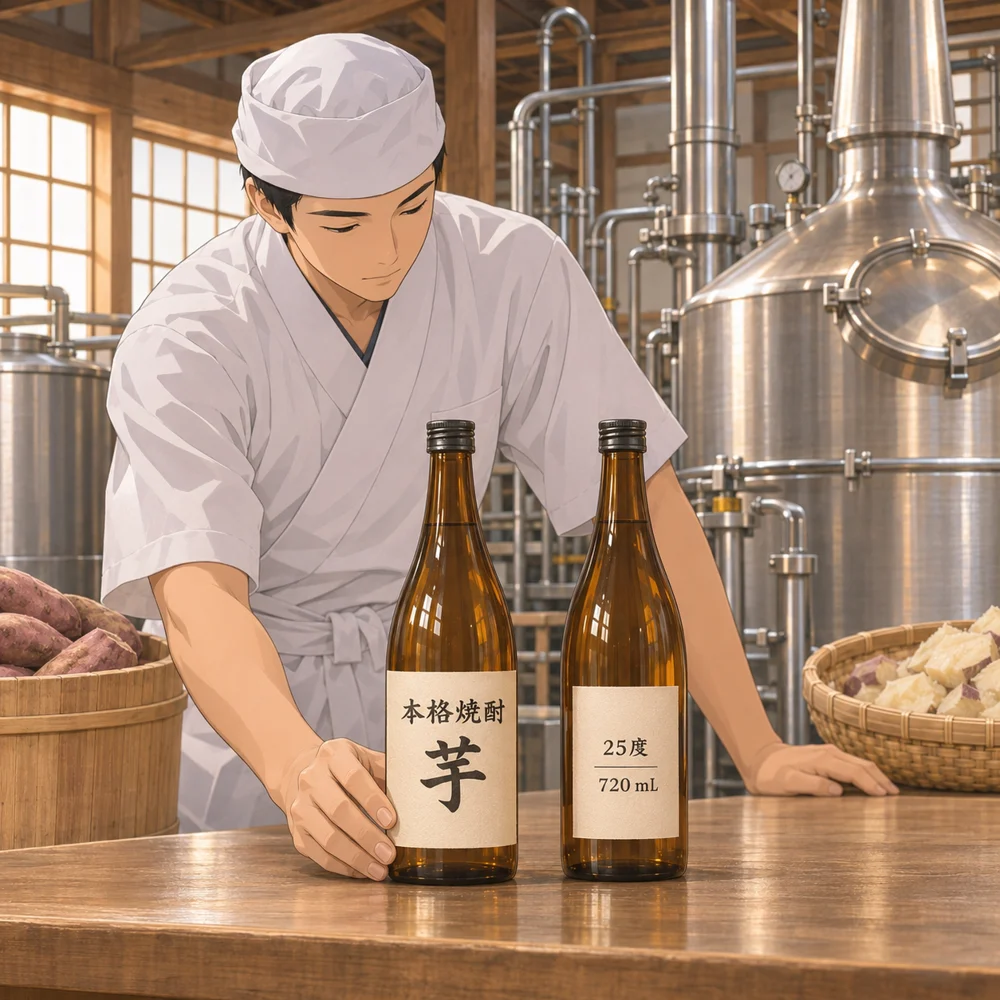
This is a fictional label. 芋 means sweet potato. The ingredients さつまいも・米麹 indicate sweet potato with koji grown on rice. 25度 means 25% alcohol by volume, while 720 mL is the bottle size. If distillation pressure is not stated, the strength and ingredients alone cannot tell you which method was used.
1) Ingredients (sweet potato, barley, rice, brown sugar, koji type) 2) strength (often 20–25%) 3) single or continuous distillation 4) atmospheric or vacuum. These four give you the general direction.
Some Japanese grocers and specialist shops stock it. Range and prices vary, so check with the shop.
Generally shochu is stronger: sake is brewed, shochu distilled. You can dilute it to adjust.
Rice, barley, sweet potato, brown sugar, buckwheat and more. “Honkaku” uses designated ingredients and koji, adding only water.
A close relative, but awamori comes from Okinawa, uses Thai rice and black koji, in one stage.
Try a light barley or rice shochu with soda or water; for sweet potato, try it with hot water.
Often just rested in tanks, unlike whisky. Some, such as kusu awamori, are aged for years.